Preventing and Treating Stroke in Cameroon
Overview
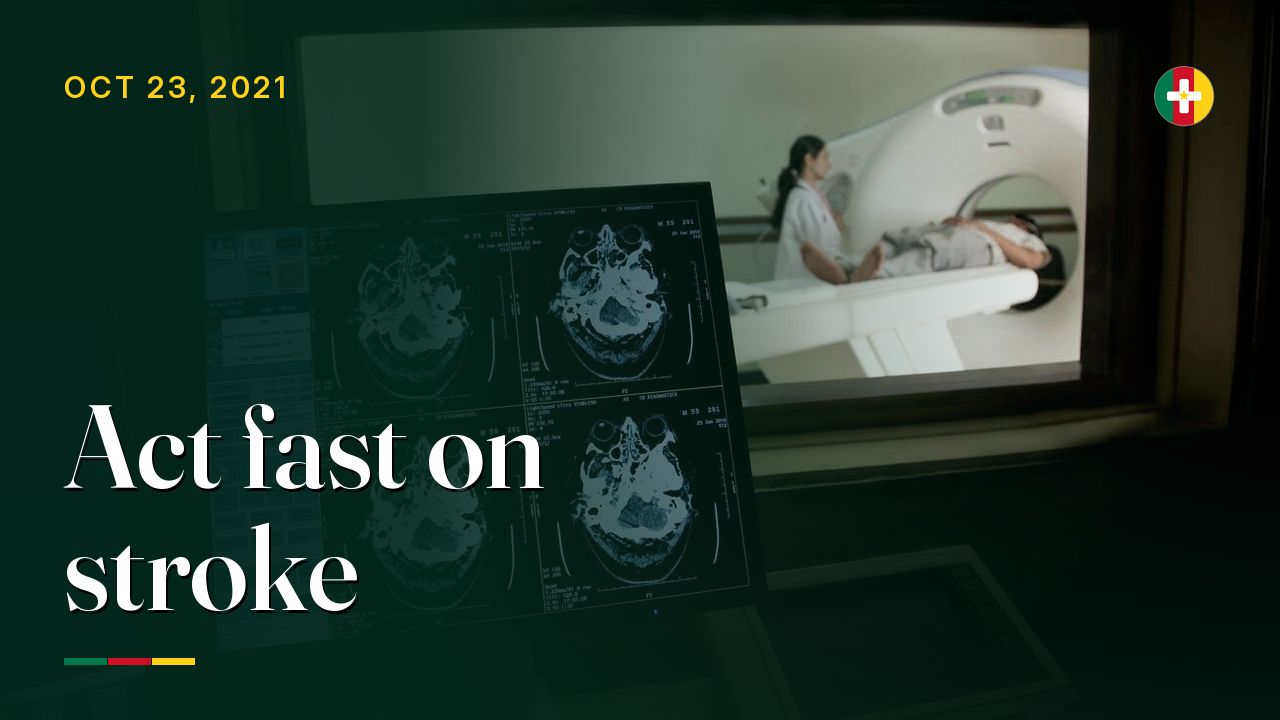
This policy briefing synthesizes key insights from the Cameroon Town Hall for Healthcare Professionals meeting held on October 23, 2021, focusing on the theme "Let's Talk About Stroke: A Call to Action," presented by Dr. Alain Lekoubou, Assistant Professor of Neurology and Public Health Sciences at Penn State College of Medicine.
Context
Stroke is often seen as rare in Cameroon, yet hospital data show stroke admissions rising from 2.5 percent in 1999 to 13.1 percent in 2012, and hypertension, diabetes and obesity are common and poorly controlled. CT imaging, thrombolysis and thrombectomy are largely unavailable, and the country has no dedicated stroke unit.
Key issues
- Uncontrolled risk factors. About 30 percent of adults have high blood pressure, many unaware; most diabetes is undiagnosed. Hypertension and physical inactivity drive most strokes in a young population.
- No organised acute stroke care. Patients are scattered across general wards; CT is often unavailable, so ischaemic and haemorrhagic stroke cannot be distinguished. A tPA vial costs about US$7,000.
- Neglected rehabilitation and secondary prevention. Few physiotherapists are trained, and TIA patients are often sent home without evaluation.
Discussion highlights
- Stroke units improve survival and function even without thrombolysis or thrombectomy.
- Cheap measures (blood pressure control, lipid and glucose testing, aspirin plus clopidogrel after minor ischaemic stroke or TIA) can prevent recurrence.
- Responsibility is shared: individuals, families, communities, hospital directors and government.
- Public health work on salt and sugar in processed foods was under way in Cameroon.
Recommendations
- Pilot a stroke unit in a teaching hospital. MINSANTE and a university teaching hospital should create one geographically defined stroke unit with a dedicated multidisciplinary team, as a training and research site. First step: designate beds and a lead clinician, building on earlier dedicated stroke beds at the central hospital in Yaoundé.
- Adopt national stroke guidelines adapted to local resources. MINSANTE, with Cameroonian neurologists and internists, should issue guidelines covering care with and without CT: swallowing assessment, early mobilisation, blood pressure management, and dual antiplatelet therapy after CT-confirmed minor stroke or TIA.
- Scale up hypertension and diabetes screening. MINSANTE and regional delegations should implement screening for adults over 40 at health facilities and community events, with lifestyle counselling and treatment.
- Regulate salt and sugar and support physical activity. MINSANTE and partner ministries should finalise policies on salt and sugar in processed foods and work with councils on safe spaces for walking and exercise.
- Train rehabilitation staff and educate communities. Training schools should expand physiotherapy and speech therapy training. Diaspora professionals and community groups can run stroke awareness sessions in local languages, including recognition of TIA.
Next steps
The town hall was working to host the Minister of Public Health at a future session, and participants were asked to share the recording widely.
Conclusion
Stroke is a growing and largely preventable cause of death and disability in Cameroon. Prevention, an organised stroke unit, and care for survivors can reduce its burden even before advanced therapies become available.
Meeting minutes
Agenda
- Welcome and opening remarks by co-moderator Elvis Ndansi
- Brief COVID-19 update from the Chair on mixing vaccines and boosters
- Introduction of the guest speaker
- Presentation by Dr. Alain Lekoubou on "Let's Talk About Stroke: A Call to Action", with live audience polls
- Discussion and Q&A, moderated by Dr. Louisa Viban
- Take-home messages from co-moderators and the Chair, summary and parking lot
Opening remarks
- Elvis Ndansi welcomed participants and described the town hall as a fortnightly platform for Cameroonian health professionals worldwide, including doctors, nurses, laboratory staff, public health scientists and community health workers.
- Asked for a COVID-19 update, the Chair said UK data showed mixing vaccines was safe (AstraZeneca followed by Moderna or Pfizer gave similar immunity), that AstraZeneca and Sputnik share the same technology, and that the Johnson & Johnson booster had just been approved in the US.
- Elvis Ndansi introduced Dr. Lekoubou, author of more than 70 peer-reviewed articles, whose research focuses on factors influencing stroke and epilepsy outcomes and on prediction models for stroke survivors.
- The Chair added that Dr. Lekoubou trained as an internist in Cameroon, had worked as a general practitioner in Bamenda, and had shaped the careers of many participants as an outstanding internal medicine resident.
Presentation
1. A case of acute ischaemic stroke
Dr. Lekoubou presented a recent US case: a 46-year-old man with hypertension, hyperlipidaemia and type 2 diabetes who arrived 30 minutes after onset with aphasia, left-sided weakness and a visual field cut (NIH Stroke Scale 7), blood pressure 198/88 and weight 94 kg. CT showed no acute findings and CT angiography showed a middle cerebral artery occlusion. His blood pressure was lowered and he received IV tPA, and the next day his NIHSS was 3. Work-up showed an 80 percent carotid stenosis, LDL 140 and HbA1c 8.9 percent. In the live poll, all respondents chose a head CT as the next step and about 36 percent chose blood pressure control, tPA and thrombectomy.
2. Evidence for acute treatment
Guidelines support IV tPA within 3 hours and with benefit up to 4.5 hours of onset ("time is brain"), although the FDA had not approved the 3 to 4.5 hour window. Five major trials, starting with MR CLEAN in the Netherlands, showed that mechanical thrombectomy markedly improves the chance of functional independence at three months, with about seven patients treated for one to become independent. Care after the acute phase included rehabilitation, carotid endarterectomy, and control of blood pressure, cholesterol and diabetes.
3. Stroke is a growing problem in Cameroon
Dr. Lekoubou rejected the idea that stroke is rare in Cameroon, since the same risk factors are present and often uncontrolled. Citing community data from Prof. André Pascal Kengne and colleagues (published 2012), he said about 30 percent of adults had high blood pressure, many unaware of it, with diabetes at 6 to 8 percent (about 80 percent undiagnosed), obesity around 30 percent, and smoking at 5 to 11 percent among college students. Global Burden of Disease estimates placed stroke incidence in Cameroon around 160 per 100,000, which he considered the tip of the iceberg. His own retrospective study of hospital registries found the share of admissions due to stroke rose from 2.5 percent in 1999 to 13.1 percent in 2012.
4. Prevention can halve the burden
About 55 percent of Cameroonians are 15 to 60 years old, and hypertension and physical inactivity together account for a large share of strokes, so controlling them in this group could reduce strokes by about half. He told the story of a close friend in his mid-40s who, between 2018 and 2021, went from 210 to 165 pounds, normalised his blood pressure and halved his LDL cholesterol. If 100 people did the same, he estimated, only about 20 would go on to have a stroke.
5. Cameroon needs stroke units
Dr. Lekoubou argued that Cameroon "must stop flying blind" and create stroke units: geographically defined hospital areas where a dedicated team (physicians, nurses, physiotherapists, speech therapists, dietitians, social workers) cares only for stroke patients. Evidence from the era before tPA and thrombectomy showed that stroke units improve survival and function compared with care at home or by a visiting stroke team. One well-run unit would build expertise, attract funding and research partnerships, and serve as a model for other hospitals.
6. A tripod of stroke care
He concluded that stroke care rests on three legs, all necessary: primary prevention, acute care in stroke units, and care for survivors (rehabilitation and secondary prevention). He called on all Cameroonians, not only physicians, to work toward "zero stroke".
Discussion and Q&A
- The Chair asked where Dr. Lekoubou would invest a limited national stroke budget if he were Minister of Health, given that CT, tPA and thrombectomy are largely unavailable. Dr. Lekoubou said a minister should gather clinicians, public health specialists and nutritionists to decide. As a clinician he leaned toward acute care, as a public health specialist toward prevention, and as a family member toward rehabilitation. Above all he called for a cultural change in which individuals take responsibility for exercise and diet without waiting for government, while government regulates salt and builds sports facilities.
- A participant asked where and how to start a stroke unit in Cameroon. Dr. Lekoubou said it should start in a teaching hospital, with a defined area, staff able to diagnose stroke clinically, access to head CT where possible, and staff for swallowing assessment, physiotherapy and speech therapy. Students and residents rotating there would spread the knowledge to other hospitals.
- A paediatrician and public health practitioner in the UK argued that primary prevention must come first because even level two hospitals cannot diagnose stroke, and that governments should invest in public transport, cycle lanes, sugar taxes and smaller portion sizes. Dr. Lekoubou agreed that government has a role but said action must start with the individual, family and community, since government faces many competing priorities and moves slowly.
- A clinical biochemist and assistant clinical professor in laboratory medicine at the University of Alberta, asked whether national screening guidelines for diabetes, dyslipidaemia and hypertension with lifestyle education would be among the best strategies, and noted that the laboratory was missing from the stroke team diagram. Dr. Lekoubou agreed that screening works and accepted the point on laboratory medicine, but said screening alone would not make stroke disappear, as stroke is "a big elephant" that needs multiple efforts.
- A participant asked how to manage a patient with suspected stroke in Cameroon when no CT scan is available. Dr. Lekoubou called for local guidelines adapted to available resources. Without CT, clinicians cannot tell ischaemic from haemorrhagic stroke, and haemorrhagic stroke is relatively common in Cameroon because of uncontrolled blood pressure. Patients should be admitted, assessed for safe swallowing, mobilised early, and have blood pressure managed cautiously, with blood pressure, glucose and a lipid panel (about 10,000 FCFA) checked for secondary prevention. Where a CT within 24 hours confirms a minor ischaemic stroke or TIA, aspirin plus clopidogrel is cheap and effective. He noted that a vial of tPA costs about US$7,000.
- The Chair asked whether Cameroon could safely give tPA or perform thrombectomy, and whether that is justified against population-level prevention, sharing that his mother had a stroke in the UK and received tPA but not thrombectomy. Dr. Lekoubou said Cameroonians deserve these treatments and there are doctors in Cameroon trained to give tPA, but safety depends on a system with volume, feedback and continuous practice. Society needs prevention while each patient needs the best acute care. On rehabilitation, the Chair noted that few physiotherapists are trained in Cameroon.
- A public health physician who had trained under Dr. Lekoubou in Bamenda, asked about the risk of stroke after a TIA, when and for how long physiotherapy should be given, and whether healthy cities and workplaces should be promoted. Dr. Lekoubou said a TIA carries about a 10 percent risk of stroke within three months, highest in the first days, so patients should not be sent home without evaluation. Controlling blood pressure, diabetes and cholesterol with aspirin can cut recurrent stroke risk by about 75 percent, and lowering population blood pressure by 1 mmHg reduces recurrent stroke by about 4 percent. Physiotherapy should start as soon as possible and continue until progress plateaus. He agreed that city planning, air pollution and work schedules affect stroke risk.
- Dr. Katte Jean-Claude asked how to reduce residual risk in well-controlled patients, and noted that public health documents were being drafted in Cameroon on salt reduction and on processed foods high in salt and sugar. Dr. Lekoubou said residual risk may reflect genetic or rare hypercoagulable conditions and lipid molecules not routinely tested, and should be addressed individually according to age, genetics and stroke type.
- A nurse in the US suggested workplace gym incentives and community education in local languages through family and village meetings, having lost close relatives to stroke. A participant calling from Germany asked whether a free first-aid unit could treat patients before payment. Dr. Lekoubou said some mission hospitals already treat first and bill later, recalling a system in Bamenda for pregnant women, and urged creative, locally adapted financing. A doctor from the central hospital in Yaoundé noted in the chat that dedicated stroke beds had been set up there in preparation for a stroke unit before a reorganisation halted it; Dr. Lekoubou urged them to keep trying.
Calls to action and closing
- A co-moderator said the key lesson was to adapt care to what Cameroon has rather than doing nothing, and to raise awareness of modifiable risk factors.
- The Chair said the session showed that change does not rest on government alone, as many participants direct hospitals and units, and noted that most historical declines in mortality came from prevention.
- The Chair announced that efforts were under way to bring the Minister of Public Health to a future session.
- Dr. Louisa Viban summarised the session and asked participants to share the YouTube recording. A 30-minute off-the-record parking lot followed.
Submitted by the Co-Moderators, Cameroon Town Hall for Healthcare Professionals.