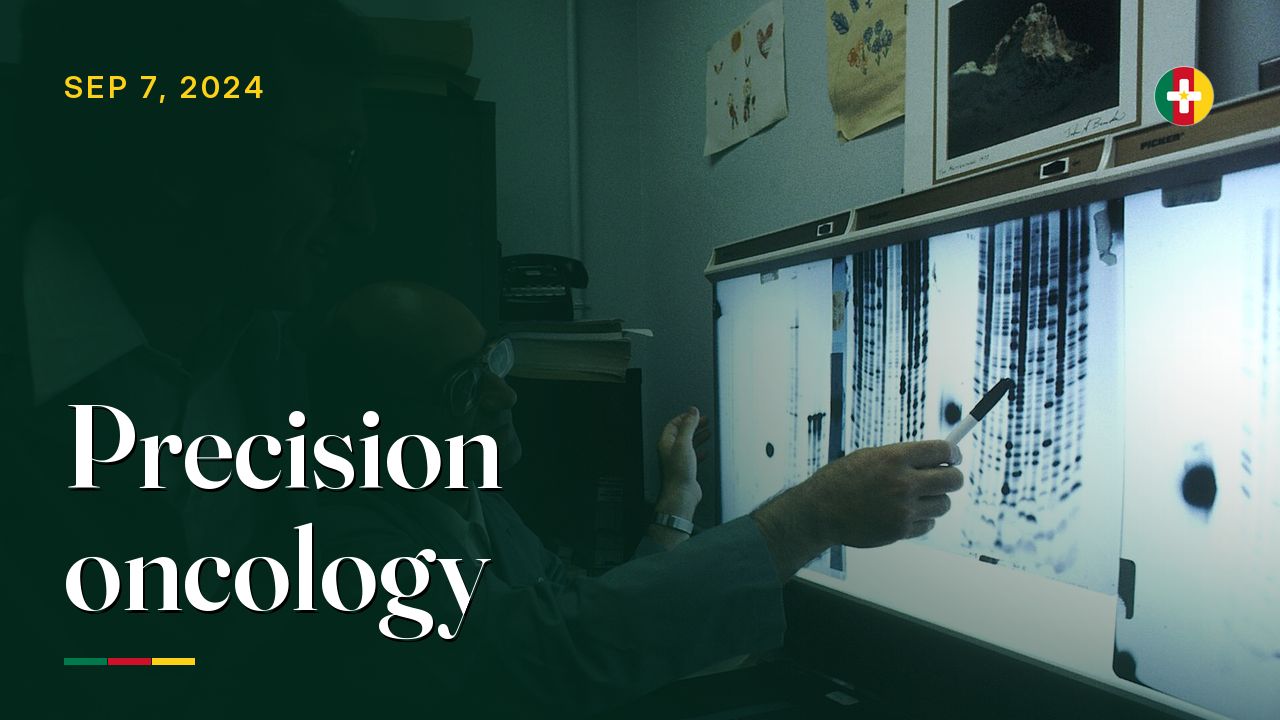
Precision Oncology in Cameroon: Starting with the Basics
Overview
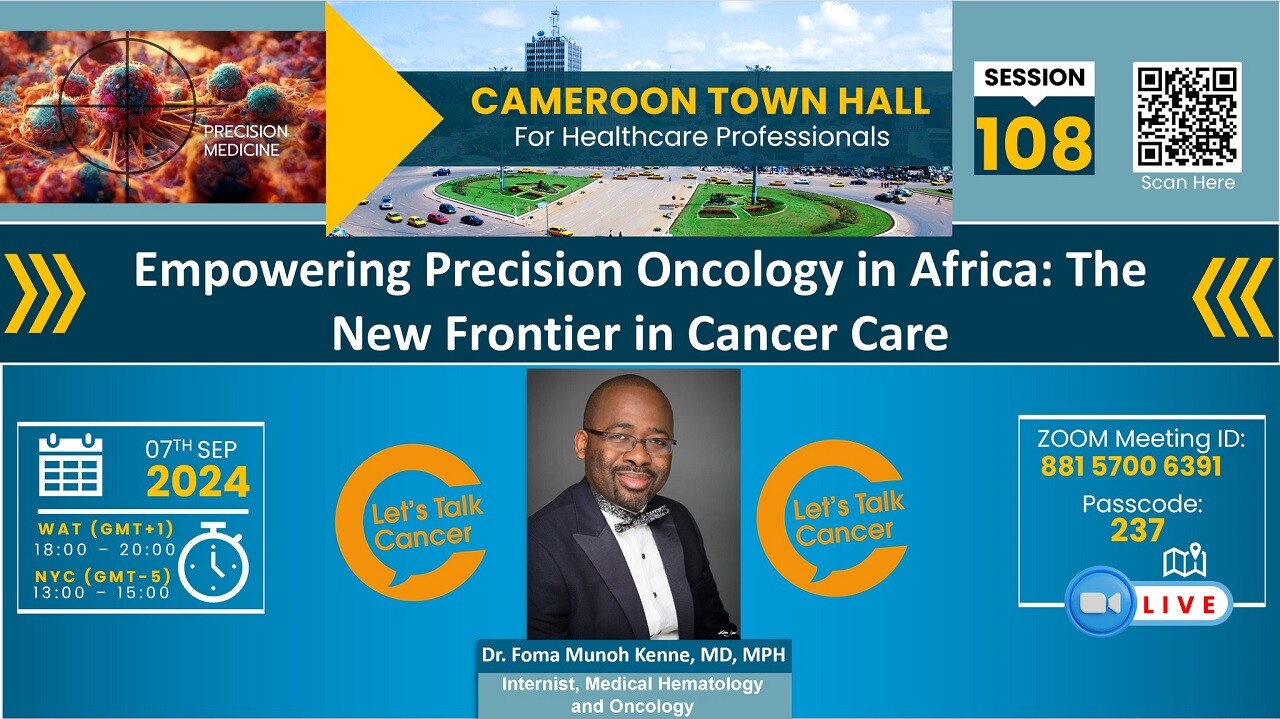
This policy briefing synthesizes key insights from the Cameroon Townhall for Healthcare Professionals meeting held on September 7, 2024, focusing on the theme "Empowering Precision Oncology in Africa: The New Frontier in Cancer Care," presented by Dr. Munoh Kenne Foma, Chair of the town hall.
Context
Breast, cervical and prostate cancer are the most common cancers in Cameroon, and all can be treated more effectively and often more cheaply when the tumour is properly characterised. Yet most cancers never receive a pathology diagnosis and very few breast cancers are tested for hormone receptors or HER2.
Key issues
- Diagnosis. Fewer than 20% of cancers are confirmed by histopathology and fewer than 10% of those get receptor testing; HER2 testing is concentrated at Centre Pasteur or sent abroad.
- Wrong treatment. Patients receive chemotherapy or surgery they may not need because tumours are not characterised or staged.
- Workforce. About 0.25 pathologists per million people, few radiation oncologists, two working linear accelerators, and limited palliative care.
- Access to drugs. Most targeted drugs and all immunotherapy are unavailable; patients import from India or travel.
- Research. Africa is largely absent from cancer trials, so evidence does not reflect its patients.
Discussion highlights
- Receptor testing costs (86,000 at Mbingo; about 172,000 FCFA elsewhere) are far lower than the cost of unnecessary chemotherapy.
- Mbingo was cited as a model of good practice despite long turnaround times for tests sent abroad.
- Speakers called for registries, trial readiness and use of COVID-era sequencing machines for cancer.
- AI and collaboration between hospitals were seen as ways to close the gap.
Recommendations
- Make tumour characterisation standard. MINSANTE and hospitals should require histopathology for every suspected cancer and every surgical specimen, and hormone receptor and HER2 testing for every breast cancer before treatment. First step: a national directive and a price-capped testing package at regional hospitals.
- Build immunohistochemistry capacity in the regions. MINSANTE, university hospitals and private partners should set up quality assured immunohistochemistry in each major cancer centre, starting with Douala and Yaoundé public hospitals, with sample transport from the North West and South West. First step: equip one public laboratory and link Mbingo and Bamenda to it.
- Use existing sequencing machines for cancer. The national public health laboratory and reference hospitals should assess using COVID-era sequencing platforms for cancer panels, with diaspora bioinformatics support.
- Train pathologists, oncologists and palliative care teams. Training schools should expand pathology and radiation oncology posts and add palliative care training; diaspora specialists can teach through the Give Back Project. First step: incentives for residents choosing pathology.
- Create a cancer registry and prepare for trials. MINSANTE, ethics committees and universities should support an electronic cancer registry and simplify approval for oncology trials, including phase four studies. First step: a registry pilot at Mbingo and one public hospital.
- Negotiate access to essential targeted drugs. MINSANTE should prioritise off-patent targeted drugs (imatinib, tamoxifen, aromatase inhibitors, trastuzumab biosimilars, rituximab) on the essential medicines list and negotiate bulk prices.
Next steps
The town hall planned its next session in two weeks. The Chair said he intends to invest in an immunohistochemistry laboratory to make testing available in the regions.
Conclusion
Precision oncology in Cameroon starts with basic pathology and receptor testing, which save money and lives now. Participants agreed that collaboration, data, training and targeted investment can close a gap that looks wide but is not out of reach.
Meeting minutes
Agenda
- Welcome by the moderators, Elvis Ndansi, Dr. Bryan Tegomoh and Dr. Katte Jean-Claude
- Presentation by Dr. Munoh Kenne Foma on precision oncology in Africa
- Comments by the moderators
- Discussion and Q&A
- Closing remarks and parking lot
Opening remarks
- Elvis Ndansi opened during half time of a Cameroon football match and noted that the recording would be available on YouTube for those who missed it.
- Dr. Tegomoh said precision medicine has advanced in North America and Europe, recalled efforts by Prof. Christian Happi in Nigeria and a team in South Africa to build African genomic databases, and asked what holds Cameroon back.
- Dr. Katte Jean-Claude said oncology has led precision diagnosis and therapy for years and that the same approach applies elsewhere, including diabetes, given how differently diseases present across populations.
Presentation
1. Two patient stories
Dr. Foma described a young woman from the North West referred to Yaoundé with chronic myeloid leukaemia who was diagnosed late and died without ever receiving imatinib, a targeted drug available for more than 20 years. He contrasted this with a US patient with metastatic ALK positive lung cancer who developed brain disease after eight years on alectinib and was about to be sent to hospice; next generation sequencing guided a switch to lorlatinib and she was disease free a year later. He said the road to precision medicine in Africa is still empty.
2. Cancer in Cameroon and access to care
He said the most common cancers in Cameroon are breast, cervical and prostate, all of which can be treated with precision approaches. He said only four regions have real cancer treatment capacity: the North West (two main centres run by Baptist and Catholic health services), the South West (the Baptist hospital at Mutengene), Douala (Laquintinie, the General Hospital and the Baptist hospital) and Yaoundé, where the Chantal Biya Foundation is the key centre for children.
3. The basics are missing
From his literature review he said fewer than 20% of cancers in Cameroon are confirmed by histopathology, fewer than 10% of those get oestrogen and progesterone receptor testing, and HER2 testing is done in the country only at Centre Pasteur, while Mbingo sends samples to the US. Since about 80% of breast cancers are hormone receptor positive and many do not need chemotherapy, treating most patients with chemotherapy without testing is the wrong paradigm. First line treatment for these patients is a CDK4/6 inhibitor with an aromatase inhibitor; in a Nigerian case he followed, only palbociclib was available, at more than a million a month.
4. From organ to mutation
He explained that cancer is now treated by its driver rather than its organ. In non-small cell lung cancer, more than half of patients have a targetable mutation (EGFR, ALK, KRAS G12C, RET, MET and others), with further testing for PD-L1, tumour mutation burden and mismatch repair. Trastuzumab deruxtecan now has a tumour agnostic approval for HER2 expressing cancers, and antibody drug conjugates such as enfortumab vedotin have changed bladder cancer care. Next generation sequencing (DNA and RNA panels), and liquid biopsy of circulating tumour DNA, guide treatment and detect resistance and minimal residual disease.
5. Immunotherapy and cell therapy
He described checkpoint inhibitors that block the PD-1 and PD-L1 'do not kill me' signal (pembrolizumab, nivolumab, atezolizumab, durvalumab and others) and CTLA-4 inhibitors, and gave examples of patients with oesophageal, endometrial and MSI-high gastric cancer alive years after treatment. He said immunotherapy is not available in Cameroon and is hard to import and store. He also outlined CAR-T cells and bispecific antibodies. He recalled that Prof. Victor Anomah Ngu won a Lasker award for work on lymphoma in Nigeria in the 1960s.
6. Africa left out of trials and supply
He said 99% of the FDA approved targeted drugs on his slides are not found in West Africa, prices run to millions of CFA francs, and patients who can afford it go to India. Africa is absent from most trials, such as those for new KRAS drugs, so it gets last access. Radiotherapy, first recognised in 1903, is still barely affordable 101 years later, with old machines. He acknowledged competing priorities (malaria, schistosomiasis, onchocerciasis, childhood pneumonia, diabetes, hypertension) but said breast and other cancers cannot be ignored.
7. Limits of precision medicine
He noted that a first biopsy may not reflect the cancer at progression, that tumours are heterogeneous, that driver, passenger and bystander mutations must be distinguished, that resistance always develops, and that immunohistochemistry is done properly in few African laboratories. Training oncologists without radiation oncology or modern pathology does not prepare them for 21st century care.
Discussion and Q&A
- Dr. Katte Jean-Claude and Dr. Tegomoh: what does this gap mean? Dr. Katte said the talk left a sense of sadness at the distance to cover. Dr. Tegomoh noted that fewer than about 2% of clinical trials take place in Africa, so the data behind these drugs do not represent African genetic diversity, and that even basic diagnostics are lacking, with HER2 samples sent from Centre Pasteur or abroad.
- A clinician: what can Cameroon do now? He said precision medicine means precise diagnosis first, and that hormone receptor testing can be done in Cameroon even if it takes time; in the US too there is a delay between diagnosis and treatment to complete the work up. Precise diagnosis also shows when not to treat. Targeted radiotherapy, such as partial prostate treatment, improves quality of life. He cited costs of about 120,000 FCFA for HER2 and 26,000 FCFA each for oestrogen and progesterone receptors, about 172,000 FCFA in total, and said the data generated would help attract funding. Mbingo reported in the chat that it runs ER, PR, HER2 and Ki-67 for 86,000.
- Dr. Tegomoh: tumour agnostic therapy, trials and the risk of a health divide Dr. Foma said PD-L1 is an imperfect marker; MSI-high tumours respond to immunotherapy whatever their PD-L1, with tumour agnostic approvals for pembrolizumab and dostarlimab, and NTRK fusions also have agnostic approval (a 25-year-old sarcoma patient responded to larotrectinib). He said Africa needs a trial-friendly environment, trained investigators and ethics committees, and its own investment, noting that EGFR mutations occur in about 50% of lung cancers in China against about 20% in the US. Without universal coverage, precision medicine will deepen the divide, as it does within the US; Africa could follow the HIV model, when South Africa insisted on generic drugs.
- Dr. Marthe-Sandrine Mpollo: is a divide always bad? She said patients who can afford treatment generate data that can draw partners in, and proposed incentivising doctors to document care in an electronic registry, with AI to structure the data. She cited the mPharma and Roche HER2 breast cancer programme in Nigeria and said the problem for pharmaceutical companies is finding patients.
- Dr. Ntumsi Tontu (Mbingo): what are the greatest needs? He said Mbingo has on-site pathology but must send samples abroad for receptor testing, which can take months and depends on volunteers carrying samples, worsened by the sociopolitical crisis, so treatment often starts before results. HER2 targeted drugs bought from India cost 250,000 to 500,000 per dose depending on weight. He said most young women seen with breast cancer in their 30s and 40s have triple negative disease. Dr. Foma called Mbingo the best oncology centre in Cameroon.
- A recently qualified doctor who studied breast cancer at Centre Pasteur: what can be done for terminal patients, and how do we attract young doctors to oncology and pathology? He said Cameroon has about 0.25 pathologists per million people, that receptor testing at Centre Pasteur is often skipped because patients cannot pay, and that peers see oncology as discouraging. Dr. Foma warned against unnecessary surgery (mastectomy or prostatectomy in metastatic disease) and said fewer than 10% of surgical specimens are sent for pathology. He said testing is cheaper than wrong treatment: a hormone positive patient may need only an oral hormonal drug at under 50,000 a month rather than costly chemotherapy. He called for palliative care training and said oncology is a rewarding specialty.
- A UK-based Cameroonian doctor: how should Africa use limited resources strategically and become a producer rather than a buyer? He cited mobile money as an African innovation. Dr. Foma said AI can help close the gap and should be embraced. He called for a 'Rwanda revolution' of investment and accountability, using COVID-era sequencing machines for cancer, accepting diaspora teachers, collaboration between hospitals (for example surgery in Bamenda and radiotherapy in Yaoundé), simpler research regulation, and fewer new medical schools with better training.
Calls to action and closing
- Dr. Katte Jean-Claude closed by saying Africa has the widest genetic diversity, that some precision medicine is already practised (for example recognising haemoglobinuria in malaria and avoiding quinine), and that technology can close the gap.
- The next session was set for two weeks later, followed by a parking lot discussion.
Next meeting
In two weeks (late September 2024); topic not announced.
Submitted by the Co-Moderators, Cameroon Town Hall for Healthcare Professionals.