A Roadmap to Sickle Cell Disease Elimination in Cameroon by 2060
Overview
This policy briefing synthesizes key insights from the Cameroon Townhall for Healthcare Professionals meeting held in early 2024, focusing on the theme "Roadmap to Sickle Cell Disease Elimination in Cameroon by 2060: Strategies, Action and Policy Priorities," presented by Dr. Yauba Saidu, Country Director of the Clinton Health Access Initiative in Cameroon.
Context
About 7,000 children are born with sickle cell disease in Cameroon each year, most diagnosed only around age four, and most children with the disease in Africa die before five. Cameroon has a clinical guideline but no national sickle cell strategy, no dedicated budget line and no indicators in its health information system.
Key issues
- No systematic screening. Newborn, antenatal and premarital screening are largely absent; testing is centralised in Yaoundé and costs families 7,000 to 20,000 FCFA.
- Weak governance and data. Only a small, largely non-functional Ministry unit, a guideline of uncertain use, and no DHIS2 indicators.
- Care out of reach. Few dedicated units, mostly urban; hydroxyurea and morphine not reliably available; 82% of children missing recommended vaccines; costs paid out of pocket.
- Knowledge gaps. About 14% of physicians had adequate knowledge in one study, and few university students know their genotype.
- Diagnostic accuracy. Basic electrophoresis misses variants and thalassaemia traits.
Discussion highlights
- A low cost point of care test could make screening possible at health centres.
- Informed choice through counselling, not restrictions on marriage, was agreed as the basis of prevention.
- Gene therapy at $2 million to $3 million per patient was judged out of reach; hydroxyurea and basic care come first.
- Integration into existing programmes was seen as the cheapest route.
- Short videos in local languages and messages through religious leaders were proposed.
Recommendations
- Adopt a national sickle cell strategy. MINSANTE should adopt a sickle cell disease strategy based on the WHO AFRO strategy, with a functional coordinating unit, a budget line and tracking of disbursement. First step: a working group of MINSANTE, CHAI, civil society and diaspora haematologists to draft it.
- Screen at existing touch points. Regional delegations and health districts should offer point of care screening at antenatal visits, vaccination contacts (including six weeks), school health programmes and before marriage, with confirmation testing. First step: pilot the point of care test in the CHAI sentinel health centres.
- Secure essential commodities. MINSANTE and partners should ensure continuous supply of hydroxyurea and morphine, safe blood, and pneumococcal and meningococcal vaccines for affected children, using volume guarantees to negotiate prices, and should include sickle cell care in the universal health coverage package.
- Train and decentralise care. Training schools and medical faculties should add sickle cell disease to pre-service curricula for doctors, nurses and community health workers, including counselling and psychosocial support, while care is integrated at health centre level. Diaspora haematologists and paediatricians can support training.
- Count cases and deaths. MINSANTE should add sickle cell indicators (cases, admissions, causes of death, screening) to DHIS2 and train staff to report them.
- Inform communities. Civil society, religious, traditional and municipal leaders, and the town hall should spread simple messages on knowing one's genotype, in local languages, through radio, WhatsApp and short videos.
Next steps
Dr. Saidu said a manuscript on the state of sickle cell care in Cameroon and a call to action on elimination by 2060 were being prepared, drawing on the presentation and participants' comments. He invited a UK participant to document the reliability of sickle cell results from African laboratories.
Conclusion
Participants agreed that sickle cell disease in Cameroon is neglected but can be brought under control with low cost measures: knowing one's genotype, screening at existing contacts, and reliable access to vaccines, hydroxyurea and pain relief. Elimination by 2060 was presented as ambitious but possible if these are put in place now.
Meeting minutes
Agenda
- Welcome and opening remarks by Elvis Ndansi, Dr. Bryan Tegomoh, Dr. Katte Jean-Claude and the Chair
- Introduction of the speaker by Elvis Ndansi
- Presentation by Dr. Yauba Saidu on a roadmap to sickle cell disease elimination in Cameroon by 2060
- Reactions from the moderators and the Chair, including on gene therapy
- Discussion and Q&A moderated by Dr. Katte Jean-Claude
- Closing
Opening remarks
- Elvis Ndansi welcomed participants and said the town hall had about 2,350 members across about 36 countries, meeting every two weeks. He recalled the previous session on the malaria vaccine by Dr. Boghuma Kabisen Titanji.
- Dr. Bryan Tegomoh said he looked forward to the speaker's vision for the ambitious goal of eliminating sickle cell disease. Dr. Katte Jean-Claude, joining from the United Kingdom, said the disease is strongly associated with people of African descent and needs a response on the continent.
- The Chair said Cameroon has no strategic plan for sickle cell disease, that the disease evolved alongside malaria, and that he treated more patients and gave better care in New York than in Cameroon; outside Africa, the Bronx has the highest concentration of patients. He noted the toll on infant, child and maternal mortality.
- Elvis Ndansi introduced Dr. Saidu, Country Director of CHAI in Cameroon, describing his work on medical oxygen during COVID-19, on malaria, and on negotiating prices of cancer medicines with the government.
Presentation
1. The disease and what prevents complications
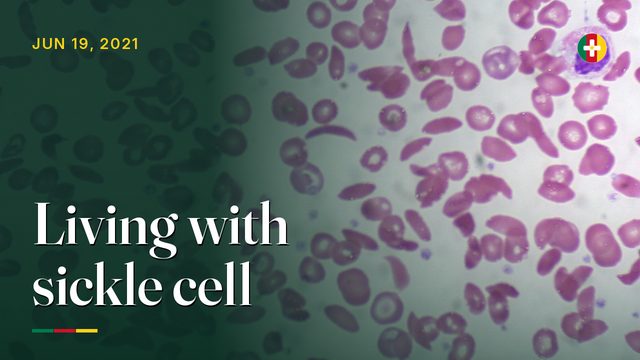
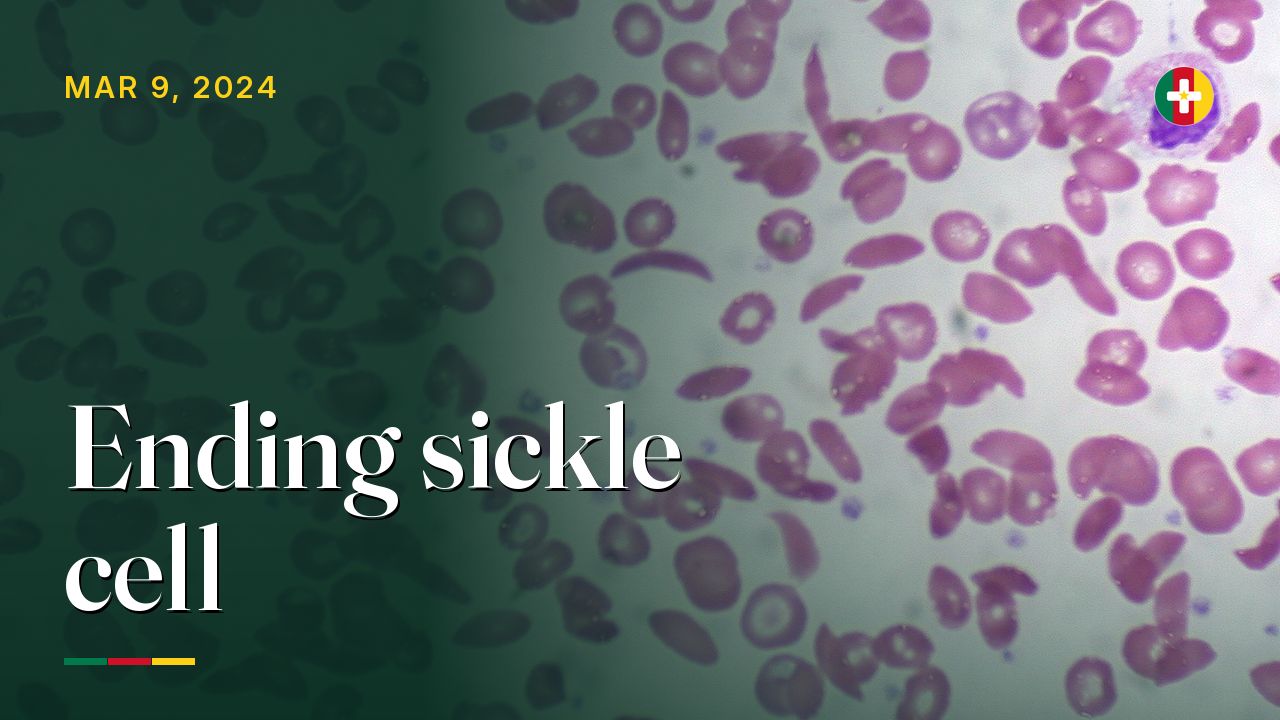
Dr. Saidu outlined sickle cell disease as a single amino acid change (glutamic acid replaced by valine at position six of the beta globin chain) that causes haemolysis, anaemia and vaso-occlusion, with complications in the lungs, brain, kidneys, eyes and spleen. Vaccination against pneumococcus and other encapsulated bacteria, eye screening, pain management and disease modifying drugs such as hydroxyurea prevent much of the harm, but uptake is low, morphine is hard to obtain, and gene therapies remain out of reach.
2. Burden and the link with malaria
Over 500,000 children are born with the disease each year worldwide and 50 to 90% in Africa do not reach their fifth birthday. The distribution of the trait mirrors malaria because carriers (AS) are protected against Plasmodium falciparum. Haplotypes differ, and the speaker and the Chair said the Bantu and Cameroon haplotypes found in Central Africa are linked to more severe disease than the Senegal or Arab-Indian types. Because the burden is concentrated in Africa, market incentives for new diagnostics and drugs are weak.
3. Governance and screening gaps
His team reviewed 106 Cameroonian publications, interviewed stakeholders and analysed newborn screening pilots. Cameroon has a management guideline (last updated in 2021), but its availability and use in facilities are uncertain, and only a small, largely non-functional unit in the Ministry handles sickle cell disease. Systematic screening is almost absent: the largest pilot screened about 60,000 newborns in 2015 to 2016, out of about 1.1 million births a year, and the median age at diagnosis is about four years. The national reference laboratory in Yaoundé offers discounted testing for children under 15, but families elsewhere pay 7,000 to 20,000 FCFA. About 7,000 children are born with the disease each year in Cameroon.
4. Care, workforce and psychosocial support
Dedicated sickle cell units are few and concentrated in tertiary urban hospitals. A study of about 200 Cameroonian physicians found only about 14% had adequate knowledge, as pre-service training is limited. Psychosocial support for families is essentially absent, and families face stigma, including accusations of witchcraft. He called for care integrated into primary health care at health centre level and more haematologists and paediatricians trained in the disease.
5. Data and financing
The district health information system (DHIS2) has no sickle cell indicators, so deaths and their causes go unrecorded. Most spending is out of pocket and can push families into poverty. A study found 82% of children with the disease had not received recommended pneumococcal and meningococcal vaccines. He proposed adding screening and care to the universal health coverage package, a budget line with tracking of disbursement, and noted the health budget had fallen from about 6% to about 5% of the national budget against the 15% target.
6. Opportunities
He pointed to the WHO AFRO sickle cell strategy, a new point of care test giving results in about five minutes for about $2 to $3, school health clubs, premarital screening through religious, traditional and municipal authorities, the Lancet Commission on sickle cell disease, and funding from Open Philanthropy. He said volume guarantees could encourage manufacturers to supply hydroxyurea at low prices, and that existing programmes (community health workers, antenatal care, HIV, the Expanded Programme on Immunization, oxygen, CHAI sentinel sites for malaria and congenital syphilis) could add screening and care at little extra cost, including a life course vaccination platform for boosters after 15 months.
7. Three steps to elimination
His roadmap: first, 'close the tap' by helping people know their haemoglobin genotype from school age and before marriage so that couples can make informed choices, preventing many of the 7,000 annual births with the disease; second, prevent deaths in children who are born with it through vaccines, nutrition, eye care, hydroxyurea, morphine and safe blood; third, introduce curative therapies when affordable. He asked that town hall talks be turned into short videos for TikTok and WhatsApp in simple English, French and Pidgin, citing Dr. Titanji's Pidgin video on the malaria vaccine, and said he writes sermons on health for religious leaders. He named Dr. Makia Christine Masong, Françoise Nwabufo and his colleague Michael among a growing group of advocates, and said a manuscript and a call to action were being prepared from the presentation and the discussion.
Discussion and Q&A
- Dr. Tegomoh: what does the recent US approval of gene therapies mean for Africa? The Chair said two therapies were approved, one using CRISPR gene editing and one a lentiviral vector, at about $2.4 million to $3 million per patient, and that even in the US few can afford them. At the American Society of Hematology meeting the main question was who would pay. Only three centres in Africa (in Nigeria, Namibia and South Africa) were said to perform bone marrow transplants, and gene therapy also requires chemotherapy conditioning. He said this is not the way forward for Cameroon now.
- Dr. Katte Jean-Claude: how does the new point of care test work? Elvis Ndansi said it is a finger prick rapid test, similar to an HIV test, that distinguishes AA, AS and SS in minutes for less than $2, with trials reporting 100% sensitivity. Dr. Saidu added that it also estimates the proportion of haemoglobin, which can guide decisions on transfusion at primary care level.
- A paediatrician in the United Kingdom: is 'elimination' the right goal, when median survival in the UK is close to that of the general population and results from African laboratories are often wrong? The paediatrician said people should know their status to make informed decisions, but advising people not to marry or have children raises ethical questions, and the focus should be on better care. Dr. Saidu said that in Cameroon the disease is still largely a death sentence, with about 90% of affected children dying before five, and that his proposal is informed choice through counselling, not a ban. He invited the paediatrician to document how often African test results are reversed in the UK. The Chair said his oldest patient is 88, that survival varies by haplotype, that Cameroonian laboratories mostly use basic haemoglobin electrophoresis while the UK uses high performance liquid chromatography and genetic testing, and that he estimated median survival at about 18 years in Nigeria and 19 in Cameroon. In the UK, all pregnant women and newborns are tested.
- Dr. Tegomoh: which partnerships matter most for scaling up screening? And what did the American Society of Hematology say about priorities for Africa? Dr. Saidu named government, civil society, patient and family groups (citing the role of HIV patient movements), philanthropic and women's and children's organisations, manufacturers, religious and traditional institutions, and development banks shown the economic cost of the disease. The Chair said sickle cell disease became a priority for the American Society of Hematology from 2017 and that US public funding had supported several new drugs, but manufacturers rarely prioritise Africa.
- A question from the chat (Dr. Ronald Gobina): how is malaria related to sickle cell disease? The Chair explained that the mutation arose many times, but in Africa falciparum malaria favoured carriers (AS), while AA children died of malaria and SS children of sickle cell disease. As malaria is eliminated the advantage disappears and the trait slowly declines, as seen in Brazil, but this takes a very long time, so screening and informed choice are needed.
- Franklin Maloba: how can an AA mother have a child with sickle cell disease, and does bone marrow transplant change the stem cell niche? The Chair said such cases usually involve an untested thalassaemia trait (sickle beta or alpha thalassaemia) or other haemoglobin variants, which basic testing misses, and that many doctors in Cameroon are not aware of this. He described haemoglobin C, E and other variants and referred to the research of Prof. Ambrose Wonkam.
Calls to action and closing
- Elvis Ndansi thanked the speaker for a presentation of about 90 minutes that kept about 50 to 55 participants throughout, and noted that the town hall meets every second Saturday at 1 p.m. Eastern Time (7 p.m. Cameroon time).
Submitted by the Co-Moderators, Cameroon Town Hall for Healthcare Professionals.