The Cameroon Town Hall at 100 Sessions: Turning Dialogue into Policy
Overview
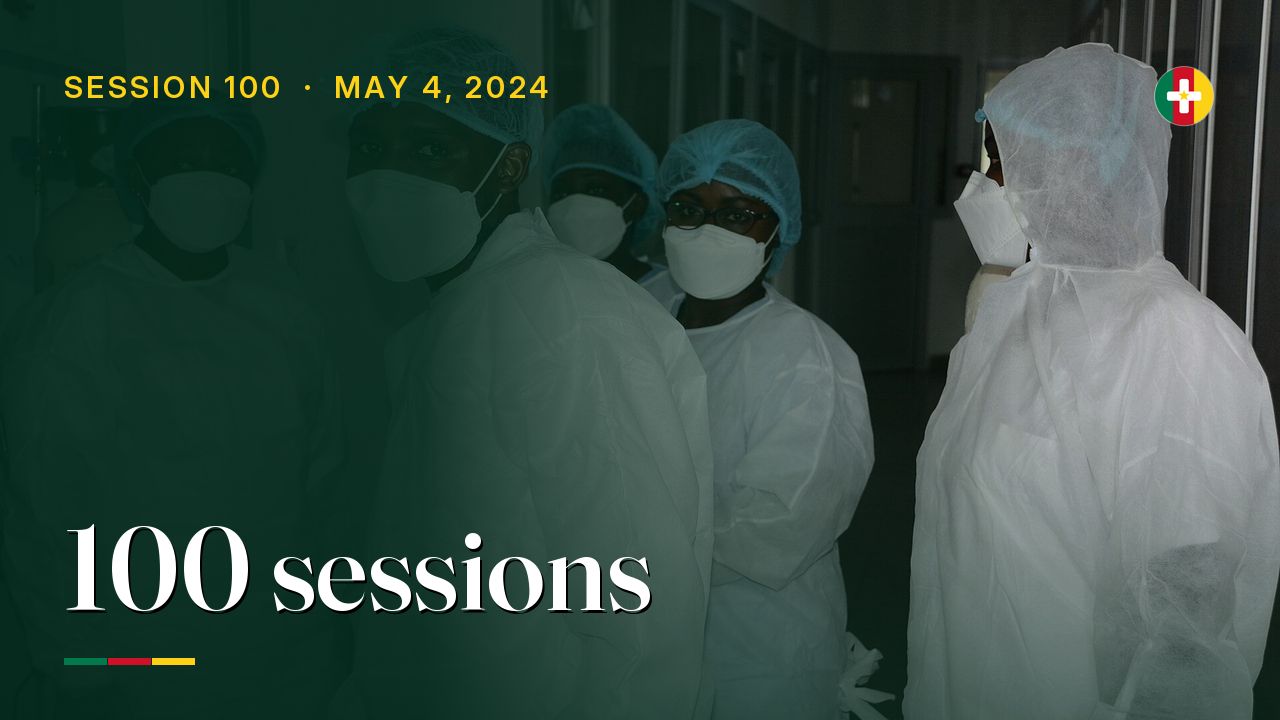
This policy briefing synthesizes key insights from the Cameroon Townhall for Healthcare Professionals meeting held on May 4, 2024, the 100th edition, a reflection session on the town hall's history, impact and future direction.
Context
Since early 2020 the town hall has met every two weeks, first to support the COVID-19 response and then on a wide range of health topics. It has hosted the Minister of Public Health twice and led to a ministerial working group on cooperation with the diaspora in health. Participants used the 100th session to ask how its discussions can produce change on the ground.
Key issues
- From discussion to implementation. Policy briefs are now drafted for each session, but participants asked how they are delivered and whether they are acted on.
- A weak formal link with the Ministry. The working group exists, but its channel for receiving diaspora proposals (a planned website) and its budget were still being finalised.
- Sustainability of the platform. The town hall relies on a small group of unpaid volunteers; few of its members have come forward to help.
- Capacity gaps at home. Speakers cited missing tests (sequencing, basic breast cancer markers), staff turnover and broken equipment, and unemployed graduates who could fill gaps.
Discussion highlights
- Broad support for a short participant survey to guide the format, frequency and topics of future sessions.
- Calls for a six month topic calendar, with topics drawn from needs raised in Cameroon.
- Proposals for a theory of change and for tracking what happens to each policy brief.
- Interest in a physical presence in Cameroon, balanced by the Chair's view that the town hall should stay focused and partner with others.
- Examples of impact: the diaspora working group, DAC-Africa coming to Cameroon, a regional tumour board, and facility authorisations.
Recommendations
- Open a formal channel for town hall policy briefs. MINSANTE and the working group on cooperation with the diaspora should launch the planned website and name a focal point to receive each session's brief and reply on its status. First step: the town hall sends its backlog of briefs through the working group rapporteur and logs each one.
- Fund and convene the working group. MINSANTE should finalise the working group's budget and hold its plenary meeting so that technical proposals can be decided. First step: publish the group's annual programme of activities as its founding decision requires.
- Set the agenda from needs in Cameroon. Regional delegations, district medical officers and hospitals should be invited to submit the topics on which they want diaspora input, and the town hall should publish a six month calendar. First step: a short request sent to the ten regional delegations.
- Make diaspora teaching count. Training schools, medical and nursing student associations and the Give Back Project should set up regular courses (for example ECG interpretation) and seek CME recognition for participation. First step: one pilot course with a medical school in Buea or Yaoundé.
- Track and report impact. The town hall should run its participant survey, adopt a simple theory of change, and report each year which briefs were delivered and what followed. First step: deploy the survey and present results at a session.
Next steps
The moderators committed to a participant survey (with a volunteer leading its design), to bringing results back to the town hall, and to continuing sessions every two weeks in the meantime.
Conclusion
Participants agreed that the town hall has built trust with the Ministry and real relationships across the diaspora. The next stage is to make that trust count: a formal route for its policy briefs, topics set by needs in Cameroon, and a sustainable base of volunteers.
Meeting minutes
Agenda
- Welcome and purpose of the 100th session by Dr. Bryan Tegomoh
- Opening remarks by the Chair, Dr. Munoh Kenne Foma: the origin of the town hall
- Reflections on translating town hall discussions into policy
- Open discussion: participant reflections and proposals for the future of the town hall
- Closing round by the moderators and the Chair
Opening remarks
- The session marked the 100th edition of the Cameroon Town Hall. There was no guest speaker; the session was set aside to reflect on the history of the town hall and its direction for the coming years.
- Dr. Tegomoh recalled that the town hall had met every two weeks since early 2020, when it was created to bring clinical and public health expertise from across the world to Cameroon's COVID-19 response, and that it had grown to several thousand participants.
- The Chair joined from his cousin's wedding near Hot Springs, Arkansas. He said he sees new faces at every session and a shared drive, in Cameroon and abroad, to collaborate, to facilitate, and to hold the administration accountable. He stressed equity: a person in a remote district should have the same access to care as a person in Yaoundé or Douala.
- Asked about the early days, the Chair described New York hospitals saturated within two weeks in February and March 2020, with no known treatment, and veteran physicians saying they had seen nothing like it. The town hall began as a platform to share what was being learned with colleagues in Cameroon. He showed slides from the third session, held when Manu Dibango died, with case projections and early discussion of steroids.
Presentation
1. Lessons from the pandemic
Dr. Tegomoh said COVID-19 showed that infectious disease does not respect borders and that every country needs health security capacity. He cited genomic sequencing, which tracked variants during the pandemic and now supports surveillance of mpox, enteric diseases such as salmonella and shigella, cholera and hospital acquired infections. He noted the previous session on pharmaceutical access by Dr. Alain Abeh and the continued difficulty of getting therapeutics, monoclonal antibodies and vaccines to Africa.
2. Value of the town hall to members
Dr. Samuel Ndinjiakat said the town hall is the one forum where diaspora professionals receive expert, Cameroon specific continuing education, together with updates from regional delegates, district medical officers and people on the ground. He noted that the Minister of Public Health came to the town hall twice, chose it to announce changes to universal health coverage, and then created the working group on cooperation with the diaspora, for which he serves as rapporteur.
3. Policy briefs and minutes
Dr. Tegomoh showed the policy briefings now drafted for each session: a one page summary of the key points meant for the Minister and policy makers, who rarely have time to read full minutes, alongside archived meeting minutes. The aim is to go back and produce these for every session. The Chair cited the colon cancer session as an example, where the brief proposed feasible steps such as stool based testing with colonoscopy for those who test positive, and training gastroenterologists for regional referral points.
4. From evidence to implementation
The Chair said research alone does not change policy and that findings from the UK or US cannot simply be pasted into Cameroon. Dr. Tegomoh noted that sequencing costs have fallen sharply, so far more data is generated than is turned into action; he cited the slow genetic characterisation of the mpox virus in the DRC. Closing that gap requires community health workers, field staff, professors and policy makers to work together.
5. Impact so far
Elvis Ndansi said the Minister twice took unscripted questions, created the diaspora committee as promised and appointed town hall members to it. The Chair said a decree signed by the Prime Minister created a diaspora forum, that the DAC-Africa project came to Cameroon through the town hall, and that health centres had opened after town hall members intervened. He credited the Northwest and Southwest regional delegates and the Bamenda Regional Hospital, which runs a tumour board with Mbingo Hospital. Dr. Samuel Ndinjiakat said a member's imaging centre was authorised because the Minister trusts the town hall.
6. A volunteer, unpaid model
Elvis Ndansi said the town hall runs on volunteers, has never raised money, and that the Chair's rule is that it must never be monetised. A general assembly once voted to keep sessions every two weeks rather than monthly. He said that out of about 2,350 members, no one had yet come forward to offer help with moderation or IT, and that the Chair had not missed one of the 100 sessions.
Discussion and Q&A
- Dr. Joshua Tambe, radiologist in oncology imaging: how do research findings become policy in Cameroon? He said some initiatives work only once they are proven on the ground and then adopted from the top. He warned that policy briefs may end up on ministry shelves, recalled a University of Buea meeting where the Ministry of Economy and Planning asked researchers to align with national development plans, and said staff turnover and broken equipment mean projects such as standardised RECIST reporting keep starting from zero.
- Dr. Ivo Che Ditah: what should the town hall do next? He called for a situational analysis of form and content. On form: attendance trends, who attends, and whether sessions should be weekly, fortnightly or monthly, all answerable by a short survey of participants. On content: the link with the Ministry is not strong enough; for example, he said sequencing is not done in Cameroon and basic breast cancer markers (ER, PR, HER2) are often unavailable. He asked for topics to be scheduled well ahead and for the town hall to report which policy papers were delivered and what came of them.
- Response from the moderators The Chair said attendance has stayed steady at about 50 and sometimes 100 to 200, and committed to a survey. Elvis Ndansi proposed a panel to plan six months of topics in advance across regions, with topics drawn from needs raised in Cameroon (the Ministry, district doctors) rather than chosen by moderators. Dr. Tegomoh invited a volunteer to build the survey, for example on REDCap.
- Franklin Maloba: how can the town hall reach further? He asked for more presenters from Cameroonians in Asia and Europe (including in AI and pathology), outreach to clinics so their nurses and lab staff attend relevant sessions, a plan for implementing policy proposals, capacity building that puts unemployed young graduates to work on identified gaps, and funding links for PhD students, citing his own malaria PhD that stalled for lack of about 15 million. He also asked whether the Ministry offers incentives for specialists abroad to return.
- Dr. Samuel Ndinjiakat: what is the working group doing? He said the technical team is active, the Minister is setting up a website through which diaspora proposals and town hall policy briefs will reach him directly, and the group's budget was being considered at a meeting two weeks earlier. A channel for diaspora support to students in Cameroon was expected within three to four months.
- A school health and nutrition researcher at LSHTM: what should the town hall's strategy be? He proposed teach and learn sessions on core topics, research that answers community needs, emergency preparedness lessons from COVID-19, and a theory of change setting out whom the town hall engages, how, and through which impact pathways. He reported that a World Cancer Research Fund supported collaboration is creating five nutrition centres of excellence in Africa, one to be hosted in Cameroon, with three Cameroonian students to be trained in the UK.
- A participant: should the town hall become an implementing body? He proposed pausing new topics until a road map is agreed, and establishing a physical association in Cameroon to act as an implementing partner for research, policy follow up and interventions, able to seek grants. The Chair replied that sessions will continue while improvements are made, that the future is hybrid, and that the town hall should focus on what it does best and partner with groups such as the American Association of Cameroonian Physicians and CamDoc UK.
- Dr. Marthe-Sandrine Mpollo: how can the town hall keep its focus and grow its impact? She urged the town hall to stay focused on knowledge sharing, to define needs first and then match them to available science, to map the health system so people outside medicine (for example in tech) can see where to help, to share session highlights as short videos on TikTok and YouTube to build public trust, and to make volunteering sustainable by giving partner organisations roles such as co-moderating or analysing the survey.
Calls to action and closing
- Dr. Katte Jean-Claude said the town hall belongs to everyone and should add only work closely tied to its mission, while continuing to partner with other organisations.
- Dr. Samuel Ndinjiakat thanked participants for their criticism and invited suggestions at any time.
- The Chair thanked the volunteer who built the survey, past moderators including Louisa Viban and Dr. Christelle Jouego Tagne (who moderated in French), and the more than 3,000 Cameroonians who have taken part.
- The Chair promoted the Give Back Project, inviting diaspora members to offer something small, such as lectures or a month long ECG course for medical students in Buea or Yaoundé, and called on student and nursing organisations to show their commitment.
- The Chair said CME credits for town hall participation were being pursued.
- Sessions will continue every two weeks while the survey is run and results are brought back.
Next meeting
In two weeks (May 18, 2024 per the town hall's records).
Submitted by the Co-Moderators, Cameroon Town Hall for Healthcare Professionals.