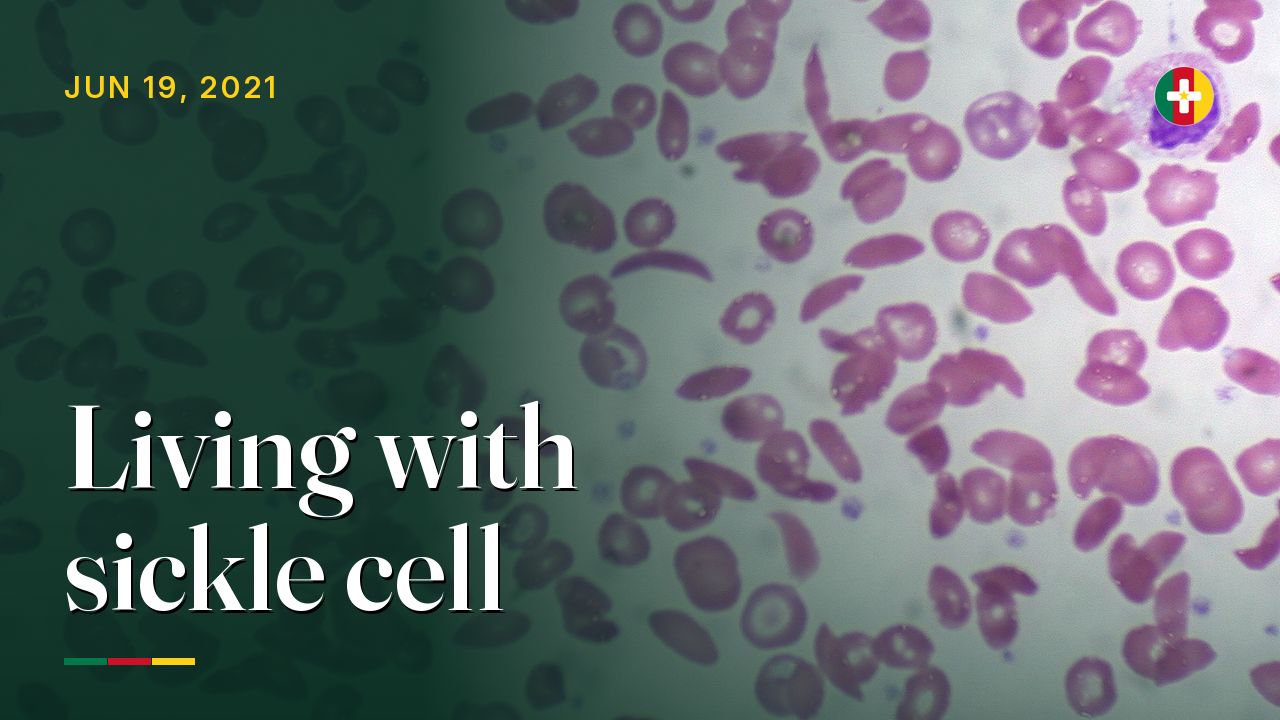
Sickle Cell Disease in Cameroon: Closing the Gaps in Screening, Treatment and Care
Overview
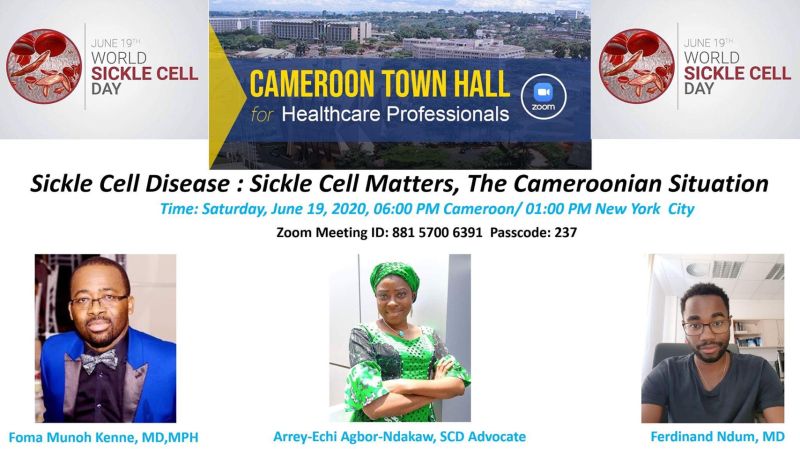
This policy briefing synthesises key insights from the Cameroon Townhall for Healthcare Professionals meeting held on June 19, 2021, World Sickle Cell Day, focusing on sickle cell disease in Cameroon, with a presentation by Dr. Munoh Kenne Foma and testimonies from advocate Arrey Echi and Dr. Ferdinand Ndum.
Context
About 18 percent of Cameroonians carry the sickle cell trait and many children with the disease die young. Speakers described a disease neglected in training, research and financing, with patients and families carrying the cost of drugs, blood and hospital care.
Key issues
- No systematic screening. Pregnant women and newborns are not routinely screened, so most children are diagnosed only after complications.
- Access to hydroxyurea. Hydroxyurea is effective and generic but is sold only in specialty pharmacies at about 12,000 to 20,000 FCFA a month, and monitoring is rarely available.
- Weak acute care. Blood is hard to obtain, exchange transfusion is not available, pain is undertreated and analgesics run out of stock.
- Workforce and training. There are few adult haematologists, no pain protocols for primary care, and curricula give little weight to a common African disease.
- Stigma. Patients face beliefs that they are cursed or possessed, indifferent hospital staff and depression.
Discussion highlights
- Dr. Ndum's health changed once he had insurance, regular follow-up and hydroxyurea in Germany.
- Ghana screens all pregnant women; COVID-19 PCR capacity could support screening in Cameroon.
- Mayors could counsel couples about testing during marriage registration.
- Generic hydroxyurea could be procured at low cost if placed on the essential medicines list.
- Patient-led groups such as Joy2Endure Foundation are already distributing medicines and running sensitisation.
Recommendations
- Essential medicines listing. MINSANTE should add hydroxyurea to the national essential medicines list and supply it through public pharmacies at a fixed low price, with folic acid and penicillin prophylaxis. First step: a price and supply review with CENAME and partners.
- Newborn and antenatal screening. MINSANTE and partners should pilot newborn and antenatal screening in regional hospitals, using existing laboratory and PCR capacity, linked to early enrolment in care.
- Standard treatment protocols. MINSANTE, with paediatric and haematology societies, should issue national protocols for pain crises, acute chest syndrome and hydroxyurea monitoring, and train primary care staff to use them.
- Reference clinics. Each region should have a sickle cell reference clinic that follows patients from childhood to adulthood and trains students, with reliable blood supply.
- Training and empathy. Faculties of medicine, nursing and pharmacy should strengthen teaching on sickle cell disease and on respectful care of patients in pain.
- Awareness and partnership. Councils, schools and patient organisations should run sensitisation and voluntary testing; the Town Hall and diaspora professionals can support patient-led groups and approach manufacturers for donated drugs.
Next steps
Members were invited to support Joy2Endure Foundation's medicines, school and screening projects. The next Town Hall was set for July 3, 2021.
Conclusion
Sickle cell disease touches almost every family in Cameroon, yet care depends on what each family can pay. Low-cost steps (screening, hydroxyurea on the essential list, protocols and reference clinics) could change the outlook for children born with the disease.
Meeting minutes
Agenda
- Welcome and opening remarks
- Presentation by Dr. Munoh Kenne Foma on the science and management of sickle cell disease
- Testimony by Arrey Echi, sickle cell advocate and founder of Joy2Endure Foundation
- Testimony by Dr. Ferdinand Ndum on growing up with sickle cell disease in Cameroon and care in Germany
- Discussion and Q&A
- Closing remarks and next meeting
Opening remarks
- The session was held on World Sickle Cell Day and brought together clinical teaching, a patient advocate's testimony and a doctor's own experience of the disease.
- Elvis Ndansi moderated with Dr. Christelle Jouego Tagne, who summarised in French. Louisa Viban, Dr. Bryan Tegomoh and another co-moderator sent apologies.
Presentation
1. History and stigma
Dr. Foma explained that sickle cell disease was present in Africa for centuries, where children who repeatedly died young were thought to be cursed (the Nigerian 'ogbanje', a child who comes and goes). It was first described about a hundred years ago in a dental student from Grenada in Chicago, although Africans had lived in America for centuries without a diagnosis, which he presented as a sign that health is also political.
2. Genetics and the link with malaria
The disease results from a single amino acid change (glutamic acid replaced by valine) in the beta globin gene on chromosome 11. Carriers (AS) are protected from severe malaria, which explains why the trait persists where malaria is common; he put trait prevalence in Cameroon at about 18.2 percent. He explained inheritance risks for couples and noted that haplotypes differ (Benin, Bantu, Senegal, Cameroon, Arab-Indian), with the Bantu type producing the least fetal haemoglobin and the most severe disease.
3. Burden and survival
Africa carries about 80 to 90 percent of patients, and WHO reports about 300,000 affected births a year. He said the median age at death is about 18 years in Cameroon, 21 in Nigeria and 48 in the United States, and that most children in Africa die before their fifth birthday if untreated. Acute chest syndrome and infection are the main causes of death.
4. Complications and gaps in care
Sickle cell affects every organ: pain crises, acute chest syndrome, splenic sequestration, stroke, gallstones, kidney failure, priapism and eye disease. He listed gaps in Cameroon: no routine screening of pregnant women or newborns, unreliable blood supply (families paying 5,000 FCFA and finding donors), no exchange transfusion, limited X-ray and opioid access, and no adult haematologists in most hospitals. He advised half normal saline for hydration and pulse oximetry to detect acute chest syndrome.
5. Treatment options
Hydroxyurea, used for over 30 years, reduces crises by about 50 percent and should be offered to patients with more than three crises a year, from age two, with blood count monitoring; he noted the first large African trial came only in 2019. Newer drugs (L-glutamine, crizanlizumab, voxelotor) are largely unavailable in Cameroon. Bone marrow transplant from a sibling can cure young patients, and gene therapy, including CRISPR-based editing, has shown early success.
6. Research neglect
He contrasted about 28 approved HIV drugs in 40 years with four for sickle cell disease, three of them less than four years old, and said the American Society of Hematology had only recently made the disease a priority. He also described stigma in the US, where patients are labelled as seeking pain medication.
7. Arrey Echi: an advocate's view
Arrey Echi said community attitudes and hospital care remain poor, that even referral hospitals lack essentials, and that some general practitioners show little commitment to patients in crisis. She said hydroxyurea costs about 12,000 FCFA in Cameroon, out of reach for most. Her foundation began a medicines programme the previous year that had reached about 200 warriors, with another 200 planned that June.
8. Dr. Ferdinand Ndum: living with the disease
Dr. Ndum, 31, described pain as his first memory, giving up football at age 10, and the burden on his family. He avoided hospitals during crises because of long waits and indifferent staff, did not receive effective pain treatment until about 15 or 16, and believed he would not live past 22. After moving to Germany in January 2016, health insurance, a cholecystectomy, hydroxyurea with regular monitoring and later monthly crizanlizumab infusions transformed his health. He called for treating patients as normal people, attention to mental health and depression, and role models, and recalled being subjected to an exorcism as a teenager.
Discussion and Q&A
- Comment from a researcher on sickle cell disease in Cameroon She said patients in Cameroon lack basics such as paracetamol and oxygen, that some doctors caring for sickle cell patients have given up, and urged participants to help fund drugs and vaccines.
- Comment from a physician and drug regulator She said staff attitudes in Cameroon drive patients to traditional healers, that customer care should be taught in medical, nursing and pharmacy schools, and that curricula should prioritise common African diseases such as sickle cell disease. She argued that funds spent on one official vehicle could buy a year of hydroxyurea for about 50 patients and that generic supply could be negotiated, as was done for HIV drugs.
- What are the barriers to premarital and prenatal screening in Cameroon? (a participant who spoke on prevention) The Chair said the disease is not treated as a health priority, so neither training nor screening follows. He noted Ghana screens all pregnant women, that PCR capacity built for COVID-19 could be used, and that hydroxyurea, a generic, could be placed on the essential medicines list. He favoured informed choice over mandatory premarital testing. Elvis Ndansi proposed that mayors counsel couples to test during the 30-day marriage registration period, through the councils.
- Is hydroxyurea available in Cameroon? (chat) The Chair said it is sold in specialty pharmacies at an unstable price of about 12,000 to 20,000 FCFA a month, and that some patients stretch a pack over fewer days. He said manufacturers can be approached for donations of newer drugs.
- If you were Minister of Public Health, what three things would you do? (Elvis Ndansi to Dr. Ndum) Dr. Ndum named population-wide sensitisation, funding and subsidies so that every patient can get medicines, and specialised sickle cell clinics that would also train students.
- Comment from a participant on pain management He said colleagues in Cameroon hesitate to give adequate doses of pain medication and that analgesics run out of stock, and saw universal health coverage as the main long-term solution.
- Is there an organisation through which people can support patients? (participant) Elvis Ndansi pointed to Arrey Echi's Joy2Endure Foundation. Arrey Echi, by typed answers, listed three projects needing support: buying folic acid and other supplies for warriors, school sensitisation in September, and screening in remote communities.
Calls to action and closing
- Elvis Ndansi thanked the Chair for the presentation and invited those wanting the slides to contact him.
- He thanked Dr. Ndum and Arrey Echi and encouraged members to support her foundation's projects.
- The next session was announced for two weeks later.
Next meeting
In two weeks (July 3, 2021): Customer Care in Healthcare Facilities in Cameroon.
Submitted by the Co-Moderators, Cameroon Town Hall for Healthcare Professionals.