Colorectal Cancer Screening in Cameroon: Starting with Awareness and High-Risk Groups
Overview
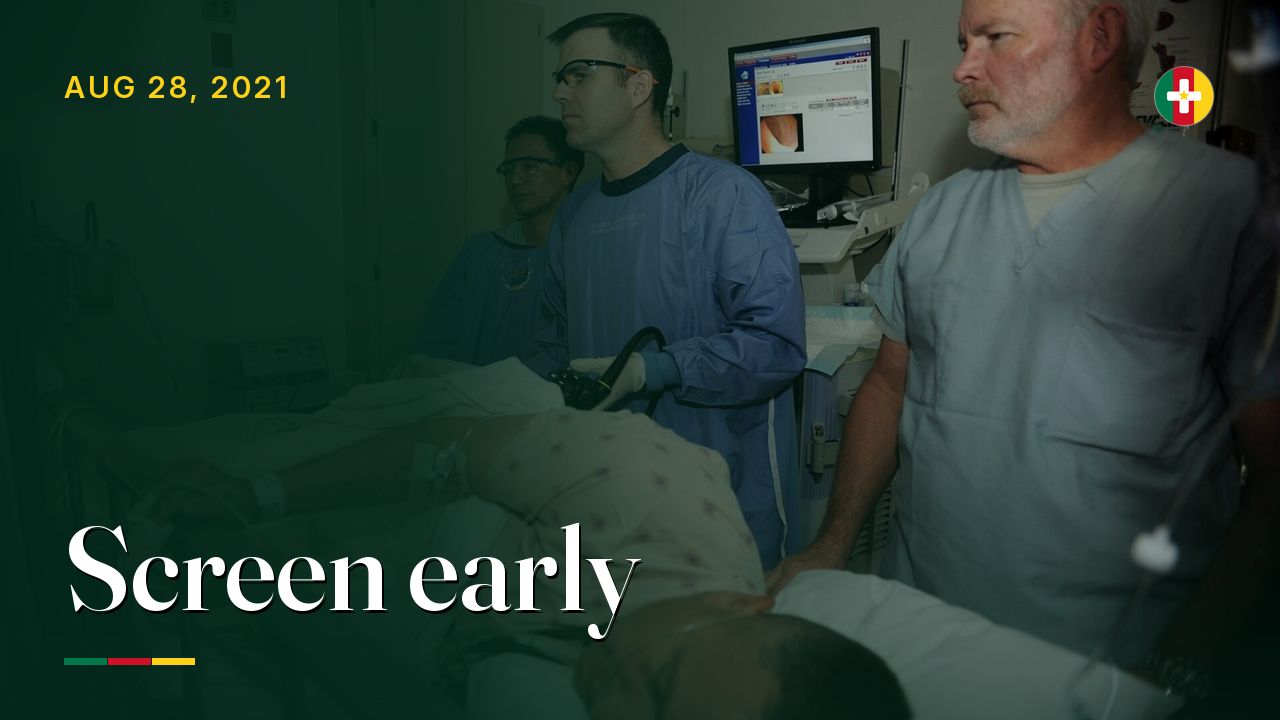
This policy briefing synthesises key insights from the Cameroon Townhall for Healthcare Professionals meeting held on August 28, 2021, focusing on the theme "What to Know About Colorectal Cancer Screening", presented by Dr. Ivo Che Ditah, gastroenterologist at the University of Minnesota.
Context
Colorectal cancer is a leading cause of cancer death worldwide, and clinicians in Cameroon report rising numbers, often in young patients and at late stages. Cameroon has no screening policy, few public endoscopy units and limited capacity for chemotherapy.
Key issues
- No screening policy. There are no national guidelines for colorectal cancer screening or treatment.
- Late diagnosis. Most patients present with bleeding, obstruction or metastases, and many cases are attributed to haemorrhoids or witchcraft.
- Few endoscopy services. Public colonoscopy is limited to a few hospitals, and trainees get too little hands-on experience.
- Cost. Colonoscopy costs about 90,000 to 110,000 FCFA and chemotherapy about 300,000 to 500,000 FCFA, all paid out of pocket.
- Missing data. Recorded incidence is low because the disease is rarely looked for.
Discussion highlights
- Age is the strongest risk factor; family history moves people into a higher-risk group.
- A polyp takes about 10 years to become cancer, so early detection prevents disease.
- Stool blood tests are a cheaper first step where colonoscopy is scarce.
- Many patients in Cameroon are under 45.
- Gastroenterologists and surgeons need to work together.
Recommendations
- Raise awareness first. MINSANTE, through the National Cancer Control Programme, and professional societies should run campaigns for health workers and the public on warning signs (rectal bleeding, weight loss, change in bowel habit, iron deficiency anaemia).
- Define high-risk groups. The National Cancer Control Programme should define who should be screened first, such as people with a first-degree relative with colorectal cancer, and set a referral pathway.
- Stool testing with referral. Regional hospitals should offer FIT, or guaiac tests where FIT is unavailable, to high-risk adults without symptoms, with referral of positives to an endoscopy centre.
- Endoscopy capacity and training. MINSANTE and faculties of medicine should equip at least one public endoscopy unit per region with polypectomy tools and strengthen hands-on training of gastroenterology residents, with support from diaspora specialists.
- Teach the basics. Medical schools should emphasise rectal examination, family history and colorectal cancer as a differential for rectal bleeding.
- Multidisciplinary care and financing. Reference hospitals should set up joint gastroenterology, surgery and oncology teams, and future universal health coverage should include cancer diagnosis and treatment.
Next steps
Dr. Ditah offered to connect with clinicians in Cameroon and to help medical students find shadowing opportunities. A participant from a 3D printing company offered printing for training models.
Conclusion
Colorectal cancer is under-diagnosed in Cameroon, not absent. Awareness, a focus on high-risk groups, cheap stool tests and stronger endoscopy services are realistic first steps.
Meeting minutes
Agenda
- Welcome and opening remarks by the moderators
- Remarks by the Chair, Dr. Munoh Kenne Foma
- Presentation by Dr. Ivo Ditah on "What to Know About Colorectal Cancer Screening"
- Discussion: adapting screening to Cameroon
- Remarks by the moderators and the Chair
- Summary, closing remarks and next meeting
Opening remarks
- Elvis Ndansi recalled the previous session on the Delta variant and said the Town Hall's database covered professionals in 34 countries. Dr. Christelle Jouego Tagne was travelling to Cameroon and could not join.
- Louisa Viban returned after a month away and noted that prevention is the best cure.
- The Chair thanked Dr. Ditah, whom he called a big brother who guided him when he arrived in the US, and said cancer is not found in Cameroon because it is not looked for.
Presentation
1. A hidden burden
Dr. Ditah said colorectal cancer is the third leading cause of cancer death in men and women combined in developed countries. Data from Africa are scarce and underestimate the problem: colonoscopy was only recently available in places such as Bamenda and Mbingo, and many deaths with rectal bleeding and weight loss were blamed on witchcraft. As Cameroon goes through the epidemiological transition, more people live long enough to develop it.
2. New screening age
In 2021 the US Preventive Services Task Force lowered the start of screening for average-risk adults from 50 to 45, previously the age for Black patients only. About 10.5 percent of cases are diagnosed before 50, and incidence among people aged 40 to 49 rose about 15 percent between 2000 and 2016.
3. Risk factors
Age is the strongest risk factor. Black patients develop the disease earlier and present at a later stage, a difference he linked to socio-economic factors. Men are at higher risk than women. Diabetes, obesity, long-term smoking, unhealthy alcohol use (more than 14 drinks a week for men, seven for women) and inflammatory bowel disease of the colon also raise risk.
4. Family history
A first-degree relative (parent, sibling or child) with colorectal cancer or an advanced polyp (10 mm or larger, high-grade dysplasia or villous features), or 10 or more polyps, places a person at higher risk. Screening then starts at 40 or 10 years before the relative's age at diagnosis, whichever is earlier; earlier still for Lynch syndrome (about 20) and familial adenomatous polyposis (about 13 to 15).
5. The screening toolkit
Stool tests include the guaiac faecal occult blood test and the faecal immunochemical test (FIT), both yearly, and the stool DNA test (Cologuard) every three years; a positive result needs colonoscopy. Colonoscopy every 10 years, if normal, both finds and removes polyps. CT colonography and flexible sigmoidoscopy are done every five years, and combinations are possible. Screening between 75 and 85 is decided case by case.
6. Why screen
A polyp takes about 10 years to become cancer, so finding and removing it prevents cancer, while a cancer that has spread to the liver is far harder to treat. Screening risks are low.
7. Adapting to Cameroon
Dr. Ditah said that with limited resources a blanket policy for everyone over 45 would not work. He proposed awareness among health workers and the public, a national definition of high-risk groups (such as family history), stool testing for those groups with referral for colonoscopy when positive, and attention to warning signs such as weight loss, rectal bleeding and a change in stool calibre. He said that as minister he would still prioritise malaria, safe water and diarrhoeal disease.
Discussion and Q&A
- Do African countries contribute to the burden data? (a participant) Dr. Ditah said the figures come almost entirely from developed countries and that what exists from Africa is a large underestimate.
- Do changing diets explain rising cases? (Dr. Bryan Tegomoh) Dr. Ditah said lifestyle and socio-economic factors may play a role but their share cannot yet be measured. He said colonoscopy in Cameroon is often diagnostic only, and that in his experience polyps were seen but not removed.
- With no colonoscopy nearby, which test would you use in Bamenda? (Elvis Ndansi) Dr. Ditah would use the stool blood test available, accepting many false positives, and refer positives for colonoscopy. He discouraged faecal occult blood testing in acutely ill or bleeding patients, where it gives uninterpretable results.
- What should health workers do, given patients rarely come for check-ups? (Louisa Viban) He said screening is a shared decision: inform patients, define higher-risk groups, and use FIT where possible since it is more sensitive than the guaiac test.
- Is the health system ready for colorectal cancer? (Chair) The Chair said he never heard of a screening policy in Cameroon, that one of his aunts was operated on without staging when she already had metastatic disease, and that only breast, prostate and cervical cancers get attention because they are visible. Dr. Ditah agreed it is not the most pressing problem but said awareness must start now.
- What is the situation on the ground? (a gastroenterology resident in Yaounde) He said there is no screening policy and most patients present at advanced stages; a 10-year study in 10 referral hospitals found many cases under 30. Colonoscopy costs about 90,000 FCFA. In Yaounde only the General Hospital among public hospitals was doing endoscopy at the time, with a few private clinics, and residents do too few colonoscopies to gain skills. Polyps are removed, but patients often cannot pay for histopathology.
- How do we tell a bleeding ulcer from a positive screening test? (a doctor in Cameroon) Dr. Ditah said screening tests are for people without symptoms; in a patient with suspected GI bleeding the test will be positive and is not useful. He advised Africans to be tested for H. pylori and hepatitis B.
- Comment from a surgeon at Yaounde Central Hospital He said most patients arrive at the surgeon with bleeding or obstruction, many under 45 (his youngest was 16). A chemotherapy course costs about 300,000 to 500,000 FCFA and colonoscopy at least 110,000. He called for teaching rectal examination and family history, joint work between gastroenterologists and surgeons, universal health coverage, and media messages that not all rectal bleeding is haemorrhoids.
- Comments from the Chair and two participants The Chair said that in the US an African immigrant man with iron deficiency anaemia usually turns out to have a gastrointestinal cancer, and Dr. Ditah advised endoscopy and colonoscopy for every man and post-menopausal woman with iron deficiency anaemia. The CEO of a 3D printing company in Budapest offered 3D printing for training models and medical parts. A participant studying public health said rising awareness could drive demand for colonoscopy services.
Calls to action and closing
- Dr. Tegomoh said data drive policy and noted that WHO Global Cancer Observatory figures show low recorded incidence in Cameroon, which he attributed to limited diagnosis.
- The Chair said Cameroon lacks chemotherapy, immunotherapy and specialised centres, and that advocacy and data can change policy, as happened with dialysis centres.
- Dr. Ditah shared his number in the chat and offered to discuss cases and help medical students find shadowing opportunities in the US.
- Elvis Ndansi summarised the session and urged members to encourage relatives over 45 to be screened. The next session was announced for a fortnight later.
Next meeting
In a fortnight (September 11, 2021): A Light in the Darkness, therapies recently granted emergency use authorisation for COVID-19.
Submitted by the Co-Moderators, Cameroon Town Hall for Healthcare Professionals.