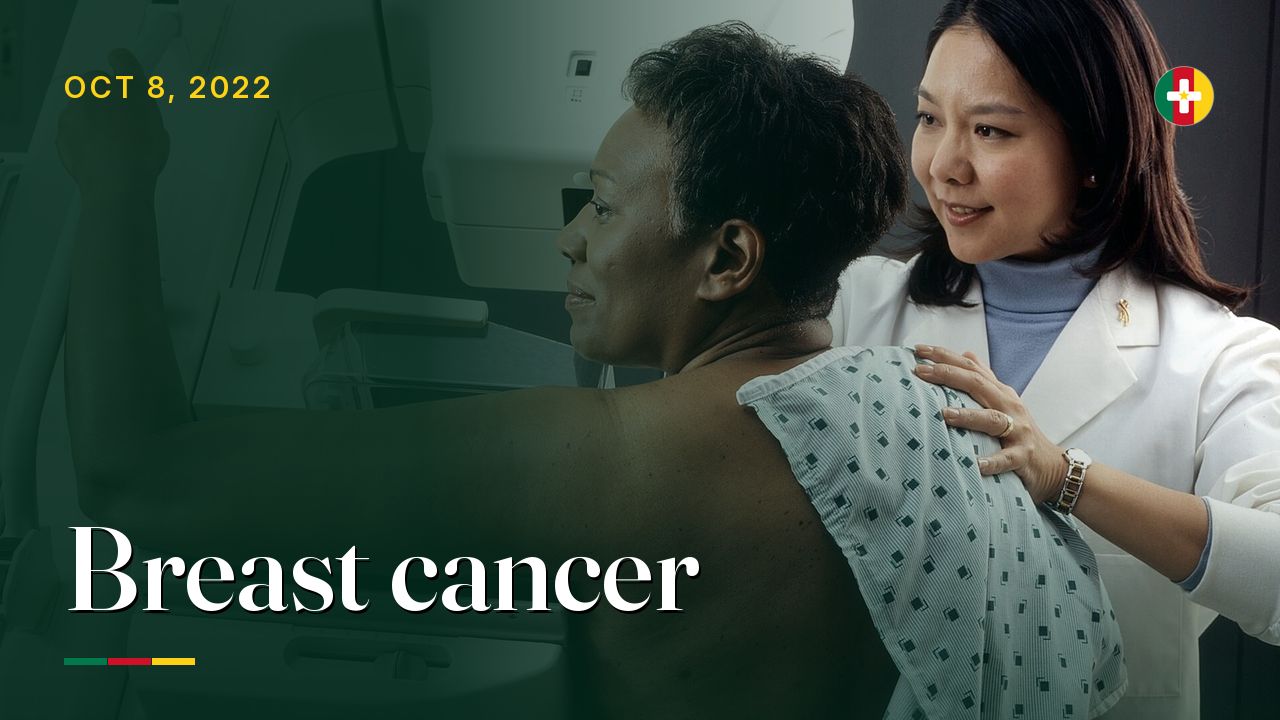
Breast Cancer Prevention and Management in Cameroon
Overview
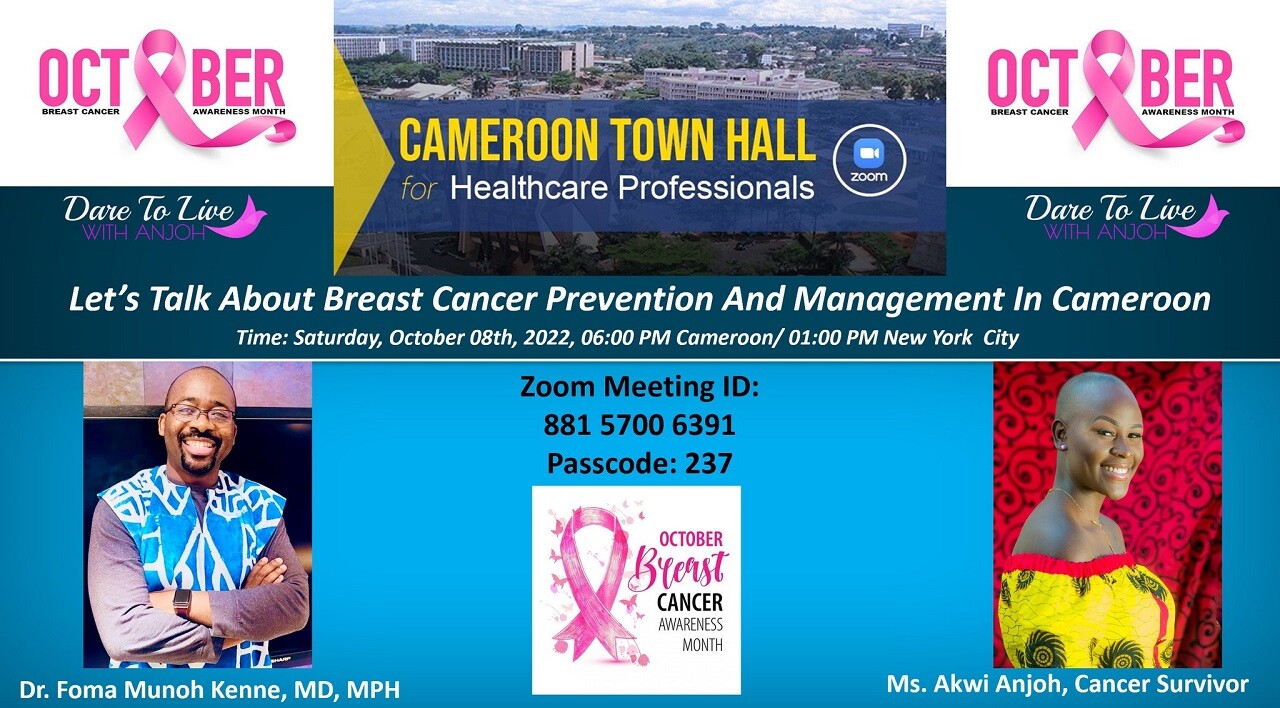
This policy briefing synthesizes key insights from the Cameroon Town Hall for Healthcare Professionals meeting held in October 2022, focusing on the theme 'Breast Cancer Prevention and Management in Cameroon', presented by Dr. Munoh Kenne Foma, haematologist and oncologist, and Akwi Anjoh, breast cancer survivor and founder of the Dare to Live with Anjoh Foundation.
Context
Breast cancer is the most common cancer in Cameroon (about 20 percent of cancers). Most women are diagnosed at stage 3 or 4, often young, and many hide symptoms because of stigma. Cameroon has no national screening guideline, receptor testing is often not done, radiotherapy is available in only a few centres, and patients pay for treatment themselves.
Key issues
- Late diagnosis and stigma. Women ignore or hide lumps, fear witchcraft accusations and social exclusion, and reach care at advanced stages.
- No screening policy. There is no national guideline, and screening depends on campaigns by NGOs and individual hospitals.
- Incomplete pathology. Oestrogen, progesterone and HER2 receptor tests are often not done, so patients get the wrong treatment or unnecessary surgery.
- Limited and unsafe treatment. Few radiotherapy machines, long waits, chemotherapy without supportive care, and unaffordable targeted drugs.
- Financial burden. Out of pocket costs for chemotherapy, surgery and radiotherapy push patients to abandon treatment or rely on donors.
Discussion highlights
- Self examination and clinical breast examination are useful where mammography is scarce, but must be linked to diagnosis and treatment.
- 'No tissue, no issue': receptor status should guide every treatment decision.
- Where radiotherapy is unavailable, mastectomy may be safer than lumpectomy.
- Supplements and faith should support, not replace, treatment.
- Retaining trained oncology staff and creating tumour boards are urgent.
Recommendations
- Adopt a national breast cancer screening guideline. MINSANTE and the National Cancer Control Committee should publish a screening guideline suited to available resources (clinical breast examination for all women, ultrasound or mammography for higher risk and older women) and fund free screening for women aged 40 or 50 and above, in line with WHO guidance.
- Make receptor testing standard. MINSANTE and reference hospitals should equip pathology laboratories to test oestrogen, progesterone and HER2 receptors on every breast cancer, with a referral system for samples until local capacity exists.
- Create multidisciplinary tumour boards. Cancer centres in Yaounde, Douala and Mbingo should hold regular tumour boards of surgeons, oncologists, pathologists and radiologists, with diaspora specialists joining online.
- Expand radiotherapy and safe chemotherapy. MINSANTE should restore non-functional radiotherapy machines, train medical physicists and chemotherapy nurses, and ensure supportive drugs and laboratory monitoring for every chemotherapy unit.
- Reduce the cost of treatment. Government should include breast cancer treatment, including tamoxifen and other hormonal drugs, in universal health coverage and essential medicines procurement.
- Fight stigma through community awareness. MINSANTE, NGOs such as Dare to Live, churches and community leaders should run awareness campaigns that teach self examination, involve men, and encourage early consultation.
Next steps
The town hall pledged 500 US dollars to the Dare to Live with Anjoh Foundation, and the Chair offered to join tumour boards in Cameroon. The foundation is working with the National Cancer Control Committee.
Conclusion
Breast cancer in Cameroon is often found late and treated without the information or tools needed. Early detection, complete pathology, multidisciplinary care and financial protection would turn a disease that is often fatal into one that, as in other countries, many women survive.
Meeting minutes
Agenda
- Welcome by the lead moderator
- Opening remarks by Dr. Bryan Tegomoh and the Chair
- Introduction of Akwi Anjoh by Dr. Bryan Tegomoh
- Presentation by Dr. Munoh Kenne Foma on breast cancer prevention, screening and treatment
- Testimony and presentation by Akwi Anjoh on her experience and the Dare to Live foundation
- Discussion and Q&A
- Summary and closing by the lead moderator, and parking lot
Opening remarks
- Elvis Ndansi said the town hall had held more than 60 sessions and that a free screening campaign in March had met many women who had never had a breast examination.
- Dr. Bryan Tegomoh linked the session to Breast Cancer Awareness Month and recalled how devastated he was by his first breast cancer patient and by survival disparities.
- The Chair said he presented himself because the Cameroonian oncologists he asked were busy, and urged the community to make itself available to teach. He said his most frequent calls from Cameroon are about young women diagnosed with breast cancer, usually already metastatic. There was no COVID-19 update this session.
Presentation
1. Breast cancer is the most common cancer in Cameroon
Dr. Foma said breast cancer makes up 20.1 percent of cancers in Cameroon, followed by cervical and prostate cancer, and 24.2 percent of cancers worldwide. Africa reports about 5 percent of global cancer cases, but cancer there is under diagnosed and rising. In the US most of his breast cancer patients are cured, and mortality has fallen since the 1970s; in Cameroon many women hide breast masses until they are advanced.
2. Risk factors
Age and female sex are the main risk factors. Inherited genes such as BRCA1 and BRCA2 raise risk about tenfold, and he said many young African women with triple negative cancer may carry BRCA mutations without knowing it. Other factors include early menarche and late menopause, late first birth or no children, not breastfeeding, obesity, alcohol, radiation, and hormone therapy, most with small effects.
3. No national screening guideline
Cameroon has no breast cancer screening guideline, according to WHO data, although NGOs and some private and public hospitals run screening campaigns. He proposed risk assessment from age 30, ultrasound by a trained radiologist for women under 30, mammography for older women, and advocacy for free MINSANTE mammography screening from 40 or 50, every two or three years, as countries such as the UK do.
4. No tissue, no issue
He stressed core biopsy and full pathology, including oestrogen receptor, progesterone receptor and HER2 status, before treatment. He described a young woman in Cameroon given chemotherapy and bilateral mastectomy without receptor testing; samples later sent to France showed hormone positive cancer that could have been treated with hormonal pills, and she died. He called for staging before surgery and said mastectomy is not useful in metastatic disease.
5. Treatment gaps in Cameroon
Treatment combines surgery, radiotherapy, chemotherapy, hormonal therapy, targeted therapy, immunotherapy and palliative care. He said Cameroon has about three radiotherapy centres, two not functional, so mastectomy may be safer than lumpectomy where radiotherapy and margin assessment are not available. He said many patients die of chemotherapy complications for lack of trained chemotherapy nurses and supportive drugs, and that newer HER2 drugs are largely unavailable or unaffordable.
6. Special situations
Breast cancer can be treated during pregnancy (chemotherapy in the second and third trimesters, surgery in any trimester, radiotherapy after delivery). Young patients need fertility counselling, which is limited in Cameroon. About 1 percent of breast cancers occur in men.
Discussion and Q&A
- Akwi Anjoh shared her story. She found a painful lump near her armpit in 2018, aged 33, with no family history, and was diagnosed with stage 3 triple negative breast cancer that had reached her lymph nodes. With insurance in the US she had chemotherapy, lumpectomy and radiotherapy without worrying about cost. After sharing her story online, many Cameroonian women, some in their 20s and treated at Mbingo, contacted her; most were diagnosed at stage 3 or 4, could not pay for treatment, waited months for radiotherapy and asked her to keep their illness secret because of stigma. She founded Dare to Live with Anjoh in 2019 to raise awareness, especially among young women, pay for treatment and supplies, and run screening and hospital visits in Douala, Yaounde and Bamenda. In a recent screening in a village near Yaounde, about 10 women had breast lumps and were referred.
- One of the co-moderators asked whether a woman who freezes her eggs before cancer treatment can later use IVF herself. Dr. Foma said yes; harvesting eggs is the easier step, and women who were pregnant before have higher success rates. Chemotherapy can damage eggs and sperm, so fertility preservation should be offered to patients under 45. In Cameroon, IVF centres exist, but access, cost and techniques are limited, and he offered to join any tumour board in Cameroon.
- A participant in the Netherlands asked whether IVF after cancer increases risk, and how age at childbirth affects risk. He said hormones used in IVF may slightly raise risk but trials show no significant difference. Late first pregnancy and not breastfeeding slightly increase risk, while breastfeeding lowers hormone exposure, but the effect is small compared with genes, sex and age.
- Elvis Ndansi asked how men are involved in the campaign. Akwi Anjoh said husbands should tell their wives if they notice any change in their breasts, that men are also screened at events, and that male volunteers help spread the message.
- A nurse practitioner in Maryland shared her mother's story. Her mother was diagnosed in Cameroon in 1996 at 44, after an initial misdiagnosis as a cyst, confirmed in France, and survived stage 3 disease. She began mammograms 10 years before her mother's age at diagnosis, and advised women to check their breasts a few days after their period. Dr. Foma added that families with several affected members should have genetic counselling and multigene testing.
- A participant in Kumba asked about patients stopping chemotherapy for supplements sold through network marketing. Dr. Foma said supplements are not regulated as medicines and do not treat cancer, though correcting a deficiency can help a patient feel better. He said many patients in Cameroon are harmed by chemotherapy given without antiemetics, hydration and blood monitoring. Elvis Ndansi suggested engaging religious leaders and marketers so that they support patients without making them abandon treatment.
- A medical student in Yaounde asked whether general practitioners may prescribe tamoxifen, the survival of triple negative breast cancer, and links with colorectal cancer. Dr. Foma said no: tamoxifen should not be given without a tissue diagnosis and receptor status because of its side effects, including uterine cancer. Median survival in metastatic triple negative disease was about 23 months but improving, and many such cancers are being reclassified as HER2 low with new treatment. BRCA genes do not much raise colorectal risk, but other inherited syndromes do.
- Dr. Bryan Tegomoh asked how to grow the oncology workforce and access to imaging and pathology. Dr. Foma said retention comes first, since many trained staff leave, then training adapted to the epidemiological transition, pathology and interventional radiology to obtain and analyse tissue, and multidisciplinary tumour boards.
- Elvis Ndansi asked Akwi Anjoh about her challenges and government support. She said finances are the main obstacle, including requests for payment to use venues and from some hospital staff during donations. She had no support from MINSANTE, but the National Cancer Control Committee had reached out that year.
Calls to action and closing
- Dr. Foma pledged 500 US dollars from the town hall to the Dare to Live foundation, and Akwi Anjoh shared her contacts in the chat.
- Elvis Ndansi summarised the session and noted that recordings are viewed by about 1,000 people on average.
- The session closed with a parking lot.
Next meeting
In a fortnight.
Submitted by the Co-Moderators, Cameroon Town Hall for Healthcare Professionals.