Type 2 Diabetes Remission Through Weight Loss: Implications for Cameroon
Overview
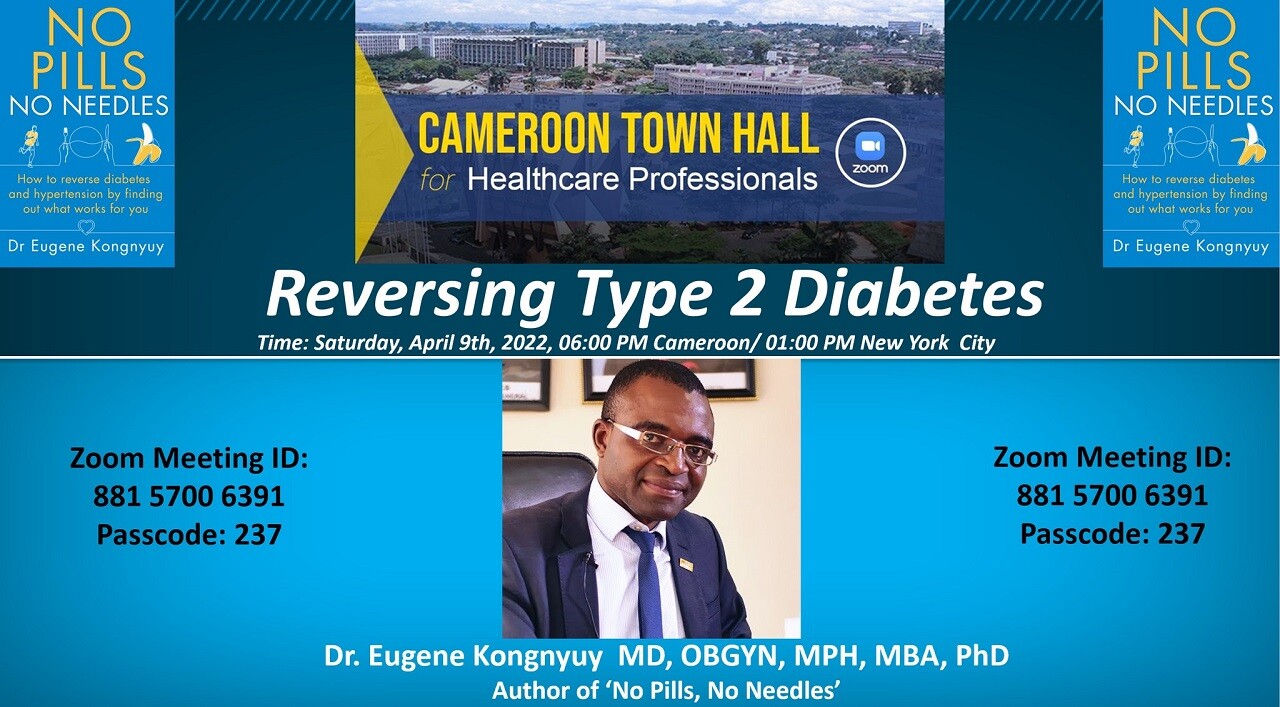
This policy briefing synthesises key insights from the Cameroon Town Hall for Healthcare Professionals meeting held on 9 April 2022, focusing on the theme "Reversing Type 2 Diabetes," presented by Dr. Eugene Kongnyuy, consultant obstetrician gynaecologist, UNFPA Resident Representative in the Republic of Congo and author of 'No Pills, No Needles'.
Context
Diabetes and hypertension are rising in Cameroon and across Africa, and participants reported deaths from undiagnosed hyperglycaemia. Patients are usually told diabetes is lifelong and given many general lifestyle tips. The speaker reversed his own diabetes by losing 10 kg and bringing his BMI below 23.
Key issues
- Remission is possible but rarely discussed. Significant weight loss can put type 2 diabetes into remission, yet clinicians seldom present this as the main goal.
- Overweight is normalised. Most adults screened in community settings had a BMI above recommended levels; a Unite for Health Foundation screening in Bamenda found none of 560 people within the target. A large belly is still seen as a sign of success.
- BMI thresholds may be too high. Evidence presented suggested diabetes risk rises from a BMI of 23 in low and middle income populations, below the usual cut-off of 25.
- Carbohydrate-heavy diets. Local staples (fufu, cassava, plantain, rice) dominate meals, while dietary advice focuses on food quality more than quantity.
- Medication safety during weight loss. Patients losing weight on insulin or sulphonylureas risk hypoglycaemia if doses are not reviewed.
Discussion highlights
- Participants agreed that 'lose weight' should be the main message to patients with type 2 diabetes.
- Intermittent fasting worked for the speaker mainly by reducing total intake; any meal can be skipped if it produces weight loss.
- Changing social norms around body size needs community, religious and traditional leaders and popular role models.
- Bariatric surgery evidence supports weight loss as a route to remission.
Recommendations
- Make remission a stated goal of diabetes care. MINSANTE and the national diabetes programme should include weight loss for remission in type 2 diabetes guidelines. First step: a short clinical note for district hospitals and health centres.
- Review medication as patients lose weight. Hospitals and diabetes clinics should train staff to reduce insulin and sulphonylureas as glucose improves and to confirm remission with HbA1c.
- Screen BMI and glucose in communities. Regional delegations, with diaspora groups such as Unite for Health Foundation, should expand BMI, blood pressure and glucose screening and refer high-risk people.
- Give dietary advice that fits local food. Training schools and dietitians should develop simple Cameroonian guidance on reducing staple carbohydrates and portion size, without calorie counting.
- Change norms around body size. MINSANTE should involve religious and traditional leaders, musicians and young role models in campaigns that present a healthy weight as the norm.
- Generate local evidence. Universities and researchers should study BMI thresholds and remission outcomes in Cameroonian patients to inform guidelines.
Next steps
Follow-up session in two weeks (about 23 April 2022), with details to be confirmed. Further questions were taken in the parking lot.
Conclusion
The session showed that type 2 diabetes is not always a life sentence. Putting weight loss at the centre of care, adapting advice to local diets and changing norms about body size could help many Cameroonians avoid lifelong medication and complications.
Meeting minutes
Agenda
- Welcome and introduction of co-moderators by Dr. Bryan Tegomoh
- Opening remarks by the Chair, Dr. Munoh Kenne Foma
- COVID-19 and cholera update by the Chair
- Introduction of the guest speaker by Dr. Louisa Viban
- Presentation by Dr. Eugene Kongnyuy on reversing type 2 diabetes
- Participant reflections, discussion and Q&A
- Summary by Elvis Ndansi, closing remarks by the Chair
- Parking lot discussions
Opening remarks
- Dr. Tegomoh welcomed participants and introduced the speaker's book 'No Pills, No Needles'. Elvis Ndansi noted the town hall had run for almost two years and more than 48 sessions without missing one.
- The Chair thanked Dr. Kongnyuy, who was chief resident in obstetrics and gynaecology when the Chair was a fourth year medical student, for having been a model of a good doctor.
- COVID-19 update by the Chair: BA.2 was now dominant, about 30 percent more transmissible than BA.1, and driving surges in China, Hong Kong and other Asian countries where many elderly people were unvaccinated. Cameroon had given about 1.5 million doses and had a low vaccination rate (he said under 6 per 100 people). He noted Paxlovid and molnupiravir were still not available in Africa and that new data showed COVID-19 infection, not the vaccine, reduced fertility.
- Cholera: as of 5 April there were over 4,500 cases and about 150 deaths in Cameroon, mainly in the South West and Littoral regions. A vaccination campaign had started the day before and he urged people in the South West to get vaccinated.
- Dr. Tegomoh mentioned a CDC study showing an increase in diabetes incidence during the pandemic and described work with Africa CDC on genomic and wastewater surveillance.
Presentation
1. A personal story
Dr. Kongnyuy said he was speaking as a patient, not an endocrinologist. About 12 years earlier, in the UK, a routine check found type 2 diabetes at a weight of 80 kg (BMI 26.1). Diet and exercise advice did not work and he was started on metformin. Over two years he tried about 30 different changes, each for about four weeks, and none worked.
2. Skipping lunch
He then stopped eating lunch, which made up 40 to 50 percent of his daily intake, while still joining colleagues at lunch and drinking only water. The first week was hard, then hunger came only in the evening. In two to three months he lost 10 kg (80 to 70 kg, BMI 22.8). He stopped metformin, kept his glucose normal for three months, and his GP confirmed a normal HbA1c and stopped the drug. He also reversed his hypertension, where he found exercise more important.
3. Lesson 1: weight loss is the key
He said he knows of no single measure other than significant weight loss that reverses type 2 diabetes, citing UK work showing most patients who lost 10 to 15 kg went into remission. He explained that excess calories are stored as fat, and free fatty acids and the cytokines released against them damage insulin sensitivity and beta cells. Doctors should tell patients the single most important thing rather than a long list.
4. Lessons 2 and 3: overweight matters and the BMI target
He had come to see overweight as normal because most people around him were overweight, but his own diabetes at BMI 26.1 changed his view. Normal BMI may not be enough for people predisposed to diabetes. He cited a Lancet publication of about 685,000 participants in 57 mostly low and middle income countries showing diabetes risk rises from a BMI of 23, matching his remission below 23, and urged guideline bodies to fund research and update advice.
5. Lesson 4: exercise helps but is not enough
He estimated exercise contributed about 20 percent to his diabetes reversal. It lowers blood sugar and uses glycogen (about 600 g stored), but losing weight through exercise alone needs intense daily effort, so diet is the easier route.
6. Lessons 5 and 6: intermittent fasting and fewer carbohydrates
He said fasting worked for him because it reset his hunger rhythm, shrank his appetite and made him eat less in total; fasting without weight loss would not work. His diet had been heavy in carbohydrates (plantains, fufu, rice), and he now bases meals on protein and healthy fats. He questioned guidelines such as the UK Eatwell Guide and MyPlate that base the diet on carbohydrates.
7. Lesson 7: some people need fewer calories
He eats about 1,500 to 2,000 kcal a day, below the 2,500 kcal usually recommended for men, and suggested that people predisposed by genes or by epigenetic adaptation to harsh early conditions (citing James Neel) may need less than standard advice. He described his method as 'try, track and tell' and called for research to change protocols.
Discussion and Q&A
- A Cameroonian doctor studying at Oxford asked why he skipped lunch rather than breakfast or dinner. He skipped lunch because he ate it outside the home. Any meal can be skipped if it leads to weight loss; what matters is losing weight.
- A participant with type 2 diabetes who had lost a lot of weight said his doctor worried his HbA1c had fallen too fast and asked about hypoglycaemia. Dr. Kongnyuy said weight loss alone is unlikely to cause hypoglycaemia unless BMI falls below 18.5, and advised keeping the weight off. The Chair added that the risk comes from continuing medication such as insulin or sulphonylureas, so the doctor should reduce drugs as glucose improves.
- A co-moderator asked how people in Cameroon, without food labels, can follow a low carbohydrate diet. He said he does not recommend counting calories. People can reduce the obvious carbohydrates (fufu, corn, cassava, plantain, bread, rice) and eat more fish, meat and other protein, using BMI to check progress.
- The Chair raised bariatric surgery, mentioning Prof. Mathias Fobi, and asked whether epigenetics explains higher diabetes rates among Black, Hispanic and Native American patients in the US. Dr. Kongnyuy agreed that epigenetic adaptation to harsh early conditions, followed by abundant food after migration, may contribute.
- Dr. Louisa Viban asked how he maintained remission over ten years. He keeps his weight around 68 to 70 kg, checks his HbA1c regularly, exercises more than before, and said family support helps.
- A paediatrician and nutritionist asked whether being fit and overweight is better than being of normal weight and sedentary, and advised building activity into daily routine. He said it is hard to know who is predisposed, so he favours normal weight. A cardiac rehabilitation physician added that metabolically fit people have fewer non-communicable diseases than slim but unfit people, as long as activity is kept up.
- A surgeon in Douala asked how to change the social belief that weight gain and a big belly are signs of success; a data scientist in San Francisco asked whether he had convinced Cameroonians to follow his approach. He compared 1960 photographs of slim palace notables with today's norm, and called for community, traditional and religious leaders, musicians and young role models to change the norm. He said readers he had met, including in Johannesburg, reported following the book, but he could not measure the impact.
- Questions from the chat covered tea, bariatric surgery for women with PCOS, postpartum weight and alcohol. Green tea did not work for him. Any method that produces weight loss, including surgery, can help reverse diabetes. Postpartum weight usually falls in the first six weeks and should be addressed if still present after a year. Excessive and binge drinking contributes to the metabolic syndrome.
Calls to action and closing
- Elvis Ndansi summarised the key message: to reverse type 2 diabetes, lose weight, aiming for a BMI below 23.
- The co-moderators thanked the speaker, with several saying they would apply the lessons themselves.
- The Chair thanked Dr. Kongnyuy for sharing his personal journey, noted that the question of diet versus exercise remains open for research, and invited members to propose topics.
Next meeting
In two weeks (about 23 April 2022). Details to be confirmed.
Submitted by the Co-Moderators, Cameroon Town Hall for Healthcare Professionals.