Expanding Access to Preventive Health in Cameroon
Overview
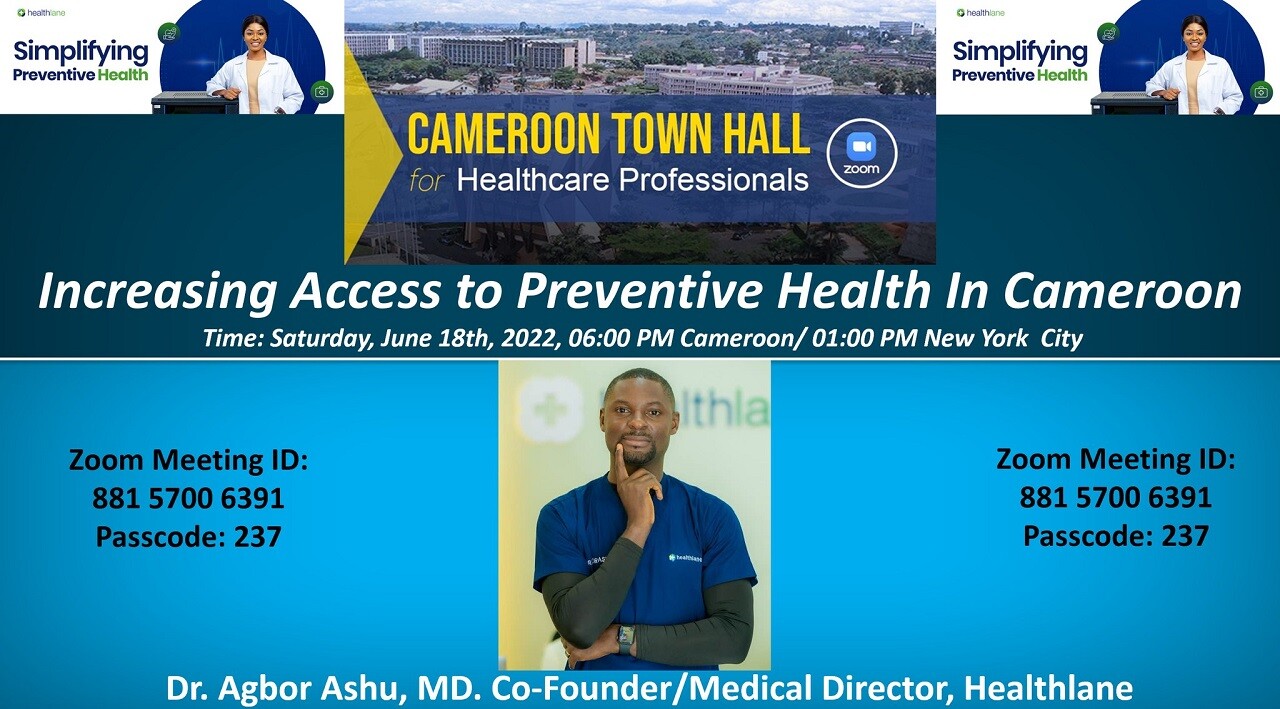
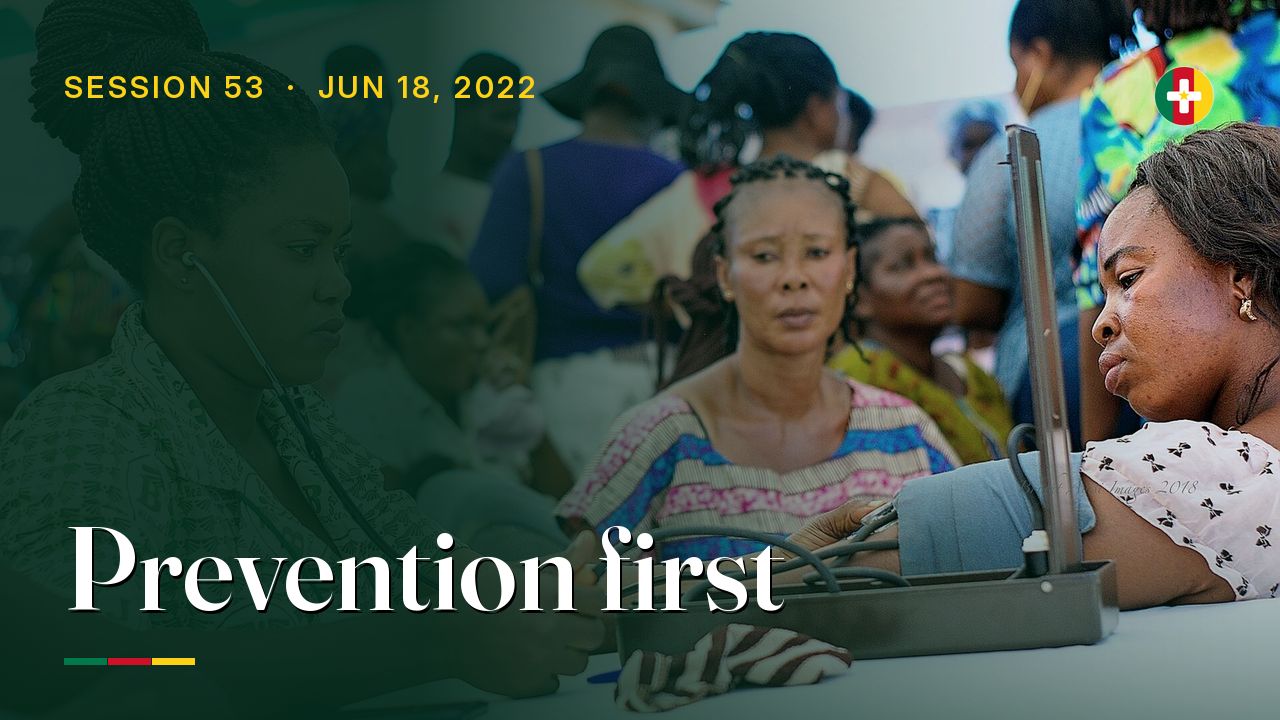
This policy briefing synthesizes key insights from the 53rd Cameroon Town Hall for Healthcare Professionals meeting held on June 18, 2022, focusing on the theme "Increasing Access to Preventive Health in Cameroon," presented by Dr. Agbor Ashu, co-founder and Medical Director of Healthlane.
Context
NCDs caused about 35 percent of deaths in Cameroon in 2018, driven by urbanisation, inactivity and diet. The health system is organised around curative care; prevention policies exist on paper but are weakly applied, and insurers do not pay for preventive checks.
Key issues
- A curative system. Wellness and prevention services have no regulatory category, and occupational health checks are often formalities.
- No financing for prevention. Insurers do not cover preventive checks, so screening is paid out of pocket and largely limited to urban, better-off clients.
- Weak implementation of NCD policies. Tobacco, alcohol and physical activity policies are poorly enforced, and prevention needs ministries beyond Public Health.
- Low awareness and harmful beliefs. Obesity seen as prosperity, little awareness of adult vaccine boosters, and reliance on untested supplements and concoctions.
Discussion highlights
- Personal test results motivated more than half of Healthlane clients to change behaviour.
- Cancer prevention (HPV vaccination, breast, colorectal and liver cancer prevention) is a major opportunity.
- Neonatal sickle cell screening was limited to a few hospitals in Yaoundé and Douala.
- A One Health civil society network was active in Cameroon.
Recommendations
- Bring prevention into insurance and public financing. MINSANTE and the insurance regulator should require health insurance products to cover a defined annual preventive package (blood pressure, glucose, lipids, cancer screening by age) and include it in universal health coverage plans. First step: a workshop with insurers, as proposed at the session.
- Create a regulatory category for preventive services. MINSANTE should define standards and a licensing category for wellness and preventive health services so they can be quality-assured and integrated with referral pathways.
- Make occupational health checks meaningful. The Ministry of Labour and employers, starting with the public service as the largest employer, should ensure workers receive and understand their screening results, with follow-up for those at risk.
- Promote adult immunization and cancer screening. MINSANTE and regional delegations should publicise adult booster vaccines and HPV vaccination, and expand access to mammography and other screening beyond Yaoundé and Douala.
- Generate local evidence. Researchers, universities and private providers should partner to study the effect of preventive programmes in Cameroon, using data already collected by services such as Healthlane.
- Extend neonatal sickle cell screening. MINSANTE should expand neonatal sickle cell screening beyond the few hospitals in Yaoundé and Douala and support premarital screening and counselling.
Next steps
A monkeypox session was planned for two weeks later, and a future workshop on insurance coverage for preventive care was proposed.
Conclusion
Prevention offers Cameroon the greatest return against rising NCDs, but it needs financing, regulation and public awareness to move beyond a service for the urban few. Private initiatives show demand exists; public policy must now make prevention part of the health system.
Meeting minutes
Agenda
- Welcome and opening remarks by co-moderator Elvis Ndansi
- Monkeypox and COVID-19 update by the Chair, Dr. Munoh Kenne Foma
- Introduction of the guest speaker by Dr. Christelle Jouego Tagne
- Presentation by Dr. Agbor Ashu on "Increasing Access to Preventive Health in Cameroon"
- Discussion and Q&A, moderated by a co-moderator
- Closing remarks, announcement on support to cholera unit workers, and summary
Opening remarks
- Elvis Ndansi recalled the previous session on the cholera epidemic, which included the Regional Delegate of Public Health for the South West, and reported 1,246 members in over 35 countries, with no session skipped since the town hall began.
- He restated that the town hall is a voluntary, non-political platform of scientists and health professionals.
- The Chair gave a monkeypox update: Cameroon is one of the historical epicentres, with both the West African and Central African clades; three cases had been confirmed out of 28 suspected in Cameroon that year, while about 100 cases had been confirmed in the US, over 100 in the UK and about 150 in Canada, many clustered among men who have sex with men. A dedicated monkeypox session was planned in two weeks.
- On COVID-19 he noted the spread of Omicron BA.4 and BA.5, the FDA authorisation of vaccines for young children, new findings on long COVID, and that only about 6.9 percent of Cameroonians were vaccinated. He recommended dexamethasone and other steroids, baricitinib (pledged to Africa by Eli Lilly) and Paxlovid, and said ivermectin, hydroxychloroquine and HIV antiretrovirals did not work.
- Asked about the US dropping pre-travel testing, the Chair supported it, saying pre-departure tests were costly and poorly effective, and that in Cameroon some travellers bought negative results. He favoured a combination of rapid self-testing, treatment and vaccination, and noted that hygiene and sanitation, vaccines and antibiotics did more for life expectancy than most hospital care.
Presentation
1. The double burden of disease
Dr. Ashu said rapid, unplanned urbanisation, air pollution, a shift from farming to sedentary office work and Western fast food were driving NCDs alongside infectious diseases. He cited WHO figures for 2018 that 35 percent of deaths in Cameroon were due to NCDs and a 20 percent probability of dying between ages 30 and 70, and noted that obesity is often seen as a sign of prosperity ("eating money"). He said NCDs are the world's leading preventable illnesses, yet Cameroon's attention remains on TB, HIV and malaria.
2. Levels of prevention
He described primordial prevention (hygiene, sanitation, clean air), primary prevention (vaccination against typhoid, meningitis and cholera, avoiding tobacco, healthy diet and exercise), secondary prevention (screening such as mammography and PSA, and detecting pre-hypertension), and tertiary prevention (arresting or reversing conditions such as diabetes and hypertension). Preventive care, he said, is proactive while curative care waits for illness.
3. Gaps in Cameroon
The health system is designed around curative care; when inspectors from the regional delegation visited Healthlane, there was no category for a wellness and prevention service. Government runs vaccination, TB and HIV prevention programmes, and policies exist on tobacco, alcohol and physical activity, but implementation is weak and there is no effectively implemented national NCD prevention policy or inter-ministerial approach. Insurers do not cover preventive health checks, and cultural attitudes limit uptake. He cited a projection of 52 million NCD deaths globally by 2030.
4. From GiftedMom to Healthlane
In 2015 GiftedMom built an automated SMS and voice messaging platform to remind pregnant women and nursing mothers of vaccination appointments and to educate them, which improved vaccination outcomes. In 2021 the team pivoted to Healthlane, a preventive health company with facilities in Cameroon and Nigeria offering wellness checks, personalised care plans and health coaching, with the mission to "simplify the way people understand, track and improve their health".
5. How the Healthlane model works
Clients undergo a risk profile (lifestyle, work, sexual health) and medical history, combined with extensive blood and urine tests and body composition analysis on point-of-care devices, with results usually available within about an hour and 30 minutes. A doctor explains the results and places the client on a programme, and records are available on a smartphone app. Programmes include weight management, diabetes and hypertension reversal, STI and HIV prevention including pre-exposure prophylaxis, ageing and longevity, and adult immunization (boosters such as Tdap, hepatitis B, typhoid and HPV).
6. Call for collaboration
Dr. Ashu said Healthlane alone would not solve the NCD problem and invited researchers to collaborate on local evidence, specialists to work with the company, and participants to refer and recommend preventive check-ups.
Discussion and Q&A
- The co-founder of a One Health club in Nigeria working across three countries, asked about behaviour change, vaccine hesitancy and One Health in Cameroon. Dr. Ashu said more than half of clients adopted some healthy lifestyle change once shown their own data, and that clients rarely refused adult booster vaccines, apart from some hesitancy over COVID-19 vaccines. A participant from the Family Health and Development Foundation in Yaoundé added that a One Health civil society network existed in Cameroon, with organisations in Yaoundé, Buea and the East working on antimicrobial resistance, food security, COVID-19, rabies and monkeypox.
- A second-year registrar at the University of Nairobi, asked what evidence Healthlane gives clients who use supplements or concoctions, and whether Cameroonian data exist on prevention. Dr. Ashu said baseline blood and urine tests show whether a product is harming the liver or kidneys, giving the example of clients with excessive calcium levels from supplements. Healthlane recommends some evidence-based supplements and uses drugs as a last resort. He acknowledged that local data were lacking and hoped to build research partnerships.
- A participant from the United Kingdom asked where Healthlane's clients and laboratory results come from. Clients come through corporate partnerships, social media and the website, as well as partner facilities. Healthlane runs its own point-of-care laboratory equipment so that clients do not have to wait.
- The Chair proposed collaboration on cancer prevention. He listed opportunities: HPV vaccination to eliminate cervical cancer (as Australia is doing), mammography from age 40, colonoscopy from 45, selective PSA testing, low-dose CT for smokers, curative hepatitis C treatment to prevent liver cancer, and BRCA testing in high-risk families. He said government, as the largest employer, could require screening for its staff.
- A final-year nursing student, asked how preventive care can reach rural communities without internet, and how clinicians can promote prevention without detailed test data. Dr. Ashu said Healthlane started in cities where the NCD burden is high and planned to expand later. Without data, he said, continuous education and detailed, non-judgemental history-taking help, giving the example of offering PrEP rather than only advising condoms.
- Dr. Christelle Jouego Tagne asked, in French, for success stories and whether Healthlane supports clients to follow recommendations. Dr. Ashu described a woman told she had kidney and heart failure who in fact had adult malnutrition, and a woman with years of abdominal pain found to have a liver problem and referred to a specialist. Healthlane organises yoga and short exercise sessions. He criticised occupational health checks done as a formality, recalling a worker told his results only mattered if something was wrong.
- Dr. Bryan Tegomoh asked how the move from the non-profit GiftedMom to for-profit Healthlane affected reach, and how client data are stored and secured. Dr. Ashu said Healthlane targets a wider population but payment may limit access, and the team was working on wider health promotion through the app. Data are kept on Healthlane's own platform, which he believed was HIPAA compliant.
- A dentist in Yaoundé, asked about preventive dentistry and whether insurance covers preventive checks. Dr. Ashu said dentistry and ophthalmology had not yet been added because of cost. Insurers in Cameroon had told Healthlane they have no policy covering preventive checks, so clients pay out of pocket; only a few corporate clients had been reimbursed. Elvis Ndansi proposed a future workshop with insurers, and the Chair called for state policy and universal insurance so that prevention is not only for the rich.
Calls to action and closing
- The Chair noted that World Sickle Cell Day was the next day, called for neonatal and premarital sickle cell screening, and announced a Facebook live session. The participant from the Family Health and Development Foundation said neonatal screening, begun in 2015, was limited to three hospitals in Yaoundé and four in Douala.
- Elvis Ndansi announced that, as pledged at the previous session, the town hall moderators had sent 1 million FCFA to the Regional Delegate of Public Health for the South West, to be shared among about 60 health workers who were isolated in the cholera treatment unit in Limbe.
- A co-moderator said she would encourage family members to have preventive check-ups, noting that unexplained deaths are often blamed on witchcraft.
- Elvis Ndansi summarised the session; the next session was announced for two weeks later.
Next meeting
In two weeks, with a session on monkeypox planned.
Submitted by the Co-Moderators, Cameroon Town Hall for Healthcare Professionals.