One Year of the Cameroon Town Hall: Lessons and Next Steps for Diaspora Engagement in Health
Overview
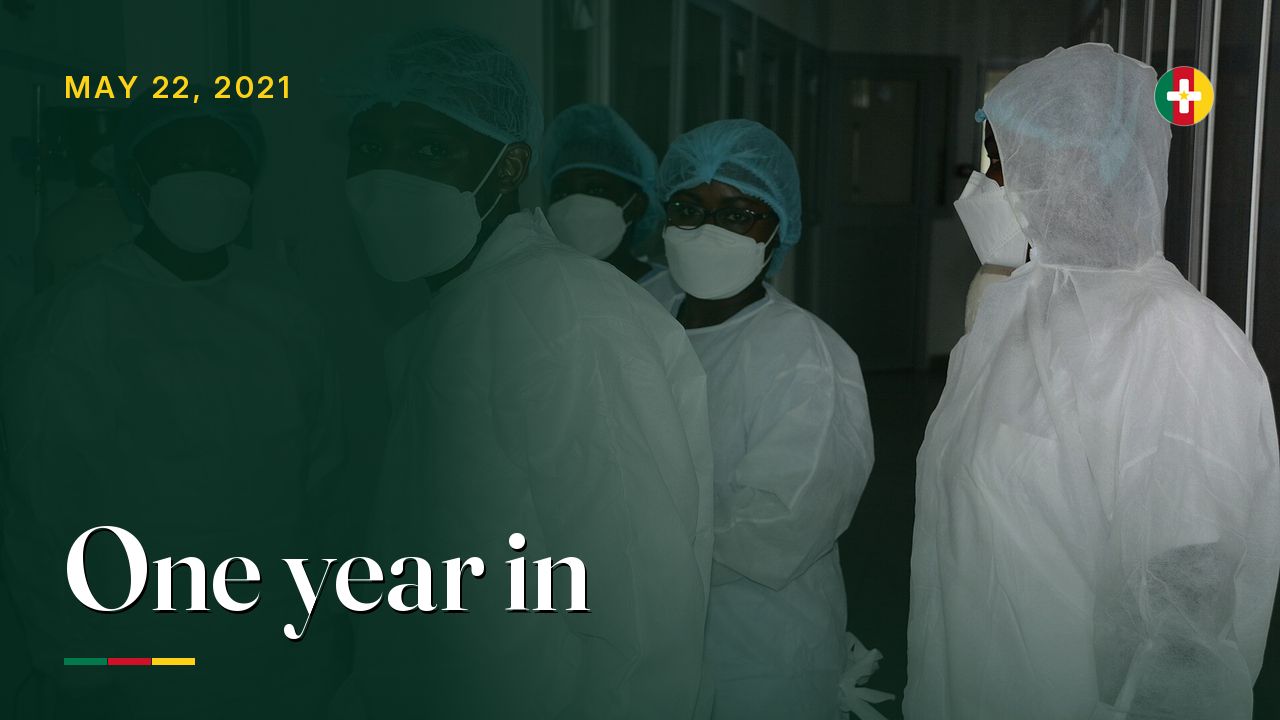
This policy briefing synthesises key insights from the Cameroon Townhall for Healthcare Professionals meeting held in May 2021, which marked the Town Hall's first anniversary and focused on its first year, vaccine hesitancy and the way forward.
Context
The Town Hall began in 2020 as a COVID-19 forum linking Cameroonian health professionals abroad with colleagues at home. By May 2021 it counted 1,012 registered members from more than 30 countries and had held fortnightly sessions on a wide range of topics. Cameroon's COVID-19 vaccine coverage was about 0.1 percent.
Key issues
- Low vaccine uptake. Coverage remained very low, and hesitancy among health workers was undermining community confidence.
- Weak surveillance and public health funding. The pandemic showed gaps in disease surveillance and long-standing under-investment in public health.
- Knowledge without action. Members asked that discussions lead to research, mentorship and practical projects.
- Staffing at referral hospitals. At Bamenda Regional Hospital only 167 of 510 staff are government employed.
- Language. Sessions had been mostly in English, limiting French-speaking participation.
Discussion highlights
- No single intervention reduces vaccine hesitancy; tailored, multi-component approaches work best.
- Health workers need training to communicate about vaccines.
- CME accreditation, mentorship matching and research collaborations were proposed.
- Hospital leaders welcomed diaspora support for specific projects.
- Plans were announced to invite the Minister of Public Health.
Recommendations
- Tailored vaccine confidence strategy. MINSANTE and the Expanded Programme on Immunisation should identify hesitant groups by region, engage religious and traditional leaders, and use reminder messages, rather than relying on posters and radio alone.
- Train health workers first. Regional delegations should run vaccine communication training for health workers, so that they are confident to vaccinate and to counsel others.
- Strengthen surveillance. MINSANTE and partners should invest in laboratory and genomic surveillance, drawing on diaspora expertise in pooled testing and variant detection.
- Structured diaspora partnerships. Hospitals such as Bamenda Regional Hospital should publish priority projects (ICU, dialysis, training) so that diaspora professionals can support them in a coordinated way.
- Recognised continuing education. The Town Hall should seek CME or CPD accreditation for its sessions, with recordings and short assessments, and the Cameroon medical and nursing orders should recognise them.
- Bilingual access. The Town Hall should recruit French-speaking presenters and co-moderators and issue bilingual flyers.
Next steps
The Town Hall planned to pursue research collaborations, mentorship, CME accreditation, French-language moderation, and an invitation to the Minister of Public Health. The next session was set for June 5, 2021.
Conclusion
In its first year the Town Hall built a respectful, wide professional network around COVID-19 and beyond. Members agreed that the next step is to turn that network into research, training and concrete support for health services in Cameroon.
Meeting minutes
Agenda
- Welcome and opening remarks by Elvis Ndansi
- COVID-19 update by the Chair, Dr. Munoh Kenne Foma
- Presentation by a co-moderator on interventions to address vaccine hesitancy
- Reflections from the moderators and the Chair on the Town Hall's origins
- Review of the first 12 months of sessions by Elvis Ndansi
- Testimonies and suggestions from members
- Closing remarks and next meeting
Opening remarks
- Elvis Ndansi opened the first anniversary edition, noting the Town Hall meets every fortnight and thanking the presenters of the previous session on malaria.
- The Chair reported more than 165 million COVID-19 cases and about 3.5 million deaths worldwide, and 1.6 billion vaccine doses given. Cameroon was still in its second wave, with vaccination coverage of about 0.1 percent, mainly Sinopharm and AstraZeneca, and he estimated 10 years to reach herd immunity at that pace. He questioned whether all vaccines are equal, citing rising cases in the Seychelles and Chile with high Sinopharm coverage, urged patent waivers and dose sharing, and said corticosteroids remained the main treatment.
- Dr. Bryan Tegomoh said the pandemic had exposed weak disease surveillance, under-investment in public health and health inequities, and called for a global disease detection system drawing on the expertise of members such as Dr. Kenji.
Presentation
1. Vaccine hesitancy is complex
The presenter, an epidemiologist and co-moderator, explained that hesitancy ranges from accepting some vaccines to refusing all, varies by context, time and vaccine, and is shaped by confidence, complacency and convenience. Even 100 percent coverage does not mean there is no hesitancy. WHO had listed it among the top 10 threats to global health in 2019.
2. What the evidence says
Drawing on two 2015 reviews linked to WHO's Strategic Advisory Group of Experts (an overview of 15 reviews and a systematic review of 181 studies), she said interventions fall into education, incentives, dialogue, reminders and policy. No single intervention is proven; multi-component, tailored approaches work best, while passive measures such as posters and radio spots do little on their own.
3. Approaches that show promise
Dialogue with religious and traditional leaders worked in polio campaigns in northern Nigeria and francophone West and Central Africa. Reminder messages raise uptake. Training health workers to communicate about vaccines matters because many health workers were themselves hesitant about COVID-19 vaccines. Mandates and incentives may raise coverage without resolving hesitancy.
4. How the Town Hall began
The Chair said the idea came in early 2020 while he worked as an internist in New York, where his hospital had more than 1,000 COVID-19 patients and about 300 intubated at one point. He wanted health workers in Cameroon to learn from those mistakes, and shared the idea with Elvis Ndansi and a fellow co-moderator. After COVID-19 the group widened to other health problems.
5. Twelve months of sessions
Elvis Ndansi reviewed the year, from the first conversation in June 2020 on prevention of a pandemic, through case management in the North West, traditional medicine and mental health, pooled testing (Dr. Kenji), evidence-based medicine with the South African Cochrane Centre, clinical trial registries, children and schools, vaccine hesitancy, pharmaceutical regulation, audit and feedback, cervical cancer, telemedicine, maternal and infant mortality, neurosurgery (about 20 neurosurgeons in Cameroon), tuberculosis, variants and malaria.
6. Reach and culture
He said attendance grew from about 15 people at the first session to 1,012 registered Cameroonian health professionals from more than 30 countries, and that discussions had stayed respectful, with everyone treated as equals. A co-moderator had created the Cameroon Digest, a compilation of research by or about Cameroon plus scholarship opportunities. He announced plans to invite the Minister of Public Health.
Discussion and Q&A
- What should the Town Hall do next? (Dr. Boghuma Kabisen Titanji) She proposed turning the network into research collaborations that produce data, formalising mentor and mentee matching, and seeking continuing medical education (CME) accreditation for sessions.
- Comment from Dr. Kenji He supported CE credits through recorded sessions with short quizzes on the website, and suggested pairing experts with students in Cameroon to co-present.
- Comment from a clinical biochemist in Canada He said the laboratory diagnosis session helped him validate COVID-19 assays at a large northern Canadian laboratory, and encouraged PhD holders to consider clinical laboratory science fellowships.
- Comment from Dr. Denis Nsame, Director of Bamenda Regional Hospital He thanked the Chair for weekly support during the hospital's COVID-19 response, said only 167 of the hospital's 510 staff for 400 beds are government employed, and invited diaspora members to support projects such as the intensive care unit and dialysis centre.
- Comments from members A critical care physician, Dr. Judwin Ndzo, a pharmacist and others described learning, networking, mentoring and mental health support. Louisa Viban and another member said the Town Hall had helped them secure residency places. Another member asked that sessions keep to two hours.
- Is the Town Hall open to French-speaking colleagues? (a senior clinician) Elvis Ndansi said the Town Hall is for all Cameroonians and welcomes presentations in French; a co-moderator asked for volunteers to help prepare French flyers. The Chair said the platform belongs to all participants and that anaesthetists, pharmacists and people living with sickle cell disease would be invited.
Calls to action and closing
- Elvis Ndansi thanked members and invited French-speaking colleagues to co-moderate.
- The Chair said the Town Hall exists so that the diaspora and colleagues at home solve problems together rather than blame each other.
- The next session was announced for a fortnight later.
Next meeting
In a fortnight (June 5, 2021): Heart Attack: The Hidden Pandemic in Cameroon and Africa.
Submitted by the Co-Moderators, Cameroon Town Hall for Healthcare Professionals.