Expanding Access to Medical Oxygen in Cameroon
Overview
This policy briefing synthesizes key insights from the Cameroon Town Hall for Healthcare Professionals meeting held on October 9, 2021, focusing on the theme "Access to Medical Oxygen in Cameroon: A Call to Action," presented by Dr. Yauba Saidu, Acting Country Director of the Clinton Health Access Initiative in Cameroon.
Context
COVID-19 exposed long-standing gaps in Cameroon's oxygen supply. A Ministry of Public Health task force created in May 2021 surveyed about 130 facilities and produced a five-year national strategy, validated in September 2021, with a budget of about US$228 million that was about 2.2 percent funded at the time.
Key issues
- No policy, standards or financing. No policy on clinical oxygen use, no standards for import and distribution, no pricing guidance; patients paid an average of about US$18 per day out of pocket.
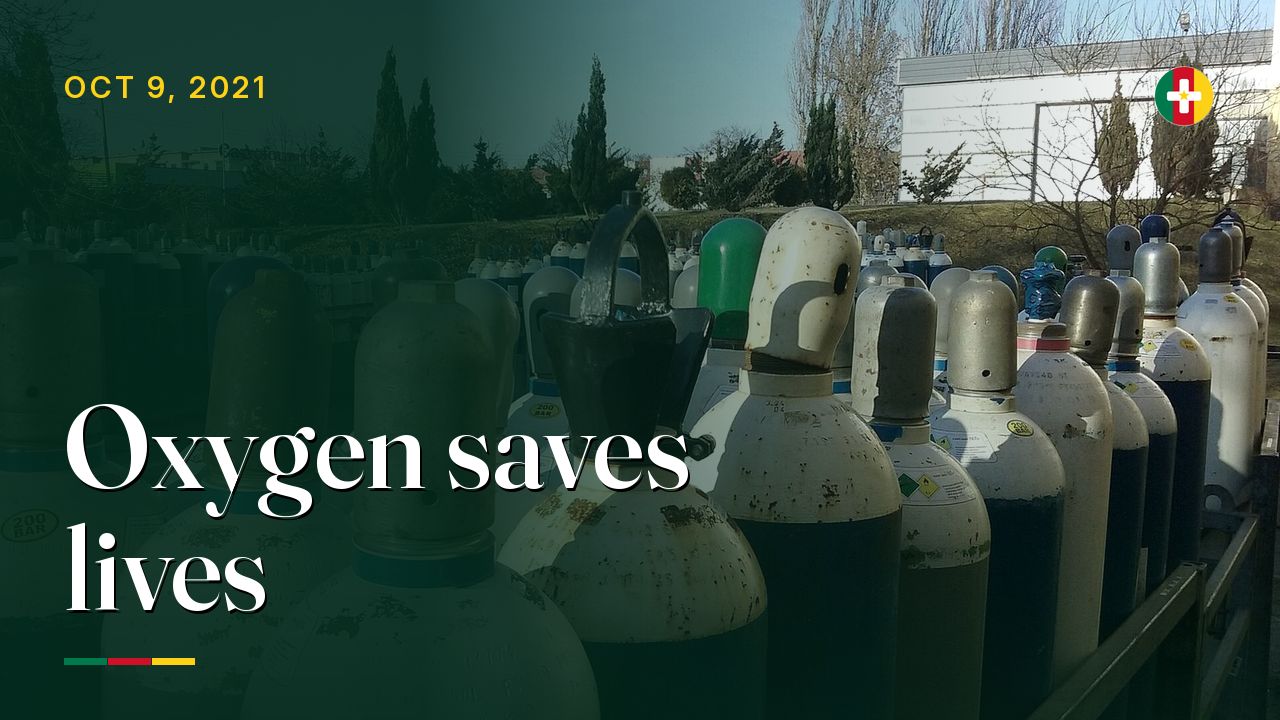
- Insufficient and unreliable supply. Fewer than 500 cylinders nationally, imports with three-week lead times, and only about three of nine PSA plants functioning. Most of the population lives beyond reach of a facility with oxygen.
- Delivery, monitoring and skills. Shortages of pulse oximeters, blood gas analysers, high-flow and CPAP devices and airway equipment, and clinicians unsure how to titrate oxygen. Cameroon had no respiratory therapists.
- No data on hypoxaemia. Only about 15 percent of facilities record hypoxaemia data and none in a standard format; deaths from lack of oxygen, including during referral, are not measured.
Discussion highlights
- Equipment must match each facility's power, size and maintenance capacity, or it will fail as earlier concentrators did.
- Plant operating costs of 30 to 60 percent of capital cost require a management model; a public-private partnership was proposed.
- Inexpensive devices (pulse oximeters, ABG analysers, end-tidal CO2 monitors, air compressors) determine whether oxygen reaches the patient safely and economically.
- Diaspora intensivists and pulmonologists offered to help build training modules.
Recommendations
- Fund and protect the oxygen budget line. MINSANTE and the Ministry of Finance should give the new medical oxygen budget line a defined amount in the annual state budget and ring-fence it for the national strategy. First step: publish the 2022 allocation.
- Adopt policy, standards and pricing for medical oxygen. MINSANTE should issue a policy on clinical oxygen use, norms for import and distribution, and a price ceiling for oxygen in public facilities, so that cost does not decide survival.
- Prioritise the point of care. MINSANTE and partners should ensure every health centre and district hospital has pulse oximeters, and that reference hospitals have blood gas analysers, high-flow, CPAP and BiPAP devices, air compressors and end-tidal CO2 monitoring, alongside plants and cylinders.
- Train the oxygen workforce. MINSANTE, regional delegations and training schools should roll out hands-on oxygen therapy training for doctors and nurses, with modules co-developed with diaspora specialists, and study a training pathway for respiratory therapists.
- Plan maintenance and management before installation. MINSANTE should agree a management model (such as a public-private partnership with operators) and maintenance contracts for each PSA plant before commissioning.
- Measure hypoxaemia and referral deaths. MINSANTE should add standard hypoxaemia indicators to the national health information system, and emergency physicians and universities should study deaths during referral to inform investment in ambulances.
Next steps
The Minister of Public Health agreed in principle to present his health sector transformation plan to the diaspora at a future town hall. Training of trainers was planned with emergency physicians in Yaoundé, with diaspora volunteers.
Conclusion
Cameroon now has a defined, partly funded national oxygen strategy. Its success will depend on sustained funding, matching equipment to facilities, maintenance, and training clinicians to deliver oxygen safely at every level of the health pyramid.
Meeting minutes
Agenda
- Welcome and opening remarks by co-moderator Elvis Ndansi
- Remarks by the Chair, Dr. Munoh Kenne Foma
- Introduction of the guest speaker
- Presentation by Dr. Yauba Saidu on "Access to Medical Oxygen in Cameroon: A Call to Action"
- Discussion and Q&A
- Summary, closing remarks and next steps
Opening remarks
- Elvis Ndansi reported about 1,200 registered participants from about 34 countries and recalled the previous session on diagnostic radiology with Dr. Kenedy Foryoung.
- The Chair said medical oxygen was a subject close to his heart, recalling the shortages he and a pulmonologist colleague had dealt with while supporting colleagues in Cameroon during the second wave of COVID-19, and thanked co-moderator Dr. Christelle Jouego Tagne for keeping the town hall bilingual.
- Elvis Ndansi introduced Dr. Yauba Saidu: MD from the University of Yaoundé I (2007), Master's in vaccinology and drug development at the University of Siena, clinical research at Novartis Vaccines, four large vaccine trials coordinated in The Gambia, then CHAI Cameroon, where the vaccine programme helped move cold chain sufficiency from 3 percent in 2015 to about 78 percent. He was introduced as Acting Country Director of CHAI Cameroon and a member of the National Immunization Technical Advisory Group.
Presentation
1. Hypoxaemia and the COVID-19 oxygen surge
Dr. Saidu described hypoxaemia as common in pneumonia, sepsis, malaria, meningitis and preterm birth, raising the risk of death up to seven times whatever the primary diagnosis. Cameroon could meet only about 25 to 35 percent of oxygen needs. WHO guidance of about 30 litres per minute for 14 days for a critical COVID-19 patient implies over 600,000 litres per patient. The assessment found slightly fewer than 500 oxygen cylinders in the whole country, and the oxygen molecule often had to be imported from France, Côte d'Ivoire or Gabon with a lead time of about three weeks.
2. National task force and situational analysis
Facing a possible third wave, the Minister of Public Health set up an oxygen task force on May 11, with three objectives: a situational analysis, a five-year strategy, and resource mobilisation. Data were collected from roughly 130 facilities, from specialised COVID-19 treatment centres, general, central and all regional hospitals to a cross-section of public and private district hospitals. Facilities below district level were excluded because they generally had no equipment to diagnose or treat hypoxaemia.
3. Policy and financing gaps
There was no policy on clinical use of medical oxygen, no norms or standards for importing and distributing oxygen commodities, no national budget line, and no pricing guidelines. Patients paid from 5,000 to 30,000 FCFA depending on the hospital, an estimated average of about US$18 per 24 hours, in a country where about 35 percent of people live below the international poverty line.
4. Availability of oxygen and equipment
About 85 percent of reference hospitals had at least one oxygen source, but coverage fell at district level, and mapping showed most of the population living beyond reach of facilities with oxygen, especially in Adamawa, Centre, North West and Far North. Not all intensive care units, emergency units or operating rooms had oxygen. Fewer than 50 percent of district hospitals had the necessary consumables. Only 7 to 11 percent of hospitals had an oxygen plant, and of the country's roughly nine PSA plants only about three were working. Pulse oximeters, monitors and blood gas analysis were scarce at district level, and only about 15 percent of facilities documented hypoxaemia data, without a standard format.
5. The five-year national strategy
The strategy, validated under the chairmanship of the Minister of Public Health on September 22, sets a vision of zero hypoxaemia-related deaths in health facilities and a goal of reducing them by 30 percent by 2025. Its four objectives are: policy, governance and financing; availability of oxygen equipment and commodities; case management through clinical guidelines and training; and data systems for hypoxaemia. A decision tree assigns PSA plants to hospitals over 150 beds with reliable power and maintenance, backed by cylinders or concentrators, and concentrators or cylinders to smaller facilities depending on electricity. It foresees 11 small PSA plants, three large plants feeding a hub-and-spoke cylinder distribution, and liquid oxygen tanks at about seven new regional reference centres.
6. Budget and funding mobilised
The budget was about US$228 million (the speaker gave about 114 billion FCFA), with over 94 percent going to equipment and commodities. Funds already mobilised included about US$4 million from the Central African development bank for 11 PSA plants (nine regional hospitals and two hospitals in Yaoundé), Islamic Development Bank funds for 10,000 cylinders, a Global Fund proposal of about US$25 million with preliminary approval, US$500,000 from CHAI (seeking a further US$10 million) and US$200,000 from UNICEF (mobilising about US$2 million). The plan was about 2.2 percent funded, and Dr. Saidu asked the diaspora to help mobilise funding.
Discussion and Q&A
- Dr. Louisa Viban asked whether the plan covered maintenance staff, case management training and the primary care facilities where most patients first present. Dr. Saidu said concentrators previously distributed to rural facilities had failed for lack of electricity and training, which is why the strategy now matches equipment to each facility. A large 80 Nm3 plant costs about US$1 million and operating costs run at 30 to 60 percent of capital cost; plants are specified for local altitude and humidity (Douala air must be dried). The task force favoured public-private partnerships, to be discussed with GICAM, so that operators run plants and sell oxygen to hospitals. Hands-on training was funded for about 50 staff from regional hospitals and about 500 from district hospitals, with pulse oximeters to be supplied, and a national budget line for medical oxygen had been created.
- A pulmonologist and critical care physician in West Virginia described colleagues in the North West reducing oxygen for patients saturating at 30 to 55 percent for fear of toxicity, a regional hospital with an unused CPAP machine, and asked whether the budget included ABG machines, CPAP, BiPAP and high-flow devices. Dr. Saidu said the Global Fund proposal included CPAP, BiPAP and wall oxygen outlets, with the main constraint being funding. He invited her to help develop training modules and a training of trainers with emergency physicians in Yaoundé. She later noted that high-flow, CPAP and ABG devices cost roughly US$3,000 to 12,000 each, small sums next to a plant.
- An intensivist in Yaoundé (then on a paediatric anaesthesia fellowship in Cape Town), said families sometimes had to buy endotracheal tubes, there was no high-flow oxygen, and only two arterial blood gas machines served all of Yaoundé. He urged air compressors for oxygen blending, end-tidal CO2 monitors to allow low-flow anaesthesia, and blood gas analysers. Dr. Saidu said investments follow the health pyramid: pulse oximetry, referral and data reporting at health centres, then progressively more at district, regional and tertiary level. He recalled ABG machines were budgeted but would check end-tidal CO2 and air compressors, and offered to share the commodity list with him. The Chair added that a blood gas machine at CHU Yaoundé had often sat unused because clinicians did not request tests.
- The West Virginia pulmonologist asked how hypoxic patients are transferred between facilities. Dr. Saidu said the strategy budgeted ambulances and 10-litre cylinders, but ambulances are few and most patients pay for private transport without oxygen. He had asked emergency physicians to collect data on patients who die during referral to support advocacy.
- A surgeon in Yaoundé, asked whether oxygen had been included in the 2022 state budget to be voted by the National Assembly in November. Dr. Saidu said the Ministry's director of finance, vice-chair of the task force, had told him a budget line for medical oxygen had been created at the Minister's insistence, but he could not yet confirm the amount.
- Elvis Ndansi asked whether any data existed on mortality from lack of oxygen. Dr. Saidu said he had seen no data or publication on hypoxaemia-related deaths in Cameroon; emergency physicians had promised to have students study it for their theses.
- A nurse with a Doctor of Nursing Practice in the United States, asked whether training would include nurses and whether Cameroon trains respiratory therapists. Dr. Saidu said the five-day hands-on training would include nurses as well as doctors, since district hospitals often have three doctors or fewer. He doubted that pre-service curricula could easily be changed but was open to discussion with the University of Buea, and suggested online video modules. Elvis Ndansi suggested private schools could train respiratory therapists if the state signalled demand. The Yaoundé intensivist explained that in Cameroon, as in France, intensive care is practised by anaesthetist-intensivists, and the Chair said he knew of no respiratory therapists in the country.
- A doctor in anaesthesia training in Jerusalem, asked about implementation timelines, hospitals where oxygen bottles must be fetched from downstairs during emergencies, and oxygen left running in empty theatres. Dr. Saidu said implementation had started before adoption, with plants, cylinders and concentrators on the way, and funding was the limiting factor over the five-year horizon. Piping costs about US$1,800 per bed and about 1,200 beds had been budgeted. Training and hospital check systems would address oxygen wastage.
Calls to action and closing
- A physician with the Cameroon Baptist Convention HIV programme in the West Region and a public health physician and vaccinologist greeted the hall; the former noted that the West Region had recently received oxygen concentrators and cylinders.
- Dr. Saidu reported that the Minister of Public Health had welcomed the idea of presenting his transformation plan to the diaspora through the town hall, and invited participants to send recommendations through him to the Ministry.
- The West Virginia pulmonologist, the Yaoundé intensivist and the Jerusalem anaesthesia trainee volunteered to support training.
- Elvis Ndansi summarised the key findings and thanked the speaker, the Minister, and volunteers; the Chair invited members doing work in Cameroon to present at the town hall.
Submitted by the Co-Moderators, Cameroon Town Hall for Healthcare Professionals.