Water, Sanitation and Hygiene in Cameroon's Health Facilities
Overview
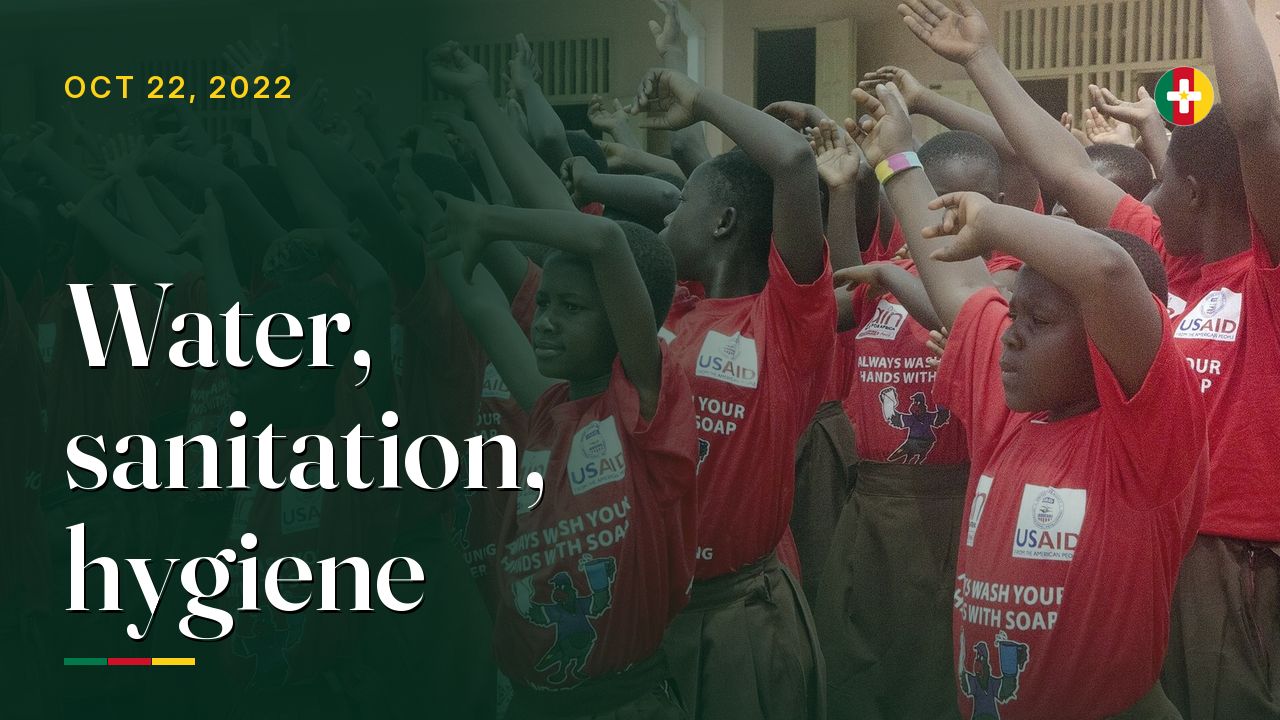
This policy briefing synthesises key insights from the Cameroon Town Hall for Healthcare Professionals meeting held on 22 October 2022, focusing on the theme "The State of WASH in Cameroon," presented by Nkwan Jacob Gobte, IPC/WASH Nurse with the Cameroon Baptist Convention Health Services, with contributions from the South West Regional Delegate of Public Health.
Context
WASH is the base on which infection prevention and control rests. World Health Assembly Resolution 72.7 (2019) asked all countries to assess WASH in health facilities by 2020 and to bring 60 percent of facilities to minimum standards by 2022. Cameroon's recent cholera outbreaks, mpox cases and the Ebola outbreak in Uganda made the discussion urgent.
Key issues
- Basic services are missing. In a 2020 survey of 103 facilities in six regions, only 61 percent had water on site, 56 percent had hand hygiene stations at all points of care and 35 percent had basic sanitation. Health posts and integrated health centres were worst served.
- No budget, protocols or trained staff. 81 facilities had no annual budget for this work, 81 percent had no waste protocol, and many relied on untrained volunteer housekeepers without job descriptions.
- Exclusion of women and people with disabilities. 71.8 percent of facilities had no toilet adapted for limited mobility and only about half supported menstrual hygiene.
- Underfunding and maldistribution. Health receives an estimated 4.5 to 5 percent of the national budget against the Abuja target of 15 percent, and a 2010 ministry study found 43 percent of health resources concentrated in Douala and Yaounde, which serve 18 percent of the population.
- Water is a multisectoral problem. Facilities mirror their communities. Water supply lies with other ministries and the water utility, yet the health sector carries the blame when cholera breaks out.
Discussion highlights
- The delegate asked for findings broken down by official facility category so they can guide decisions on upgrading or replacing unofficial health posts.
- Participants agreed that WASH needs joint action by health, water and energy, and urban development and town planning.
- Football stars, diaspora groups and individuals could fund boreholes for health facilities, starting with their own villages.
- Discussions on institutionalising IPC/WASH were reported to be under way with the ministry, with Africa CDC support.
Recommendations
- Complete a national WASH baseline. MINSANTE, with WHO and partners, should run a representative national assessment of WASH in health facilities using the WHO tool, reported by facility category, as Resolution 72.7 requires. First step: adapt the 2020 survey protocol and pilot it in the South West, which the regional delegate offered.
- Set minimum standards and integrate indicators. MINSANTE should adopt national minimum WASH standards for each facility category and add core WASH indicators (water on site, hand hygiene at point of care, toilets, waste segregation) to the health information system so regional delegations can track progress.
- Create a WASH and IPC budget line at facility level. Hospitals and district health services should hold a dedicated annual budget for WASH, cleaning supplies and protective equipment, and contract, train and give job descriptions to housekeepers and waste handlers rather than relying on volunteers.
- Establish a multisectoral water and health platform. MINSANTE should convene the Ministry of Water Resources and Energy, the ministry in charge of urban development, the national water utility and regional delegations to prioritise water connections and boreholes for health facilities, beginning with cholera-affected districts.
- Mobilise diaspora, sports and community funding. Diaspora professionals, associations and Cameroonian footballers should be invited to sponsor boreholes and hand hygiene stations in specific facilities, coordinated with regional delegations so investments match need. The town hall can link volunteers to the South West delegation as a first pilot.
- Make facilities inclusive. New and renovated facilities should include accessible toilets and menstrual hygiene facilities as a condition of approval by regional delegations.
Next steps
Follow-up session in two weeks (about 5 November 2022), with details to be confirmed. The student intervention proposal and the South West pilot were to be discussed with the speaker and the regional delegate.
Conclusion
The session showed that many Cameroonian health facilities lack the water, toilets, hand hygiene stations and budgets needed for safe care. Closing these gaps will require national standards and data from MINSANTE, a dedicated budget at facility level, and joint action with the water and urban development sectors, supported by diaspora and community contributions.
Meeting minutes
Agenda
- Welcome and opening remarks by Dr. Bryan Tegomoh and the Chair, Dr. Munoh Kenne Foma
- Infectious disease update (COVID-19, mpox, Ebola) by the Chair
- Presentation by Nkwan Jacob Gobte on "The State of WASH in Cameroon"
- Discussion and Q&A
- Summary, closing remarks and next meeting
- Parking lot discussions
Opening remarks
- Dr. Bryan Tegomoh welcomed participants and recalled that the town hall began early in the COVID-19 pandemic as a space for professionals to share knowledge.
- The Chair noted that a WHO analysis around 2000 ranked improved hygiene and sanitation as the single decision that most reduced mortality worldwide, ahead of antibiotics and vaccination.
- Infectious disease update by the Chair: COVID-19 was described as not over, with BA.5 still dominant and BQ.1, BQ.1.1 and XBB sub-variants rising and escaping several monoclonal antibodies. He urged boosters and continued masking in crowded settings, noting that his hospital recorded no influenza case during two years of universal masking.
- Mpox: about 75,000 cases had been reported worldwide up to 22 October, with recent cases in Cameroon (the Chair mentioned the Kumba area). Clinicians were asked to look out for genital, anal and oropharyngeal lesions as well as the classical form.
- Ebola in Uganda: Dr. Tegomoh cited about 64 cases and 39 deaths (case fatality near 40 percent). The Chair said Africa has not learned from COVID-19 or West Africa, and called for health systems that are not single-programme, reuse of the PCR capacity built for COVID-19 down to regional and primary level, trained technicians, and active zoonotic surveillance funded by government.
- On surveillance in Cameroon, the Chair said national COVID-19 data had not been updated for about a month and suggested hospital cases and tested deaths as the most useful indicators, since many patients only reach hospital late.
Presentation
1. WASH as the foundation of infection prevention
Mr. Nkwan described water, sanitation and hygiene (WASH) as the hardware and infection prevention and control (IPC) as the software of safe care. Without water, staff cannot wash hands, clean surfaces or reprocess equipment. Poor WASH leads to healthcare-associated infections, more antibiotic prescribing, antimicrobial resistance and higher costs, while good WASH protects staff, raises morale and helps facilities keep patients.
2. Global commitments: WHA Resolution 72.7
In 2019 the World Health Assembly adopted Resolution 72.7 with 11 actions for member states, including a national WASH assessment, a road map to close gaps, minimum standards, monitoring indicators and integration of WASH indicators into the health management information system. Targets were a baseline assessment in all countries by 2020, 60 percent of countries meeting minimum standards by 2022, 80 percent by 2025 and 100 percent by 2030. He said East African countries had made progress, while Central and West Africa appeared to be lagging or not reporting.
3. Minimum WASH standards for health facilities
Water should come from an improved source, be piped to the point of care, and be stored to cover 48 hours of interruption. Each unit should have at least four labelled toilets (separate for staff and patients, male and female), one toilet adapted for limited mobility, and menstrual hygiene facilities. Hand hygiene stations or alcohol-based hand rub should be at every point of care, waste should be segregated into at least three bins (general, medical, sharps), and cleaning should follow written protocols by trained staff. The standards were recently updated to add climate change and social and gender inclusion.
4. 2020 survey of 103 facilities in six regions
Using the WHO assessment tool, his team surveyed 103 hospitals, integrated health centres and health posts, mostly in the North West, with others in the West, South West, Centre and Littoral. Coverage was best in hospitals, lower in integrated health centres and lowest in health posts (water on site in about 7, 5 and 3 out of 10 respectively). Overall, 61 percent had water on the premises, 56 percent had functional hand hygiene stations at all points of care, 35 percent had basic sanitation, 71.8 percent had no toilet adapted for people with disabilities, and only about half could support menstrual hygiene.
5. Waste, cleaning and management gaps
Only 35.4 percent had basic waste services, segregation was poor, and 81 percent had no waste management protocol. Only 43 of 103 facilities met the minimum standard for environmental cleaning; 22 had no personal protective equipment for cleaners, 35 had no insecticide-treated nets, bed spacing was often under one metre, and 71 had no cleaning checklist. In 81 facilities there was no annual budget for this work, 40 had no trained housekeeper and relied on volunteers, and 44 had no job description for housekeepers.
6. Why coverage remains low
He cited limited funding (the Abuja Declaration target of 15 percent of national budgets for health, against an estimated 4.5 to 5 percent for Cameroon's health ministry), a reversed pyramid in which central levels receive more money than operational districts, and urban concentration: a 2010 Ministry of Public Health study found 43 percent of health resources in Douala and Yaounde, which serve 18 percent of the population. He also pointed to a lack of political will.
7. Consequences and outlook
Poor WASH puts 6 of the 17 Sustainable Development Goals out of reach, falls hardest on women and girls, increases healthcare-associated infections and resistance, and allows outbreaks to spread. On current trends, by 2030 only 81 percent of the world will have drinking water, 67 percent sanitation and 78 percent hand washing facilities, leaving 1.6, 2.8 and 1.9 billion people behind. He concluded that WASH coverage in Cameroon is unacceptably low and that a larger, representative national study is needed.
8. Mobilising football and communities
He opened and closed by asking how football could promote WASH, noting the attention around the Qatar World Cup and the president of the Cameroon football federation, and citing Sadio Mane's investments in Senegal. He suggested that Cameroonian players, and each participant in their own village, could fund at least one borehole for a health facility.
Discussion and Q&A
- A field epidemiology trainee from Gabon was asked about WASH in his country. He said, in French, that the situation in Gabon showed the same challenges and was further behind. He was described as a trainee in the field epidemiology training programme in Yaounde that builds applied epidemiology capacity for Central Africa.
- Dr. Eko Eko Filbert, South West Regional Delegate of Public Health, asked what 'health posts' were, since the ministry organogram runs from category 1 hospitals to category 6 integrated health centres, and requested the sample size and the breakdown of water availability by facility category. Mr. Nkwan said the survey was small, self-funded and not systematically sampled. He included health posts deliberately because communities hours from the nearest health centre depend on them, and argued the WASH standard should not change with who runs a facility. He added that a national study would be expected to show similar or worse results, since water quality and storage were not even assessed.
- The delegate added that facilities mirror their communities, that health accounts for only about 40 percent of cholera prevention and control, and that policy makers need precise categorisation to decide whether to upgrade a site into a recognised, budgeted integrated health centre. He said his regional WASH team was in the field building capacity in health districts and seeking NGO and donor partners, and that boreholes were increasing. He hoped a new general manager at the national water utility would improve piped supply.
- Dr. Joshua Tambe noted that hand washing promotion alone prevents infections, but safe water supply depends on other ministries. He named the Ministry of Water Resources and Energy and the ministry in charge of housing, urban development and town planning, and said the health sector is often blamed for outbreaks it does not control. He cited a CDC estimate that health care accounts for about 20 percent of what drives health and social determinants about 40 percent. He added that category 7 (ambulatory health posts) exists in the 2013 organisational chart but has no budget, and described missed hand hygiene as a 'necessary violation' under heavy workload, recalling an imaging centre in Limbe that ran on buckets during the Africa Cup of Nations.
- The Chair shared his own experience of facilities without water. As a medical student he worked in an integrated health centre with no water. As director of a medical centre in Mankon near Bamenda he found no water at all, started by collecting rainwater in drums, then mobilised the community to drill a borehole. He described other district and referral hospitals, including laboratories, without reliable water, and said the problem is bigger than health care.
- A public health student proposed next steps. He suggested a top-down approach engaging the ministry, regional delegates and facility managers, advocacy for the 15 percent Abuja target, and a public intervention with footballers. He also noted that people often do not wash hands well even when water is provided. The moderator invited him to connect with Mr. Nkwan in the parking lot.
- Closing comment from Mr. Nkwan. He said resources must be mobilised beyond the ministry, that Africa CDC is working with member states, and that at a September meeting in Yaounde with the ministry there were discussions on institutionalising IPC/WASH in the health system.
Calls to action and closing
- The Chair thanked the speaker and the delegate, said the topic had made him reflect on access to water as the first step of WASH, and mentioned diaspora groups that fund boreholes in Cameroon.
- Dr. Eko Eko Filbert thanked the town hall, recalled that during the cholera outbreak he received support from the town hall to motivate personnel (he said about one million francs), and asked to follow up with the student who proposed an intervention, offering the South West as a possible pilot.
- Dr. Tegomoh summarised the session and invited participants to the parking lot discussion.
- Call to action: check whether the health facility in your own village has water, and support a borehole where you can.
Next meeting
In two weeks (about 5 November 2022). Details to be confirmed.
Submitted by the Co-Moderators, Cameroon Town Hall for Healthcare Professionals.