Responding to Public Health Emergencies in Africa: Lessons for Cameroon
Overview
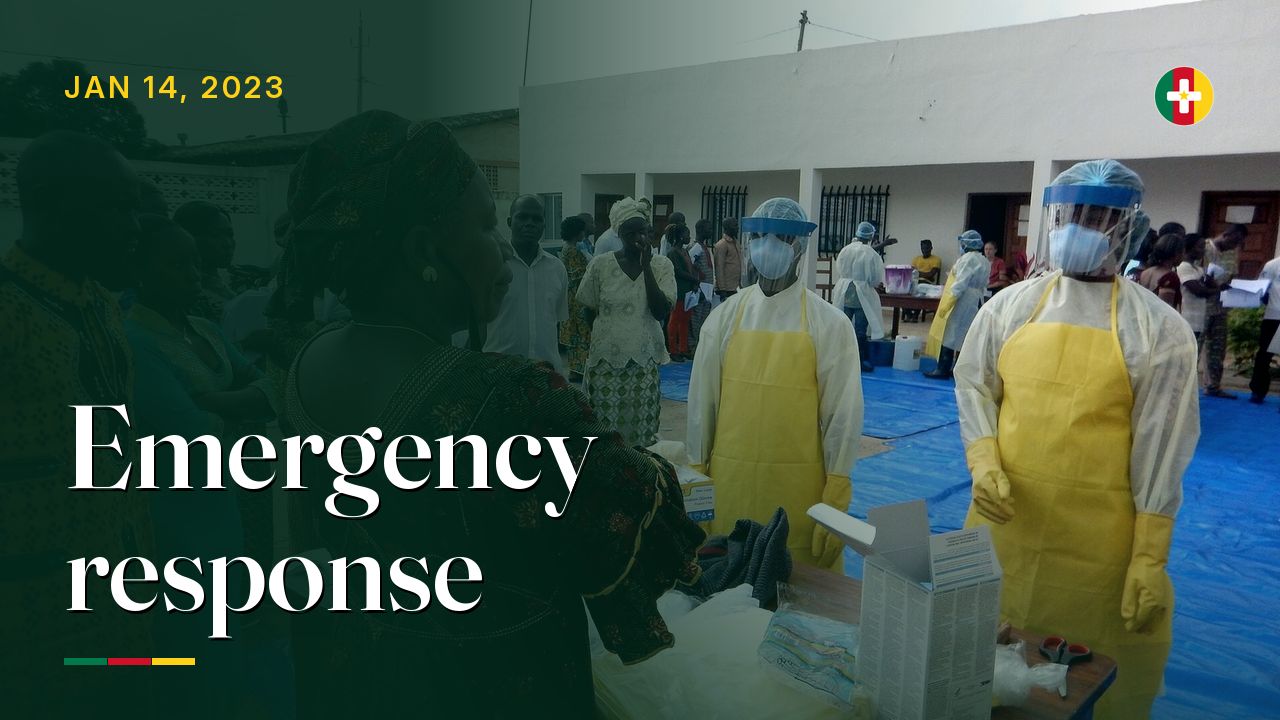
This policy briefing synthesises key insights from the Cameroon Town Hall for Healthcare Professionals meeting held on 14 January 2023, focusing on the theme "Responding to Public Health Emergencies of International Concern in Africa," presented by Dr. Nkengafac Villyen Motaze, a Cameroonian medical epidemiologist who led the field response to South Africa's first COVID-19 case.
Context
The first session of 2023 took place as Uganda declared the end of its Ebola outbreak and as COVID-19, cholera, measles and mpox continued to circulate. Senior Cameroonian experts in vaccines, laboratory systems, clinical research and infectious diseases joined the discussion.
Key issues
- Surveillance must work every day. Outbreaks are detected only where surveillance is running and funded before a crisis, with regular evaluation.
- No independent technical agency. South Africa's NICD shows the value of a largely independent public health institute that can deploy within hours and give evidence-based advice.
- Supply chains and local production. Laboratories had machines but lacked imported consumables during lockdowns.
- Inequity in countermeasures. Vaccine hoarding by high-income countries cost lives; a fair allocation would have averted far more deaths.
- Misinformation. Health professionals rarely explain their work to the public, leaving space for false claims.
Discussion highlights
- Simulation exercises and routine training in South Africa enabled a team to reach the first COVID-19 case within hours.
- Border closures should rest on evidence about variants, not politics.
- Africa CDC's regional centres and national public health institutes offer a continental model for preparedness.
- Clinical research capacity, private sector involvement and university to industry links need strengthening.
Recommendations
- Strengthen a national public health institute. MINSANTE should give a technical public health institute a clear mandate, budget and staff to lead outbreak detection, rapid deployment and evidence-based advice. First step: review the NICD model with Africa CDC support.
- Fund routine surveillance and evaluate it. MINSANTE and regional delegations should maintain year-round surveillance budgets and commission FETP-led evaluations of priority surveillance systems about every three years, starting with cholera, measles and influenza-like illness.
- Run simulation exercises. MINSANTE, with WHO and airport authorities, should hold regular case importation drills at Douala and Yaounde-Nsimalen airports and at district level.
- Secure laboratory supply chains. MINSANTE and partners should pool procurement of reagents and consumables through Africa CDC mechanisms, support local manufacturing, and expand portable genomic sequencing linked to regional centres.
- Invest in risk communication. MINSANTE should staff trained risk communication specialists, and professional bodies and diaspora professionals should share plain-language, sourced information on social media between outbreaks as well as during them.
- Build clinical research capacity. Universities, teaching hospitals and research groups should pair clinicians with methodologists and link with African contract research organisations and industry, so that trials can start quickly in the next emergency.
Next steps
Next session in two weeks (about 28 January 2023). A future session on clinical trial infrastructure in Africa was proposed.
Conclusion
The session showed that preparedness depends on systems that run before a crisis: surveillance, trained teams, supply chains, communication and research. Cameroon can build on its COVID-19 response by giving a technical public health body a clear mandate and by working through continental structures led by Africa CDC.
Meeting minutes
Agenda
- Welcome and New Year remarks by the moderators and the Chair
- Video: the first COVID-19 case response in South Africa
- Introduction of the speaker by Dr. Bryan Tegomoh
- Presentation by Dr. Nkengafac Villyen Motaze
- Remarks from invited experts
- Discussion and Q&A
- Closing remarks and next meeting
- Parking lot discussions
Opening remarks
- Elvis Ndansi, moderating from New York, opened the first town hall session of 2023 with Dr. Bryan Tegomoh (Nebraska) and the Chair, Dr. Munoh Kenne Foma.
- He reported that the town hall had reached 1,720 members across 35 countries (people who had joined at least one session), with growing YouTube viewing by medical, nursing and laboratory students.
- The Chair thanked moderators and speakers and recalled that the town hall is an open platform for discussion rather than lecture, where participants 'agree and disagree amicably'.
- A short video showed Dr. Motaze describing the NICD field response to South Africa's first COVID-19 case in March 2020 in KwaZulu-Natal: about 25 contacts were traced and sampled in roughly three days, PPE was changed behind the team's car to avoid stigmatising households, a few contacts tested positive and were isolated, and no field team member was infected.
Presentation
1. The scale of epidemics
Citing Wellcome Trust data, Dr. Motaze said more than 1,300 epidemics occurred between 2011 and 2017, with cholera the most frequent. Pandemics overshadow these smaller events, although their combined toll may be comparable. The WHO health emergency dashboard listed 211 events being monitored or responded to at the time.
2. Key terms and the International Health Regulations
He defined endemic, hyperendemic, epidemic, pandemic, reservoir, zoonosis, and emerging and re-emerging diseases. The International Health Regulations oblige countries to report new health events to WHO. A Public Health Emergency of International Concern (PHEIC) is an extraordinary event posing a risk of international spread that may need a coordinated response; COVID-19 was declared a PHEIC on 30 January 2020 before it was called a pandemic on 11 March 2020.
3. Global attention follows resources
Low-resource settings usually bear higher outbreak impact, yet sub-Saharan Africa had lower COVID-19 mortality than many expected. Outbreaks gain global attention mainly when they reach high-income countries, as with mpox, which had been in Africa for years. He asked how African problems can be given attention and handled on the African stage.
4. Lessons from Ebola, COVID-19, cholera and measles
Ebola spreads by direct contact and can be stopped, and the 2014 to 2016 West Africa outbreak drove an accelerated vaccine pipeline. COVID-19 had a low case fatality but over 661 million cases and more than 6 million deaths on the WHO dashboard. Cholera is back in force and needs a multisectoral approach, and measles, once targeted for elimination, has rebounded because of vaccination gaps. Vaccines are one tool among many, and are of little use without functional surveillance.
5. Social and economic impact
The 2003 SARS outbreak cost an estimated 40 billion US dollars, and COVID-19 costs are expected to be far higher. Many children lost one or both parents in the West Africa Ebola outbreak, and school closures during COVID-19 caused losses that cannot be recovered. He urged critics to recognise that decision makers act under pressure with imperfect information.
6. Barriers to prevention and response
He listed human activity (deforestation and animal farming bringing people into contact with reservoirs), concurrent emergencies (Haiti's cholera outbreak followed an earthquake), the infodemic of misinformation, and inequity. A modelling study he showed found that vaccine hoarding by high-income countries averted about 33 percent of deaths, against about half if vaccines had been shared by population. Competing priorities include antimicrobial resistance, food insecurity, chemical exposures and substance abuse, which he called a poorly measured epidemic among youth in Cameroon.
7. Global coordination and financing
WHO coordinates partners, and the Financial Intermediary Fund for pandemic prevention, preparedness and response was set up in 2022, hosted by the World Bank with WHO technical leadership. In Cameroon the main partners include WHO, Africa CDC, US CDC and NGOs such as Doctors Without Borders, and coordination is needed to avoid each running its own show.
8. Conclusions
A pandemic does not need a very deadly pathogen. Countries need functional surveillance that runs all the time, not only during crises, proactive risk communication and community engagement, and a multidisciplinary response including logistics, IT, trained communication specialists (not only journalists), decision makers and finance. Health professionals should become active on social media and share facts with valid sources.
Discussion and Q&A
- Dr. Bryan Tegomoh asked Prof. Charles Shey Wiysonge what we know in 2023 that we did not know in 2020. Prof. Wiysonge said the world expected a pandemic but was still unprepared. Lessons included fast-tracked clinical development, the first registration of vaccines on new platforms, the need for a multipronged approach, and an active role for public health professionals in countering misinformation.
- Prof. George Alemnji was invited to comment on preparedness. He said Africa had trained field epidemiologists and laboratory staff and had machines, but supply chains for consumables broke down during lockdowns. He praised Africa CDC's leadership under Dr. John Nkengasong (now US Global AIDS Coordinator) and called for government ownership, political, programmatic and financial sustainability, and local manufacturing of reagents and supplies.
- Dr. Tegomoh asked what lessons NICD learned and what Africa lacks. Dr. Motaze said the key ingredient is a largely independent, technical national public health institute like NICD, able to put a team on the ground within hours alongside provincial staff and to give evidence-based recommendations that governments then own. He said Cameroon handled the pandemic well with a dedicated ministry directorate but would benefit from such a body.
- A participant (initials 'LBG') asked why Africa was not restricting travel from China while high-income countries were. Dr. Motaze said border closures three years into the pandemic were inconsistent with earlier measures such as vaccination certificates and pre-departure tests, and that aiming for zero cases no longer made sense. Restrictions are justified only by evidence of a variant that escapes vaccines or tests or causes more severe disease. Dr. Tegomoh recalled that travel bans punished South Africa after it reported Omicron.
- A participant asked what South Africa had done before 5 March 2020 to detect the first case, how vaccine hesitancy affects equity, and whether outbreak prediction models are useful. South Africa had run simulation exercises, including a case importation drill at O.R. Tambo International Airport, and regular training since the 2015 Ebola response and measles outbreaks, with FETP-led surveillance evaluations about every three years. Hesitancy should be tackled through community engagement but should not reduce allocation to African countries. He called predicting the next pandemic 'a waste of time' and said models are for comparing interventions, not forecasting case counts.
- Dr. Henshaw Mandi stressed the private sector and clinical research ecosystem. He described a coalition of African contract research organisations with an office in Rwanda and urged links between universities, industry and the public sector so that PhD discoveries reach trials and markets. Dr. Motaze added that clinicians and methodologists must work together, offered free methodological advice, and said efforts must be coordinated and built step by step.
- Dr. Tegomoh asked Dr. Obadia Mfuh Kenji about building diagnostics quickly. Dr. Kenji said his Stanford team designed primers from the published sequence and engineered synthetic positive controls (gene blocks) to validate an assay before any positive samples existed. Supply chains were a problem even in the US. Portable Oxford Nanopore sequencers are making genomics affordable, and WHO external quality assessment data showed African laboratories performing well.
- A participant asked what platform Cameroon now has for surveillance, diagnosis and treatment if another pandemic came and borders closed. Dr. Motaze said Cameroon maximised its available resources, that its borders cannot realistically be sealed, and that the question applies to most countries. Prof. Alemnji added that preparedness should be continental, through Africa CDC, its five Regional Collaborating Centres and national public health institutes, with shared genomic sequencing and supply chain systems.
- A civil society participant asked how scientists address community psychology and misinformation, and whether HIV lessons shaped South Africa's COVID-19 response. Dr. Motaze urged professionals to explain their work continuously on social media in simple language. South Africa's incident management team set up a dedicated communication function. He said the response drew more on recent measles and polio outbreaks than on HIV, whose lessons had already reshaped government policy in the 2000s.
- Dr. Tegomoh relayed a chat question from Dr. Asumba on births and deaths data for accurate outbreak estimates. Dr. Motaze said surveillance systems in South Africa and Cameroon are similar in design and differ in resources. Surveillance must have clear objectives; targeted contact studies are more efficient than community-wide testing of asymptomatic people, and burden on hospital beds matters most.
- Dr. Boghuma Kabisen Titanji was invited to share lessons. She said even countries that looked most prepared on paper, such as the United States and Western Europe, were humbled; preparedness on paper is not preparedness in a crisis, and approaches focused on one country alone are doomed to fail. She noted the WHO pandemic treaty planned for 2024.
Calls to action and closing
- The Chair recalled that Dr. Motaze taught him some of his first surgeries, asked whether a second COVID-19 would be handled differently, and argued that clinical trials should be embedded in routine care, as in oncology.
- Elvis Ndansi suggested a future session on strengthening clinical trial infrastructure in Africa.
- Participants were invited to the parking lot discussion.
Next meeting
In two weeks (about 28 January 2023). Topic to be confirmed.
Submitted by the Co-Moderators, Cameroon Town Hall for Healthcare Professionals.