Improving Access to Sustainable Diagnostic Radiology in Cameroon
Overview
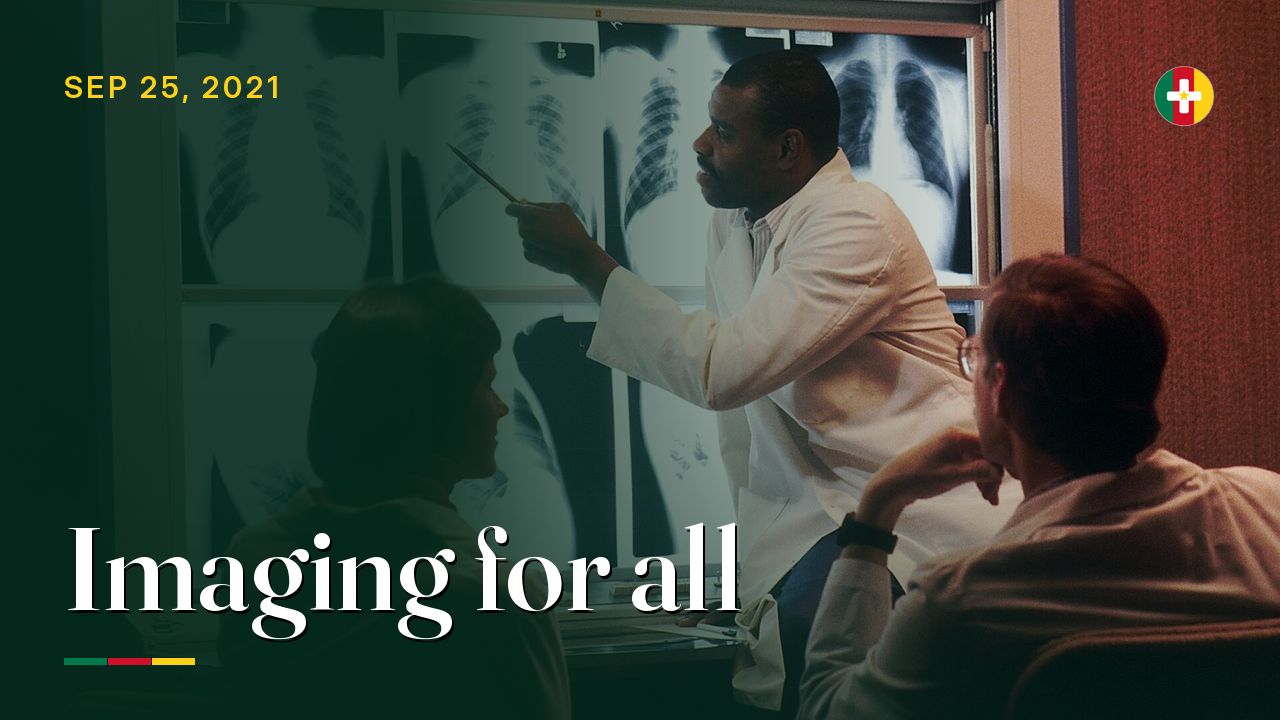
This policy briefing synthesizes key insights from the Cameroon Town Hall for Healthcare Professionals meeting held in late September 2021 (inferred September 25, 2021), focusing on the theme "Improving Access to Sustainable Diagnostic Radiology in Low Resource Settings," presented by Dr. Kenedy A. Foryoung, neuroradiologist with RAD-AID International.
Context
Imaging demand in Cameroon is rising with trauma, cancer and chronic disease. Most of the estimated 100 to 150 imaging centres are in Douala and Yaoundé and offer only X-ray and ultrasound. Government investment has added CT, MRI and catheterisation labs, but much equipment fails early, sits idle for months, and is operated by staff with limited training.
Key issues
- High equipment failure and downtime. Equipment frequently fails within warranty for lack of maintenance contracts, spare parts and local engineers. Participants cited a referral hospital CT scanner down for six months and an MRI out of service for about 11 years.
- Workforce shortages beyond radiologists. Estimates of about one radiologist per 500,000 people, very few radiation oncologists, medical physicists and biomedical engineers, and technologists without hands-on training. No practising interventional radiologist was known in the country.
- Cost and geographic inequity. A CT scan cost about 75,000 to 150,000 FCFA, largely paid out of pocket, and advanced imaging was concentrated in the two main cities.
- No quality control or professional regulation. Ultrasound reports from untrained operators, unreadable MRIs, and no accreditation body or radiological waste facilities.
Discussion highlights
- Mbingo Baptist Hospital showed a workable model: readiness assessment, a CT scanner financed through loans, an on-site radiologist, a maintenance contract and a local engineer.
- Tanzania trained its first three interventional radiologists through short faculty mission trips and streamed lectures, aligned with its national residency.
- Teleradiology should support and train local radiologists, not replace them.
- Power instability damages equipment and needs local technical solutions.
Recommendations
- Write maintenance and training into every equipment contract. MINSANTE and hospitals should require warranties, service contracts, spare-parts guarantees and training of local engineers and technologists in all imaging procurement, including the remaining phases of the government equipment plan. First step: adopt a standard contract clause and check serial numbers for parts availability before purchase.
- Use a readiness assessment before buying equipment. Regional delegations and hospital boards should assess power, IT, pathology, specialist staff and maintenance capacity before acquiring advanced modalities, using a tool such as the RAD-AID Radiology Readiness Assessment (available in French).
- Train the full imaging team. MINSANTE and training schools should expand training of technologists, sonographers, medical physicists and biomedical engineers, with bonded scholarships for those trained abroad. Diaspora radiologists can support the national radiology residency through teaching and short placements.
- Regulate quality through a professional body. MINSANTE should work with Cameroonian radiologists to establish or strengthen a professional association that sets accreditation and certification standards, starting with ultrasound operators, and publish a list of accredited imaging centres.
- Build a national teleradiology network led by local radiologists. MINSANTE and partners should give district and regional hospitals digital (DICOM/PACS) capacity so images can be read by Cameroonian radiologists in Yaoundé and Douala, with data protection. A pilot in one region would be a practical first step.
- Reduce cost to patients. Government should consider subsidies, insurance coverage and tax or customs relief for imaging services and equipment, as is done for other essential services.
Next steps
Dr. Foryoung offered to collaborate with Cameroonian faculties on radiology training; participants asked him to share his slides and contact details.
Conclusion
Cameroon is acquiring more imaging equipment, but without maintenance, trained staff, quality control and financing it will not be sustainable. The Mbingo and Tanzania experiences show that planned, locally led partnerships can close these gaps.
Meeting minutes
Agenda
- Welcome and opening remarks by co-moderator Elvis Ndansi
- Remarks by the Chair, Dr. Munoh Kenne Foma, and greetings from participants
- Introduction of the guest speaker
- Presentation by Dr. Kenedy Foryoung on "Improving Access to Sustainable Diagnostic Radiology in Low Resource Settings"
- Discussion and Q&A, moderated by the co-moderators
- Summary by Elvis Ndansi, closing remarks and next meeting
Opening remarks
- Elvis Ndansi welcomed participants after a two-week break and recalled the Chair's previous session on COVID-19 therapies granted emergency use authorization.
- Several participants could not join because the registration link showed "registration closed"; they were directed to the Zoom link sent from the Chair's email.
- Elvis Ndansi reported positive feedback from viewers on YouTube, Facebook and the website, and said government officials would be joining future sessions, as policymakers were following the discussions.
- The Chair thanked Dr. Foryoung, describing him as one of the few diaspora professionals who has returned home repeatedly to improve radiology in Cameroon. A participant who had known him since secondary school at Sasse greeted him warmly.
- Elvis Ndansi introduced Dr. Foryoung: medical school at Howard University (Alpha Omega Alpha, Gold Humanism Honor Society), radiology residency at Yale New Haven Hospital (RSNA travel grant, 2016), co-founder of the Yale RAD-AID chapter, neuroradiology fellowship at Yale, and outreach trips to Cameroon and Tanzania.
Presentation
1. Why imaging matters more in Cameroon now
Dr. Foryoung grouped radiology into simple, low-cost modalities (plain film, ultrasound) and advanced, capital-intensive ones (CT, MRI, nuclear medicine). He said Cameroon's disease pattern was shifting toward trauma (for example motorcycle crashes with brain haemorrhage), chronic disease and cancer, with breast cancer mostly diagnosed at stage 3 or 4 and a five-year survival of about 30 percent. He described CT as the workhorse for trauma, oncology and complex surgery. The Chair added that "where there is no tissue there is no issue": without imaging, cancers cannot be biopsied, staged or followed.
2. Current state of radiology in Cameroon
Reliable data were lacking. Estimates put the number of imaging centres at about 100 to 150, clustered in Douala and Yaoundé and mostly limited to X-ray and ultrasound. The private sector was growing in Yaoundé, Douala, Bafoussam and the North West. Few high-field MRI units existed, nuclear medicine was scarce, and of the two radiotherapy centres (Yaoundé and Douala) the speaker understood the Yaoundé one was not working. A government emergency plan (referred to as the "Plan d'Urgence") had added equipment, including three new cardiac catheterisation labs and several MRI units.
3. Equipment failure and workforce gaps
Most equipment ran below 80 percent capacity and figures of 50 percent non-functional had been reported, often failing within the warranty period for lack of maintenance contracts and local engineers. The speaker cited survey estimates of about one radiologist per 500,000 people, very few radiation oncologists, and even fewer medical physicists and biomedical engineers. Technologists often lacked training, partly because there were no machines to train on. He noted these figures dated from 2017.
4. RAD-AID and the Radiology Readiness Assessment
RAD-AID, a US non-profit founded in 2008, sends volunteer radiologists, technologists and nurses to strengthen imaging in low-resource settings. Its Radiology Readiness Assessment reviews disease burden, other specialties, power, IT, laboratories (including histopathology) and human resources, so that a hospital acquires the modality it can actually use. For example, a biopsy service makes no sense without a pathology lab or a surgeon.
5. Mbingo Baptist Hospital
Mbingo, a tertiary teaching hospital with a heavy surgical and oncology load, previously relied on imaging from the regional hospital. It built an imaging centre from scratch and acquired a 16-slice Siemens CT scanner through loans and grants, including a loan from Siemens, which the speaker understood had been repaid. RAD-AID supported recruitment and mentoring of an on-site radiologist (with teleradiology support at first), and linked a Siemens elastography specialist who trained staff for free for hepatitis imaging. The hospital also secured a maintenance contract and a locally based engineer.
6. Support to the government equipment plan
The government plan, linked to preparations for the Africa Cup of Nations, included eight new hospitals and refurbishment of three existing ones, with equipment supplied through Siemens. Drawing on the Mbingo experience, RAD-AID partnered on capacity building for technologists, including training around the first high-field MRI installed at the military hospital in Yaoundé. The plan was to bring French-speaking volunteers from Canada to work side by side with Cameroonian technologists, but COVID-19 travel restrictions slowed the work.
7. Tanzania: training the first interventional radiologists
Tanzania had no interventional radiologist. Through a partnership between Muhimbili University of Health and Allied Sciences, Yale, Emory, RAD-AID and Road2IR, US interventional radiology faculty travelled for two-week mission blocks (aiming for 10 trips a year over three to five years) after local residents scouted cases, and Yale lectures were streamed live to Tanzanian residents. Training moved in three phases from simple procedures (biopsies, drainage, nephrostomy) to core procedures (gastrostomy, IVC filters) and then vascular work. In September 2021 Tanzania graduated its first three interventional radiology attendings.
8. Lessons learned
Dr. Foryoung concluded that the need for imaging is growing with chronic disease, that the high failure rate of equipment requires partnerships with local engineers who can respond within a day, and that a skilled workforce (technologists, engineers, physicists, not only radiologists) is the basis of sustainable imaging.
Discussion and Q&A
- A co-moderator asked how African health systems can manage the cost of imaging when most patients pay out of pocket. Dr. Foryoung said a CT scan in Cameroon cost roughly 75,000 to 150,000 FCFA, sometimes with contrast paid separately, and that private centres need revenue to operate. He saw third-party payment, government subsidy and insurance as the way forward.
- A student asked about Dr. Foryoung's academic path. He finished secondary school in Cameroon, started at a US community college, transferred to a four-year university, won a scholarship to Howard University, finished in the top five of his class and matched into radiology at Yale. The Chair added that he had been first in the GCE the year he wrote it.
- Dr. Bryan Tegomoh asked about the role of radiology in COVID-19 guidelines, the high cost of a CT scan relative to an exploratory laparotomy, and the future of teleradiology given unstable power. Dr. Foryoung said imaging findings lag behind laboratory tests, so PCR remains the diagnostic tool, with imaging mainly for complications. On teleradiology he urged caution: sending images abroad (he cited Nigerian images read in India) can bypass and deskill local doctors. He favoured PACS and DICOM-based systems that keep the in-country radiologist in control and use remote reading to support and train.
- A doctor dialling in from Jerusalem described a referral hospital CT scanner in Cameroon that was down for six months, a stroke patient sent to a private clinic at midnight, and an MRI that has not worked for about 11 years. He asked what is done for maintenance and training, and whether teleradiology could connect rural sites to the roughly 100 radiologists concentrated in Yaoundé. Dr. Foryoung described an "epidemic of equipment failure" and said vendor contracts should include warranties, maintenance and obligatory training of local engineers, as some countries require. He cited machines worth US$1.2 to 2.2 million idle for months over a blown fuse. He supported a government strategy to give every rural hospital digital imaging capacity so images can be read remotely with patient confidentiality.
- A physiotherapist from the Bamenda Regional Hospital said power fluctuations forced the imaging unit to run on a generator in four-hour blocks, and argued that management, not only resources, was the core problem. He proposed bonded scholarships for specialists trained abroad. Dr. Foryoung said equipment is designed for markets with stable power and that African buyers lack the purchasing power to push vendors for more robust designs, so local workarounds are needed. On management he noted that some hospital leaders prioritise luxury vehicles over basic equipment such as ultrasound machines.
- The Chair asked whether the Tanzania model could train interventional radiologists in Cameroon, where he knew of no practising interventional radiologist among about 100 radiologists, and urged government-backed insurance and training of physicists, technologists and dosimetrists. Dr. Foryoung said it was possible but would require local buy-in, cutting red tape, and a professional body to verify training, since claimed qualifications are hard to check. He stressed that imaging is a team sport and that the readiness assessment prevents buying machines a hospital cannot use.
- Elvis Ndansi asked whether tax incentives and customs exemptions could bring the private sector in to close the gap. Dr. Foryoung said both public and private sectors were needed. He advised buyers to have an engineer check the serial number of any imported machine to confirm parts are still made, as some equipment cannot be repaired once parts are discontinued.
- A participant asked about radiation safety and waste disposal, and argued that Cameroon's health system is in a survival phase, that the private sector "muddies the waters" with MRIs no one can read, and that copying Tanzania would be wishful thinking. Dr. Foryoung agreed that some of the work may be wishful thinking but said one has to start somewhere. He said radiation protection must be part of every installation, MRI safety screening for metal must be taught, and Cameroon did not yet have facilities for radiological waste disposal.
- A participant asked whether Dr. Foryoung could link with faculties in Cameroon to support radiology residency training; a co-moderator asked about a radiologists' association; a clinician asked whether fluoroscopy exists in Cameroon. Dr. Foryoung said aligning with the existing Cameroonian residency (about three graduates a year) was the most sustainable route and that he was open to it. He believed working fluoroscopy units existed, though he had seen non-functional ones. He supported a professional association for accreditation and quality control, given wide variability in report quality.
- A clinician also involved in policy described ultrasound reports produced by untrained operators and a parent who publicly denounced him at the central mosque in Bamenda after he refused to operate based on such a report. He asked what should be done. Dr. Foryoung said ultrasound is highly operator dependent and requires certification and standardisation. A gastroenterologist proposed training these operators to a minimum standard rather than prosecuting them. Dr. Foryoung suggested systems such as a published list of reliable centres of excellence.
Calls to action and closing
- A clinician agreed that chest imaging should not be a priority for hypoxic COVID-19 patients when it would not change management.
- Elvis Ndansi summarised the session, highlighting equipment failure, workforce shortages, the Mbingo model, the Tanzania model, vendor obligations and the need for standardisation of imaging through a professional body.
- Dr. Foryoung closed by saying the challenges were real but there were always avenues to improve.
- The co-moderators thanked the speaker and participants.
Next meeting
Announced as "next week" without a date.
Submitted by the Co-Moderators, Cameroon Town Hall for Healthcare Professionals.