Telemedicine in Cameroon: Building the Legal and Technical Foundations
Overview
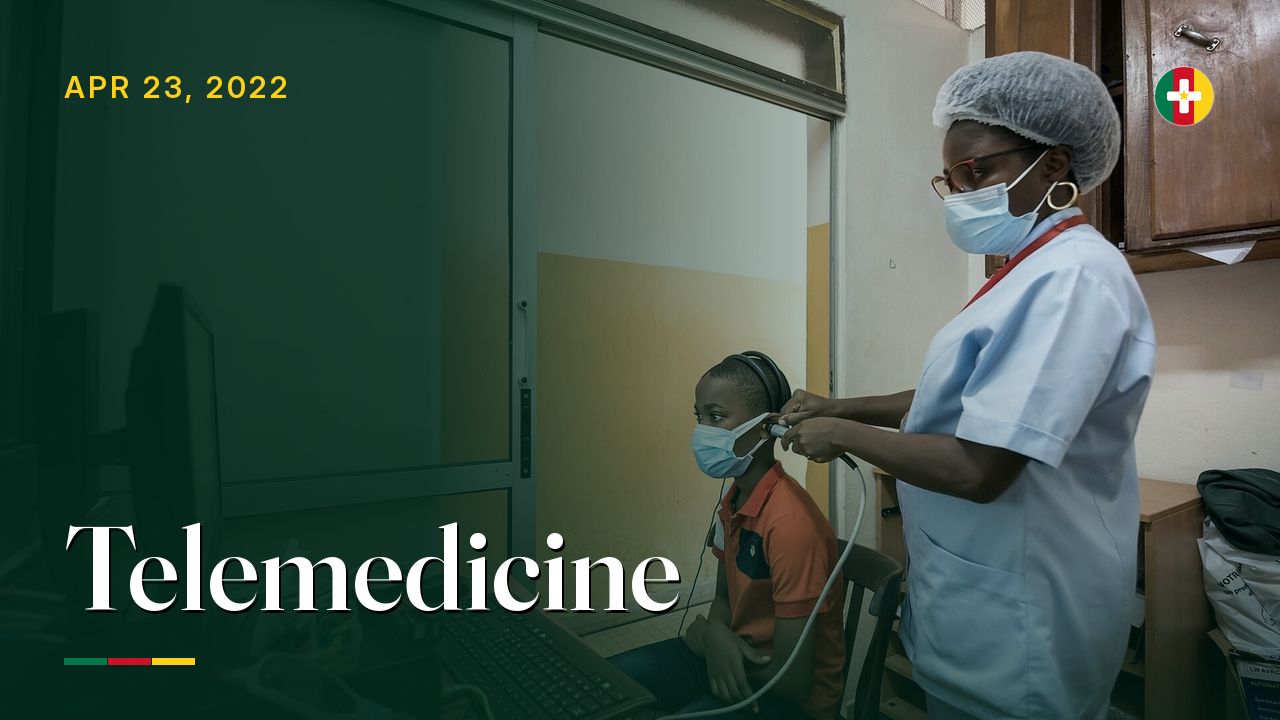
This policy briefing synthesises key insights from the Cameroon Town Hall for Healthcare Professionals meeting held on 23 April 2022, focusing on digital health and telemedicine in Cameroon, presented by Dr. Alexis Awungia Tazinya, Chief Health Officer of Waspito.
Context
Cameroon has few doctors, concentrated in Douala and Yaounde. Patients already seek informal advice by phone. Private telemedicine platforms such as Waspito are growing, while the government's 2020 to 2024 digital health strategic plan is still being implemented and no legal framework for telemedicine exists.
Key issues
- No legal framework. Telemedicine is not prohibited but not regulated, leaving doubts among clinicians and making some insurers reluctant to pay for remote consultations.
- Infrastructure gaps. Unreliable electricity and internet, and 3G and 4G coverage of about 70 percent, limit access, especially for video.
- Data protection. Cameroon has no national health data protection standard, so platforms align with HIPAA or GDPR, and cyber security policy is weakly implemented.
- Fragmented systems. DHIS2 exists, but electronic records, pharmacy systems and a health worker registry are missing or not interoperable.
- Trust. Some patients and providers doubt that remote consultations are safe or effective.
Discussion highlights
- Low-cost instant consultations (3,000 FCFA) can reduce avoidable hospital visits.
- Verification of every doctor with the medical council is a key safeguard.
- Audio and chat options and free reconnection help with poor connectivity.
- Public health communication, including for vaccination, must be adapted to local beliefs and priorities.
Recommendations
- Adopt a telemedicine legal framework. MINSANTE, with the National Medical Council and the Ministry of Posts and Telecommunications, should finalise regulations on licensing, prescribing, liability and payment for remote care. First step: publish a draft for consultation with clinicians and platforms.
- Create health worker and facility registries. MINSANTE should build a public registry of licensed health workers that platforms can use for verification, alongside the existing facility registry.
- Set national health data standards. MINSANTE and the national ICT agency should issue rules on confidentiality, consent and cyber security for health data, and interoperability standards linking platforms, electronic records and DHIS2.
- Allow insurers to cover teleconsultations. Regulators and insurers should recognise teleconsultations by verified providers as reimbursable services.
- Expand connectivity for health facilities. Government and telecom partners should prioritise reliable internet and power for district hospitals and health centres so they can use teleconsultation and referral.
- Train clinicians in digital health. Medical and nursing schools and professional bodies should include telemedicine practice and ethics in training to build trust.
Next steps
Questions on confidentiality and on medical council regulation of telemedicine should be followed up in a later session.
Conclusion
Telemedicine can bring affordable care closer to Cameroonians, but it needs a legal framework, data protection rules, verified providers and reliable connectivity to grow safely.
Meeting minutes
Agenda
- Welcome and introduction of moderators by Elvis Ndansi
- COVID-19 update by the Chair, Dr. Munoh Kenne Foma
- Discussion on low COVID-19 vaccine uptake in Cameroon
- Introduction of the guest speaker by Dr. Bryan Tegomoh
- Presentation by Dr. Alexis Awungia Tazinya on Waspito and digital health in Cameroon
- Discussion and Q&A
Opening remarks
- Elvis Ndansi welcomed participants and said the town hall, almost two years old, brings together Cameroonian health professionals in about 34 countries every two weeks, with about a thousand views per session online.
- COVID-19 update by the Chair: Omicron BA.2 remained dominant, with BA.2.12.1 rising in the US and BA.4 and BA.5 in South Africa. He defended masks after US travel mask rules changed, noted that in China many people over 80 were unvaccinated, and said a fourth dose reduced severe disease by 78 percent in Israeli data. He said Cameroon had vaccinated only 6.9 percent of its population despite having vaccines, and that a COVID-19 PCR test in Cameroon now cost 30,000 FCFA, which would limit data.
- On treatment, he said WHO had updated its guidance: Paxlovid reduces severe disease by about 90 percent, molnupiravir and sotrovimab are options for non-severe disease, and corticosteroids and baricitinib are options in Africa for severe cases, while tocilizumab is expensive.
- Asked why uptake was low, Dr. Tegomoh said public health communication had been poor and called for sociology, anthropology and communication to be part of public health training. A participant added that messages designed for Europe and America cannot simply be transferred to Cameroon, where people weigh vaccination against malaria and poverty.
Presentation
1. The access problem
Dr. Tazinya said Africa has far fewer doctors per head than Europe and the Americas, and those doctors are concentrated in big cities, so a specialist consultation can mean travelling across many villages. This leads to self-diagnosis, self-medication and roadside drugs. He noted that many people already get informal phone advice from relatives who are doctors.
2. What Waspito offers
Waspito was described as a health social network, 'a Facebook for healthcare', with instant consultations rather than bookings: a user sees which doctors are online and calls one by video, audio or chat. A generalist consultation costs 3,000 FCFA, against 10,000 to 15,000 FCFA in a Douala clinic, paid by Orange or MTN mobile money or through insurance. Anonymous discussion forums are free, and doctors can earn extra income and consult patients in other towns.
3. Reach and safeguards
He reported about 25,000 app users, more than 2,000 consultations in two years, over 70,000 listed service providers (clinics, laboratories, imaging centres), a new office in Cote d'Ivoire and a recently closed seed round of about 2.7 million dollars. Every doctor is verified with the national medical council (in Cote d'Ivoire, with the local licensing body), and the platform is built to HIPAA standards for data confidentiality. An early survey found more than 30 percent of patients were never physically examined during a consultation, which he called avoidable hospital visits.
4. Digital health policy in Cameroon
Citing the government's 2020 to 2024 digital health strategic plan, he said Cameroon is still at a desk study phase, with registries and DHIS2 in place, some electronic medical record pilots in large hospitals, and no registry of health workers. On whether telemedicine is legal, he said it is not yet regulated by a legal framework, but it is not prohibited, and the plan budgets over 11 billion FCFA for digital health.
5. Challenges
Challenges included internet access and quality, distrust of remote consultations by some users and providers, the absence of a legal framework (which makes some insurers reluctant to cover remote services), and slow technology development. From the government's SWOT analysis he listed political will, partners and DHIS2 as strengths, and weak interoperability, low funding, shortage of qualified staff, electricity and internet gaps, cyber security and only about 70 percent 3G and 4G coverage as weaknesses and threats. His own power cut during the talk illustrated the point.
Discussion and Q&A
- Elvis Ndansi asked what happens when power or internet fails during a teleconsultation. Dr. Tazinya said the patient can call the doctor back without paying again and the doctor can ring the patient. Audio calls use less bandwidth than video, and patients can send photos by chat.
- Elvis Ndansi asked whether the 3,000 FCFA price accounts for the patient's data costs and the doctor's time. He said prices are set by the market and 3,000 FCFA had proved the right level. Patients pay a little more for data but save on taxis and waiting. Consultations averaged 6 to 15 minutes for generalists and 8 to 16 minutes for specialists, with no time lost between patients, so a generalist can earn a salary from home.
- Dr. Tegomoh relayed chat questions on confidentiality, how DHIS2 works, and whether the National Medical Council (Ordre National des Medecins du Cameroun) regulates telemedicine.
Submitted by the Co-Moderators, Cameroon Town Hall for Healthcare Professionals.