Stroke Management in Cameroon
Overview
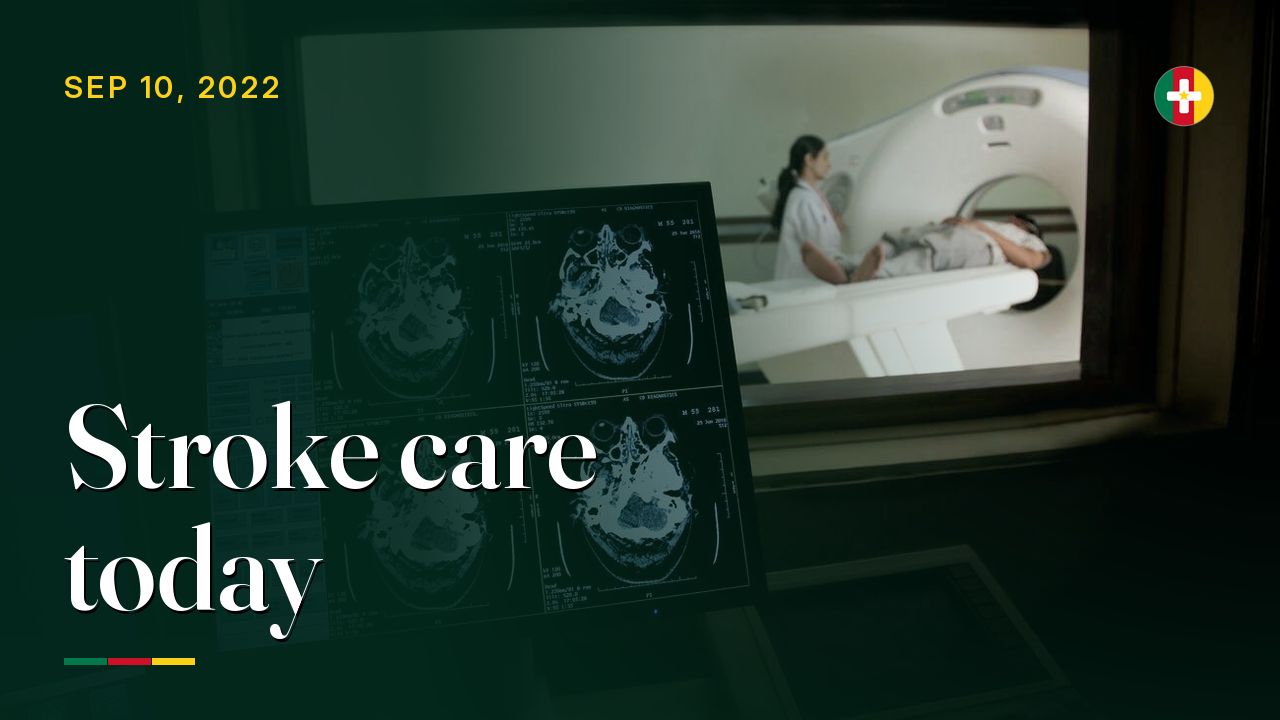
This policy briefing synthesizes key insights from the Cameroon Town Hall for Healthcare Professionals meeting held on September 10, 2022, focusing on the theme 'Stroke Management in Cameroon: Current State, Successes, Challenges and Opportunities', presented by Dr. Leonard Ngarka, consultant neurologist at Yaounde Central Hospital.
Context
Stroke is the second cause of death worldwide and a growing cause of death and disability in Cameroon, including among adults under 40. About a quarter of Cameroonians have hypertension, most uncontrolled. Care is costly (over 800,000 FCFA over nine months, and about 1.8 million FCFA for thrombolysis), neurologists work in only about five regions, and rehabilitation services are scarce.
Key issues
- Uncontrolled risk factors. Hypertension, diabetes, obesity and sedentary lifestyles are common and poorly controlled, and infections such as HIV and sickle cell disease add to the risk.
- Pre-hospital delays. Low awareness, traditional healers, poor transport and traffic, and insecurity in the North West and South West delay arrival well beyond the 4.5 hour window.
- Limited acute care. Few neurologists, out of pocket payment and high costs put thrombolysis out of reach for most patients.
- Weak rehabilitation. Shortages of physiotherapists and speech therapists (two in Yaounde) and long waiting times limit recovery.
- No reliable data. Many hospitals still record consultations in notebooks, and many deaths occur at home, so the true burden is unknown.
Discussion highlights
- Prevention, above all control of hypertension, offers the greatest impact.
- About half of stroke deaths may occur at home.
- Stroke guidelines need to be staged for each level of the health pyramid.
- Infectious causes (HIV, neurocysticercosis, syphilis, tuberculosis) should be part of the work up.
- Physiotherapy and rehabilitation drive much of the recovery seen after stroke.
Recommendations
- Make hypertension control a national priority. MINSANTE's non-communicable disease programme should run community screening for hypertension and diabetes, subsidise essential antihypertensive and antidiabetic drugs, and support adherence through primary care follow up.
- Build stroke registries and surveillance. MINSANTE and hospitals should require standard patient registers, starting with referral and regional hospitals, move towards electronic records, and add stroke to routine reporting in DHIS2. First step: adopt the Yaounde Central Hospital stroke register as a model.
- Adopt staged stroke guidelines. Building on the Brain Science Congress (26 to 28 October 2022), MINSANTE and professional societies should publish stroke guidelines for health centres, district, regional and referral hospitals, including referral pathways and thrombolysis protocols where imaging exists.
- Shorten the time to care. MINSANTE, with the ministries of transport and public works, should strengthen emergency transport and public awareness of FAST warning signs, and enforce priority for ambulances.
- Invest in rehabilitation. Training schools and hospitals should expand physiotherapy, speech therapy and nursing support for stroke survivors, with rehabilitation units in regional hospitals.
- Protect patients from catastrophic costs. The universal health coverage programme should include acute stroke care and secondary prevention medicines.
Next steps
Participants were invited to the Brain Science Congress on stroke in Cameroon (26 to 28 October 2022) and to answer its pre-congress questionnaires; the town hall offered to circulate them to its members.
Conclusion
Stroke in Cameroon is common, costly and largely preventable. Controlling hypertension, collecting reliable data, setting staged guidelines and investing in rehabilitation would do more than expensive acute treatments, while making those treatments available where imaging and teams exist.
Meeting minutes
Agenda
- Welcome by the lead moderator
- Global health update by the Chair (monkeypox, COVID-19, polio)
- Introduction of the speaker by Dr. Bryan Tegomoh
- Presentation by Dr. Leonard Ngarka on stroke management in Cameroon
- Reflections from Prof. Alfred Njamnshi and Dr. Boghuma Kabisen Titanji
- Discussion and Q&A
- Closing remarks, vote of thanks and summary by the lead moderator
Opening remarks
- Elvis Ndansi recalled the previous session on family planning and introduced the topic, noting that most people know a relative or friend who has had a stroke.
- Dr. Munoh Kenne Foma's update covered falling life expectancy in the United States, a decline in monkeypox cases worldwide (almost 22,000 cases in the US), bivalent COVID-19 boosters due by 30 September, intranasal vaccines approved in China and India, and new COVID-19 cases reported in Cameroon (over 1,000 in two weeks) with only seven vaccine doses per 100 people.
- Asked how he would spend 5 million dollars on COVID-19 as minister, the Chair said he would put most of it into education to overcome vaccine hesitancy, then vaccinate with donor supplied vaccines.
Presentation
1. What stroke is
Dr. Ngarka defined stroke as a sudden neurological deficit, often of the face, arm or speech (FAST), and stressed that 'time is brain'. About two thirds of strokes are ischaemic and about a quarter haemorrhagic. Modifiable risk factors include hypertension, diabetes, smoking, alcohol, sedentary lifestyle and obesity; non-modifiable ones are age, sex and race.
2. A heavy and rising burden in Africa
Stroke is the leading cause of preventable dementia, the second cause of death and the third cause of disability adjusted life years lost worldwide, costing about 0.6 percent of global GDP. Incidence is highest in low and middle income countries, which carry 86 percent of stroke deaths, about half of them in Africa, and he said African figures are under reported. A US study found vascular risk factors more common in indigenous Africans than in African Americans or Americans of European descent, and some genes have been linked to higher risk.
3. Complications beyond the stroke
He noted that it was the world day to fight suicide and that depression affects 16 to 18 percent of stroke survivors. Other complications include cognitive impairment, pain, sexual dysfunction in over 80 percent, anxiety, aphasia, aspiration pneumonia and delirium.
4. Stroke in Cameroon
He said stroke accounts for about 6.5 percent of deaths in Cameroon. A study at Douala General Hospital found the average cost of care over nine months exceeded 800,000 FCFA, about 90,000 FCFA a month, against a minimum wage under 35,000 FCFA. Peak incidence is at 55 to 64 years, but strokes in people aged 25 to 40 are common, and he described a 28 year old colleague with a brainstem stroke. He attributed the rise to lifestyle and dietary change, sedentary work, obesity and hypertension, and said most causes are preventable.
5. Gaps along the care pathway
Following World Stroke Organization guidance, patients should reach hospital within an hour and receive thrombolysis within 4.5 hours of onset. In Cameroon, delays arise from poverty, low awareness, visits to traditional healers, traffic and drivers not giving way to ambulances. Neurologists work in only about five regions, thrombolysis costs about 1.8 million FCFA paid out of pocket, and Yaounde has only two speech therapists, with waits of two to three months to see specialists.
6. Successes
New regional reference hospitals, including in the West, Garoua and the South, have modern imaging. More neurologists, neurosurgeons, nurses and physiotherapists are being trained, and Cameroon recently published its first reported case of stroke thrombolysis, with four more cases awaiting publication.
7. The way forward
He proposed the African Stroke Organization framework: surveillance to measure incidence, prevalence and mortality, rehabilitation centres, health promotion and prevention, and acute care. He called for stroke registries, screening and control of hypertension and diabetes, advocacy, and use of the growing young workforce and digital tools, noting Cameroon now trains about 1,000 doctors and plans over 300 specialists a year. He announced the Brain Science Congress on stroke in Cameroon, 26 to 28 October.
Discussion and Q&A
- Prof. Alfred Njamnshi was invited to comment. He said hospital cases are the tip of the iceberg, with an estimated 50 percent of stroke deaths occurring at home, and highlighted Africa specific risk factors such as sickle cell disease and infections. He invited participants to answer questionnaires for health professionals and the public ahead of the October congress, to inform staged stroke guidelines for each level of the health pyramid. Elvis Ndansi offered the town hall's support, noting about 1,300 members in over 34 countries.
- Elvis Ndansi asked whether the crisis in the North West and South West, including lockdown days, has affected stroke outcomes. Dr. Ngarka said there is no published data, but clinical experience suggests more complications and deaths because patients delay coming to hospital, and that chronic stress is itself a risk factor.
- Bryan Tegomoh asked how to build stroke surveillance and whether stroke incidence changed during COVID-19. He said many patients avoided hospitals, but he saw new strokes in COVID-19 patients without other risk factors. Surveillance should start with every hospital keeping proper patient registers, ideally electronic records, then extend to community assessments, since people with stigmatised neurological conditions are often hidden at home.
- Dr. Munoh Kenne Foma raised sickle cell disease and HIV as stroke causes, the lack of physiotherapy, speech therapy, nurse aides and insurance for post stroke care, poor maintenance of older hospitals, and asked what policy would help most. Dr. Ngarka said about 25 percent of Cameroonians have hypertension, more than half are untreated and only about half of those treated are controlled. He called for a stronger non-communicable disease programme at MINSANTE to screen for and treat risk factors, lower the cost of antihypertensive drugs, and consider incentives for patients who stay on treatment.
- A medical student asked whether health professionals alone can carry out prevention, and what students can do. Students should start with their own healthy lifestyle and educate family, neighbours and patients. Prevention needs MINSANTE, finance, transport, public works and security, among others.
- A participant asked which risk factor matters most, and suggested opening sessions to non-health professionals through social media. Hypertension is the leading risk factor worldwide, responsible for more than 30 percent of strokes. Elvis Ndansi noted that sessions are streamed on Facebook and posted on YouTube.
- A classmate of the speaker asked where thrombolysis and thrombectomy are done and by whom. Dr. Ngarka said what is done is thrombolysis, not thrombectomy, with protocols at Yaounde Central Hospital and a private clinic in Yaounde, and reports of cases in Douala. The Chair added that mechanical thrombectomy was not standard of care even in England in 2018 and that physiotherapy explains most recovery.
- Dr. Boghuma Kabisen Titanji added infectious causes. She said people living with HIV have about twice the stroke risk even with viral suppression, and pointed to neurocysticercosis, tuberculosis, fungal infections and syphilis, urging that stroke patients be screened for syphilis.
- A doctor from Gabon spoke about the epidemiological transition. He urged neurologists and cardiologists to work in communities, and described stress and lifestyle as major problems among young adults.
Calls to action and closing
- Bryan Tegomoh hoped the October congress would discuss passive surveillance through MINSANTE and electronic reporting.
- The Chair announced that the next session, in two weeks, would be on radiation and radiology.
- Prof. Njamnshi praised the diaspora's commitment and compared a connected diaspora to neurons forming a brain.
- Dr. Ngarka closed with 'stroke is not a joke', and Elvis Ndansi summarised the session.
Next meeting
In two weeks, on radiation and radiology.
Submitted by the Co-Moderators, Cameroon Town Hall for Healthcare Professionals.