Making the Case for Family Planning in Cameroon
Overview
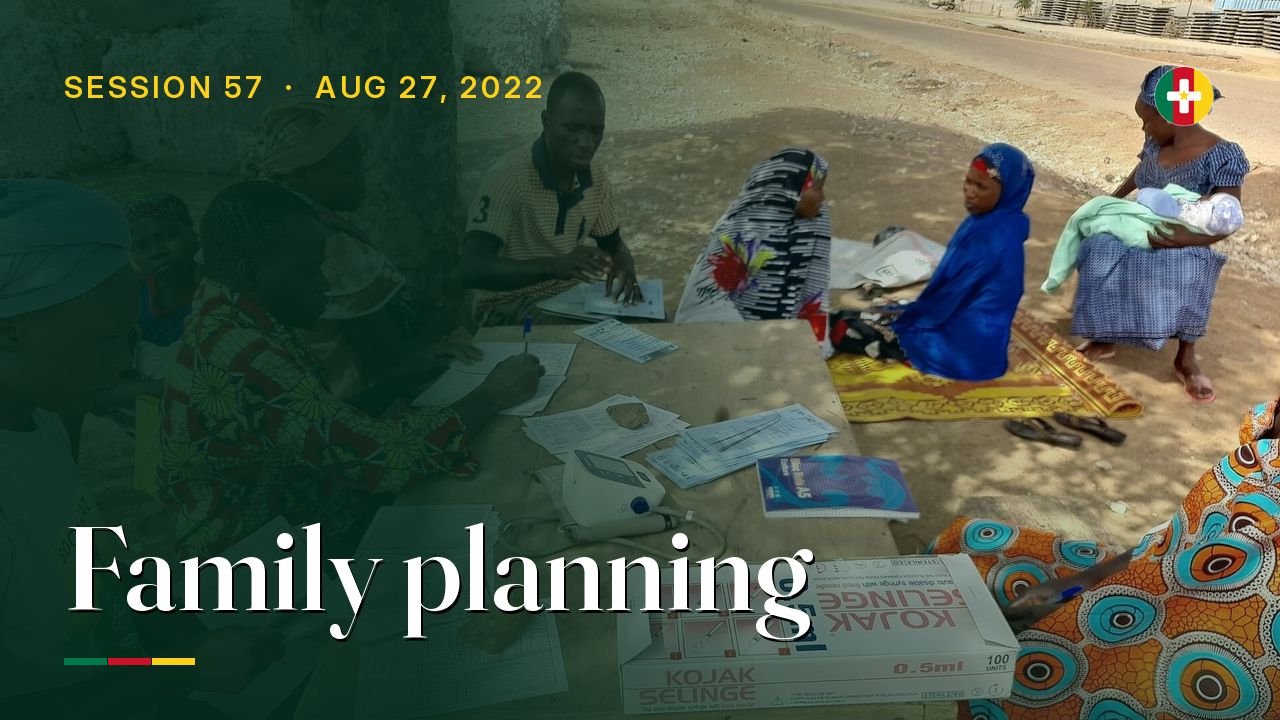
This policy briefing synthesizes key insights from the 57th edition of the Cameroon Town Hall for Healthcare Professionals, held on August 27, 2022, focusing on the theme 'Family Planning in Cameroon', presented by Dr. Samuel Akombeng Ojong, obstetrician gynaecologist and Family Planning National Focal Point at the Ministry of Public Health.
Context
Family planning is a declared priority in Cameroon, with FP2020 commitments and new FP2030 commitments, and use of modern methods has grown to about 1.11 million women. Yet the state funds about 1 percent of family planning spending, partners fund the rest, and use varies widely between regions, education levels and marital status. Adolescents are poorly served, and the maternal mortality ratio, while down from 782 to 406 per 100,000 live births, remains high.
Key issues
- Weak coordination and governance. Roles in financing, purchasing, logistics and supervision are poorly defined across the family planning ecosystem, and national plans expire without evaluation.
- Dependence on external funding. Partner funding distorts priorities and leaves the programme exposed to delays; performance based financing disrupted commodity logistics.
- Limited method mix and skills. Fewer than one in five facilities offer implants or IUDs, and providers lack skills and motivation.
- Supply chain and data. Commodities reach the country but stock out in some regions and expire in others; DHIS2 data are not reliable enough for decisions.
- Inequity and barriers to demand. Large gaps by region, education and marital status, no national communication strategy, stigma, religious and spousal barriers, and out of pocket costs.
Discussion highlights
- Family planning is one of the most cost effective maternal health interventions: every dollar spent saves 1.23 dollars in maternal and newborn care.
- Use every contact with health services to offer family planning, but build demand through mass and community communication and keep counselling voluntary.
- Integrate family planning into HIV, maternal and newborn services instead of separate programmes.
- Newborn deaths are not audited or recorded by cause, unlike maternal deaths.
- Fundong District Hospital's free services with community radio and support from chiefs raised uptake about tenfold.
Recommendations
- Clarify leadership and coordination. MINSANTE's Department of Family Health should publish a clear map of roles for the family planning working group (financing, procurement, logistics, supervision, data) and adopt a total market approach that brings public, NGO and private actors together. First step: finalise the costed implementation plan under the FP2030 commitments.
- Increase domestic financing. Government should honour the commitment to raise the reproductive health budget line and contribute to commodity purchase under arrangements such as the UNFPA compact, so the programme is less exposed to partner delays.
- Fix the supply chain. MINSANTE, regional funds for health promotion and partners should improve forecasting and last mile distribution, align performance based financing with the national commodity chain, and speed port clearance and tax procedures for donated commodities.
- Widen the method mix through on site training. Regional delegations should train providers in implant and IUD insertion in their own facilities, combined with newborn resuscitation, infection prevention and safe abortion care, starting with districts with the lowest demand satisfied (Far North, Adamawa).
- Launch a national family planning communication strategy. MINSANTE should run mass media and community campaigns on prime time TV and radio, involving men, boys, religious and traditional leaders, and offer provider initiated, rights based counselling at every facility entry point.
- Serve adolescents and audit newborn deaths. Expand adolescent friendly services and age appropriate sexuality education prepared with parents and communities, and extend death audits and cause of death reporting to newborns.
Next steps
Cameroon's FP2030 commitments were due to be launched, and the national community health strategic plan 2021 to 2025 had just been launched. Participants proposed future sessions with IPPF and UNFPA colleagues.
Conclusion
Cameroon has the policy commitments and enough commodities to make family planning work, but coordination, domestic financing, logistics, trained providers and communication lag behind. Fixing these would reduce unintended pregnancies, unsafe abortions and maternal deaths at a cost the country can recover.
Meeting minutes
Agenda
- Welcome by the moderators
- COVID-19 and monkeypox update by the Chair
- Pre-session poll on family planning in Cameroon
- Introduction of the speaker by Dr. Christelle Jouego Tagne
- Presentation by Dr. Samuel Akombeng Ojong on family planning in Cameroon
- Discussion and Q&A
- Closing remarks and vote of thanks by the Chair, and parking lot
Opening remarks
- Elvis Ndansi welcomed participants back after missing two sessions, and the lead moderator opened the 57th edition, urging men to join a conversation often seen as only for women.
- Dr. Munoh Kenne Foma gave an update: 46,724 monkeypox cases worldwide, with the United States reporting 16,925; changing clinical presentation with genital, perianal and oral lesions; limited vaccine doses given intradermally; and tecovirimat not widely available in Africa. On COVID-19, BA.5 dominated, variant specific boosters were expected in September, Cameroon had reported no cases for two months despite anecdotal infections, and many vaccine doses in Africa had expired unused.
- Dr. Ojong prepared four poll questions to test participants' knowledge before his talk; most correctly identified sexually active unmarried women as the highest users of modern methods, and most did not know that exposure to family planning messages is higher among men (42 percent) than women (30 percent).
Presentation
1. Why family planning matters
Dr. Ojong said about 218 million women in low and middle income countries have an unmet need for family planning each year, leading to 111 million unintended pregnancies and 35 million unsafe abortions. Meeting every need would cut unsafe abortions by 72 percent, unplanned births by 71 percent and maternal deaths by 62 percent, or about 113,000 deaths averted. He presented his talk as advocacy for stronger family planning programmes, using a health system lens.
2. Wins: policy commitment and rising use
Family planning is the second of eight reproductive health priorities and is on the policy agenda, with FP2020 commitments made in 2012 and FP2030 commitments signed and about to be launched. Between 2012 and 2021, users of modern methods rose from just over 820,000 to about 1.11 million women, modern contraceptive prevalence rose by about 2.6 to 2.8 points, and demand satisfied rose from about 40 to 49 percent. He said these efforts averted close to 295,000 unintended pregnancies, about 120,000 to 130,000 unsafe abortions and upwards of 1,800 maternal deaths.
3. Leadership and financing gaps
He called leadership and governance the programme's Achilles heel: there is no clear programme vision or coordination, and no one in the family planning working group has clearly defined roles on financing, purchasing, logistics and supervision. The state funds about 1 percent of family planning spending (1.1 percent for reproductive health overall), with partners such as UNFPA, Germany and the United States providing the rest, which he said can distort national priorities. He gave the example of performance based financing letting facilities buy supplies anywhere, which disrupted the commodity supply chain and caused stockouts in some areas and expiries in others.
4. Workforce, services and commodities
Providers are too few, unevenly distributed and often not trained to insert implants or IUDs, and off site workshop training is costly and reaches few people. Of about 4,100 registered health facilities, in 2018 71.3 percent offered short acting methods, 19.4 percent implants, 18.8 percent IUDs and 4.5 percent permanent methods, and only 63 percent of primary level facilities offered at least three modern methods. He said Cameroon has enough commodities thanks to partners, but logistics, forecasting and last mile distribution fail, and the DHIS2 data on family planning are weak, so policies are not well informed by evidence.
5. Inequities and barriers to uptake
Modern method use among married women ranges from 28 percent in the East to 7 percent in the Far North, and demand satisfied from about 50 percent in the East to 17 percent in Adamawa. Only 3 percent of uneducated women use modern methods against 26 percent of educated women, unmet need is higher among married than single women, and adolescents are poorly served. He cited the lack of a national communication strategy (no family planning messages on prime time TV, billboards or radio), stigma for single women, religious hesitancy, providers refusing women whose husbands object, cost and coercion linked to indicator based payments.
6. Opportunities
He saw opportunities in FP2030's rights based approach, the demographic dividend (about 43 percent of the population is under 15), a total market approach to coordinate government, NGO and commercial actors, and the business case: every dollar spent on family planning in Cameroon saves 1.23 dollars in maternal and newborn care, and meeting half the unmet need would save about 1.3 billion FCFA. He estimated 25.5 million dollars would address half the unmet need, and cited UNFPA's compact initiative as a way for government to take more financial responsibility.
Discussion and Q&A
- A surgeon trained in Italy, now in the US, asked what is being done beyond family planning to reduce maternal deaths, especially among adolescents. Dr. Ojong said there is a dedicated programme to fight maternal, neonatal and infant mortality, and the maternal mortality ratio has fallen from 782 to 406 per 100,000 live births, but he called for an integrated approach rather than funding streams that treat mothers and newborns in separate silos.
- The lead moderator relayed women's concerns: men refuse condoms, and women fear weight gain, delayed return of fertility and cancer with injectable methods. From a rights perspective, he said a woman's body is hers and men should support the use of condoms, which also protect against STIs. He said side effects exist but are rare and minimal, that providers must counsel women on what to expect and on danger signs, and that women should be screened for eligibility before starting hormonal methods.
- A youth adviser with IPPF Africa Region asked about strategies against stockouts, adolescent access without stigma, and outdated national plans. He said heavy reliance on partners (over 95 percent of reproductive health funding) means delays at the partner level cause stockouts, and port clearance delays can leave commodities near expiry; plans expire without evaluation because higher level work such as advocacy and evaluation is unfunded. For adolescents, 10 to 15 adolescent friendly clinics and mobile clinics had been launched in the past year, and he supported comprehensive sexuality education introduced with parents and communities.
- A participant from UNFPA added a comment. She urged that boys and young men be educated about family planning and that social norms be addressed early, with the ministries of health, youth and education involved.
- A participant asked whether there is formal training in family planning for health workers. Sexual and reproductive health modules are being introduced in all training schools. He proposed on site training in districts that combines family planning, newborn resuscitation, infection prevention and safe abortion care, instead of costly workshops that train two people per region.
- Dr. Munoh Kenne Foma asked what drove the fall in maternal mortality, why newborn mortality has not fallen as much, which methods to prioritise and what he could change from within the ministry. Dr. Ojong said maternal deaths are audited but newborn deaths are not, and DHIS2 records newborn deaths without causes, so newborns are less of a policy priority. He noted the fall from 782 to 406 lies within overlapping confidence intervals. His priorities were strengthening the health system and community health, noting that during COVID-19 more caesarean sections were done by unskilled staff, and that 20 to 30 percent of births still occur at home. The Chair added that midwife training was suspended for about 20 years.
- A general practitioner who worked in HIV care in the North West asked how family planning can be integrated into HIV treatment units, given drug interactions with dolutegravir and efavirenz. Dr. Filbert Eko Eko, Regional Delegate for the South West, said integration of family planning into HIV services is under way, that the national community health strategic plan 2021 to 2025 had just been launched, and that pilots for universal health coverage were being prepared. He called for provider initiated family planning at every entry point of a facility, using two questions about sexual activity and pregnancy intentions. Dr. Ojong agreed on using every contact but said demand must be created through mass and community communication, and that counselling must not be coercive.
- An obstetrician gynaecologist asked about comprehensive sexuality education, locally developed strategies and whether family planning can deliver a demographic dividend. Dr. Ojong said family planning should empower women to have children when they choose, not control population. Comprehensive sexuality education is multisectoral and failed earlier for lack of public preparation. He described offering free family planning at Fundong District Hospital from 2013, funded through performance based financing, with a weekly interactive radio programme and support from traditional chiefs: about 3,000 women received services in the first year, against fewer than 300 in the previous five years.
Calls to action and closing
- Elvis Ndansi praised the speaker's candour and called for highlighting what Cameroon does well as well as its gaps.
- Dr. Ojong closed with a quotation: women are not dying because of diseases we cannot treat; they are dying because societies have yet to make the decision that their lives are worth saving.
- The Chair thanked Dr. Ojong for stepping in at short notice when the planned speaker had an emergency, noted almost 60 participants at a time, and invited members to propose topics.
- The session closed with a parking lot of 30 minutes to an hour.
Next meeting
In two weeks.
Submitted by the Co-Moderators, Cameroon Town Hall for Healthcare Professionals.