The Practice of Anaesthesia in Cameroon: Challenges and Perspectives
Overview
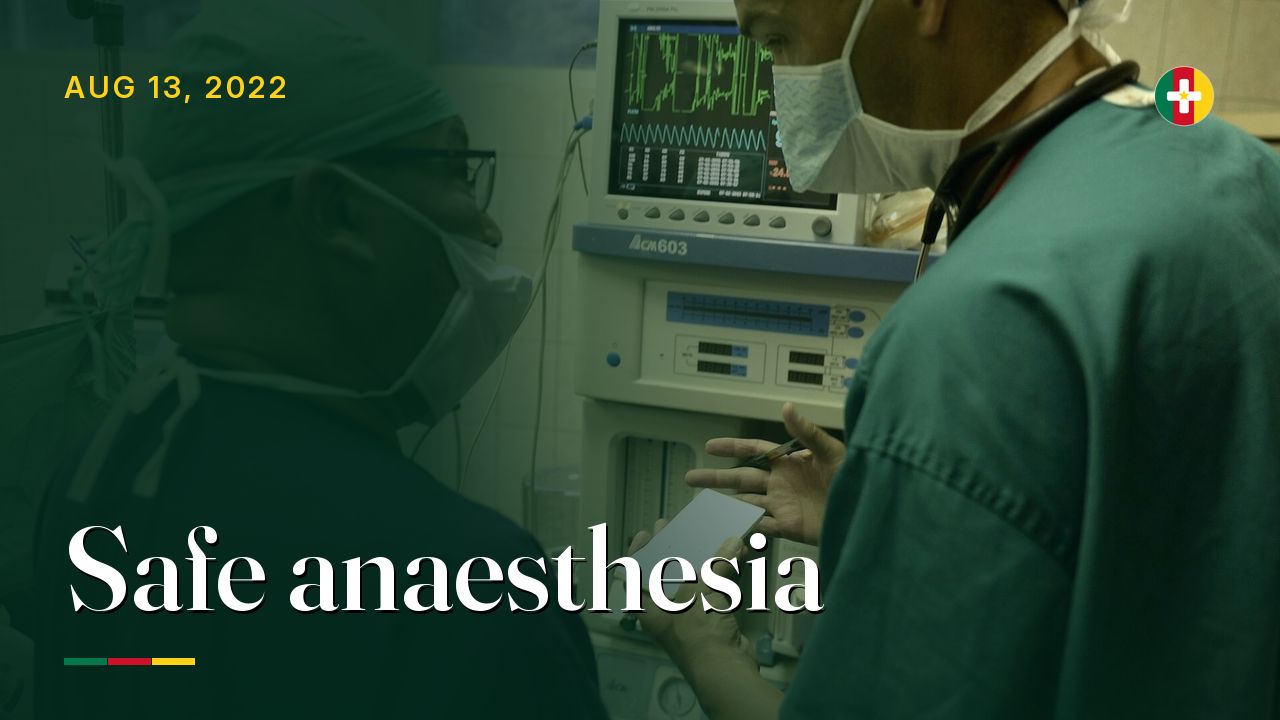
This policy briefing synthesizes key insights from the Cameroon Town Hall for Healthcare Professionals meeting held on August 13, 2022, focusing on the theme 'The Practice of Anaesthesia in Cameroon: Challenges and Perspectives', presented by Dr. Raymond Ndikontar, anaesthesiologist and intensivist and lecturer at the University of Yaounde I.
Context
Cameroon has about 70 physician anaesthesiologists for close to 30 million people, more than 90 percent of them in Yaounde and Douala, and about 400 nurse anaesthetists who provide most anaesthesia care. Lower level hospitals lack basic equipment, and even tertiary centres often lack capnography, medical air and maintained anaesthesia machines. A survey presented by Dr. Tim Fabrice Tientcheu found that only about 2 percent of district hospitals could provide all three bellwether procedures (caesarean section, laparotomy and open fracture management), with anaesthesia the weakest link.
Key issues
- Workforce shortage and maldistribution. Few physician anaesthesiologists are trained, many leave, and those who stay work in large cities where the tertiary centres are. Low pay is a main driver.
- Missing essential equipment. Most facilities fall short of WHO-WFSA standards: no capnography, few laryngoscopes and paediatric airways, no medical air, unreliable oxygen and donated machines that break down.
- Patients buy their own supplies. Patients must purchase drugs and consumables before surgery, which delays care and exposes them to arbitrary prices.
- Blood and critical care gaps. Blood components are unavailable outside a few centres, and ICU capacity limits surgery, neurosurgery in particular.
- Paediatric and neonatal anaesthesia. Very few providers do paediatric anaesthesia, and neonatal surgical outcomes are poor.
Discussion highlights
- Cameroon's nurse anaesthetist workforce and its collaboration with physicians are a strength to build on.
- Training abroad without a reintegration plan has not brought specialists home.
- Donated ICU equipment after COVID-19 is not a durable solution and often lacks trained users.
- Local standards for resource constrained settings, such as safe ketamine techniques, are needed.
- ACNA and other diaspora groups offered training and supplies, with a request for needs assessments.
Recommendations
- Make anaesthesia and critical care a national priority. MINSANTE should include anaesthesia, intensive care and emergency care in surgical and health workforce planning, with targets for physician and nurse anaesthetists per region and incentives (pay, posting and career paths) to retain them outside Yaounde and Douala.
- Equip facilities to a minimum standard. MINSANTE and regional delegations should adopt the WHO-WFSA standards as the national minimum, starting with pulse oximetry and capnography in every theatre that gives general anaesthesia, appropriate adult and paediatric airway equipment, and medical air in tertiary centres. First step: a national theatre equipment audit by level of care.
- Centralise drug and consumable supply. Public hospitals should supply anaesthesia drugs and consumables directly and bill patients afterwards, as mission hospitals do, so patients are not sent to buy items before emergency surgery. MINSANTE should move towards universal health coverage for emergency and obstetric surgery.
- Build a national anaesthesia community and continuing education. Professional societies, the Faculty of Medicine and Biomedical Sciences and nurse anaesthesia schools should create an association that brings all anaesthesia providers together, run regular continuing education, and develop subspecialty training for nurse anaesthetists in paediatrics, obstetrics and orthopaedics. Diaspora groups such as ACNA can co-host training.
- Plan maintenance and blood services alongside donations. Hospitals and partners should accept equipment donations only with a maintenance plan and staff training, and the national blood transfusion service should extend component separation to regional hospitals and promote voluntary donation.
- Expose students to anaesthesia early. Medical faculties should add an anaesthesia, intensive care and emergency medicine rotation to undergraduate training and redesign training abroad programmes with a reintegration plan.
Next steps
ACNA's next Cameroon conference for nurse anaesthetists was planned for December 2022, with an invitation to physician partners. Participants were invited to contact Dr. Ndikontar directly to coordinate supplies and training.
Conclusion
Every surgical and critical care service in Cameroon depends on anaesthesia, yet the specialty runs on a very small physician workforce, a committed nurse anaesthetist workforce and equipment that often falls below international minimums. Investment in people, standard equipment, supply systems and local standards would raise the safety of surgery across the country.
Meeting minutes
Agenda
- Welcome by the lead moderator and the Chair
- Global health update by Dr. Munoh Kenne Foma (monkeypox, COVID-19, polio)
- Introduction of the speaker by Dr. Bryan Tegomoh
- Presentation by Dr. Raymond Ndikontar on 'The Practice of Anaesthesia in Cameroon: Challenges and Perspectives'
- Discussion and Q&A
- Remarks by the President of ACNA
- Closing remarks by the moderators and the Chair, and parking lot
Opening remarks
- The lead moderator recalled that the town hall began about three years earlier, shortly after COVID-19 was declared a pandemic, and noted that anaesthesia is often overlooked even though it is a core member of the surgical team, which has contributed to an acute shortage of the skill.
- The Chair described the town hall as a platform that belongs to its members and aims to bring the diaspora and colleagues in Cameroon closer for education, discussion and partnership.
- The lead moderator reported contact that week with Dr. Edwin Aroke, President of ACNA, which is looking to extend its work on anaesthesia in Cameroon.
- Dr. Foma gave a global health update: monkeypox had been declared a public health emergency by WHO and, about a week later, by the United States; he reported 31,799 cases worldwide that morning, with the United States (over 10,700 cases) ahead of Spain, and 2,187 cases in New York City. He also covered the JYNNEOS vaccine shortage and the move to intradermal dosing, Omicron BA.5, poliovirus detected in New York City sewage, low COVID-19 vaccine uptake in Africa and vaccines expiring in Cameroon.
- Dr. Bryan Tegomoh raised vaccine hesitancy and polio; the lead moderator noted that recent polio detections are increasingly vaccine derived and proposed a future session with Prof. Charles Wiysonge on the subject.
Presentation
1. A very small physician workforce
Physician anaesthesia training is a four year course offered only at the Faculty of Medicine and Biomedical Sciences in Yaounde, with four to eight trainees a year for over 20 years. Yet Cameroon has only about 70 physician anaesthesiologists for close to 29 to 30 million people, more than 90 percent of them in Yaounde and Douala, because many leave after training. There is no subspecialty training in the country.
2. Nurse anaesthetists carry most of the work
About 400 nurse anaesthetists, trained in a two year programme at about five schools after the state nursing diploma, cover most procedures, including in rural and many urban areas. Dr. Ndikontar said that even he works exclusively with nurse anaesthetists.
3. What each level of the health pyramid can do
Subdivisional hospitals (CMA) usually have one general practitioner and no anaesthesia provider, so general anaesthesia to standard is not possible and ketamine is the main drug. District hospitals may have nurse anaesthetists and rely on spinal anaesthesia, but have no ICU and refer unstable patients. The 10 regional hospitals are better staffed but still struggle: a student study at a regional hospital found only 2 of 125 caesarean sections were done under general anaesthesia. Tertiary centres, about 12, are concentrated in Yaounde and Douala, and new regional reference hospitals in Bafoussam, Garoua and Ebolowa have modern equipment.
4. Equipment against WHO-WFSA standards
Comparing facilities with the WHO-WFSA international standards for safe anaesthesia and the Optimal Resources for Children's Surgery document, he found that CMAs and district hospitals lack most essential items, including laryngoscopes, appropriately sized airways and capnography, and that even tertiary centres often lack functional continuous waveform capnography. He described laparoscopic surgery being done without CO2 monitoring, no supraglottic airways, and no monitoring of anaesthetic agent concentrations in most centres.
5. Gases, consumables and blood
There are very few oxygen plants and transport of oxygen is difficult; many centres, including tertiary ones, have no medical air, so patients are ventilated with 100 percent oxygen. Nitrous oxide is available in constant supply in only one centre he knows, and halothane remains the most used volatile agent because it is cheap. Most anaesthesia machines are donated and stop working within six months to a year for lack of maintenance, breathing circuits are washed and reused for years, temperature control and fluid warmers are lacking, and blood components such as platelets, plasma and cryoprecipitate are hard to obtain.
6. Specialty and paediatric gaps
Obstetric anaesthesia is managed with reasonable safety nationwide, gynaecological endoscopy and regional techniques are widely used, and neurosurgery is growing but limited by ICU capacity. Cardiothoracic surgery is not routine in any state hospital and is done mainly through missions, there is no paediatric cardiac surgery outside missions, and two adult kidney transplants had been done that year. Neonatal surgery is the weakest link, with poor outcomes linked to late referral, inadequate equipment and expertise, and patients paying for their own care.
7. Outreach programmes do much of the work
He said surgical outreach groups of volunteer students, general practitioners, surgeons and anaesthetists deliver a large share of surgery and anaesthesia in enclaved areas, some visiting two to three areas every weekend with 40 to 50 cases per session for years. Activity in the North West and South West has been limited by the crisis.
Discussion and Q&A
- A nurse anaesthetist in Pennsylvania said supplies routinely thrown away in the US could help colleagues in Cameroon and asked for the speaker's contact. The moderators shared Dr. Ndikontar's email in the chat.
- Dr. Munoh Kenne Foma asked how COVID-19 affected anaesthesia practice, whether regional hospitals can intubate, and how accessible blood components are. Dr. Ndikontar said a national blood transfusion body was created four to five years earlier and recently upgraded, but regional hospitals lack the centrifuges to separate components and voluntary donation is rare. During COVID-19, airway supplies ran short worldwide and patients sometimes had to buy their own spinal needles and tracheal tubes. He said the oxygen plants announced during the pandemic had not yet had a real impact and oxygen shortages are still common, even in Yaounde.
- Dr. Foma asked whether the anaesthesiologists sent to France for cardiac anaesthesia training returned. Dr. Ndikontar said they had not yet returned, and that exchange programmes lacked a plan for reintegration into a system without universal health insurance or equipment; the programmes need to be redesigned.
- A participant asked whether more doctors should be admitted to anaesthesia residency, and about anaesthetists controlling anaesthetic drugs and setting prices for surgeons and patients. He said the problem lies in a system that makes patients responsible for buying their own drugs and supplies, leaving them vulnerable, for example women sent to buy spinal kits before a caesarean section. He favoured a centralised supply as in mission hospitals, where patients receive care and pay one bill. On training, he said expanding numbers must come with investment in training infrastructure, and that anaesthesia should be made a priority because ICU, emergency, obstetric, paediatric and surgical services all depend on it.
- Another participant raised the poor distribution of anaesthesia providers and standards for resource limited settings. Dr. Ndikontar called for Cameroon to set its own standards for resource constrained settings rather than copy textbooks, for example ketamine anaesthesia where intubation is not safe, and said low pay drives anaesthetists abroad or away from underserved areas.
- Dr. Leonard Ngarka asked whether COVID-19 helped equip ICUs and whether that equipment still works. Dr. Ndikontar said COVID-19 exposed the system and that much of the new equipment came as donations, which is not a durable solution; his own unit went from two or three ventilators to about five. The Chair added that some donated ventilators sit unused because staff were not trained to use them.
- A student nurse anaesthetist asked whether nurse anaesthetists in rural areas should be trained in nerve blocks and central lines. He said these procedures carry significant complications and should remain with appropriately trained specialists for now, with careful training.
- Dr. Tim Fabrice Tientcheu asked how to harness the nurse anaesthetist workforce while physician numbers grow. He noted that collaboration between nurse and physician anaesthetists in Cameroon works better than in several West African countries. Dr. Ndikontar proposed a national anaesthesia association bringing all practitioners together, continuing education after the two year course, and subspecialty training for nurse anaesthetists in paediatrics, orthopaedics and obstetrics, following local guidelines.
- Prof. Mathias Fobi recalled giving his own spinal and regional anaesthesia in Cameroon in 1973 and asked how to retain trained staff when salaries abroad are many times higher. The Chair asked Dr. Ndikontar for solutions. He named universal health insurance as the first policy change, so patients do not pay out of pocket in emergencies, and a dedicated anaesthesia, intensive care and emergency medicine rotation for medical students. The Chair added that students had sometimes been kept out of theatres and ICUs and urged a mentoring culture.
- The nurse anaesthetist from Pennsylvania asked where donated supplies are most needed and why halothane is still used. Dr. Ndikontar said its toxicity is well known and its use reflects logistics and supply chains. He suggested a needs assessment and that an association in Cameroon partner with diaspora anaesthesia groups.
- Dr. Joshua Tambe and a district medical officer and training coordinator commented. Dr. Tambe called for local guidelines and institutions that regulate practice. The district medical officer said Cameroon trains far more paramedical staff than doctors, that specialists are often unwilling to teach in professional schools, and that teaching outreach, like a visiting Chilean anaesthetist training student nurse anaesthetists at the Magrabi institute, should be multiplied.
Calls to action and closing
- Dr. Edwin Aroke, President of ACNA, described the association's Cameroon Conference of Nurse Anesthetists at the University of Buea the previous year, with hands-on airway, cardiovascular and pre-operative assessment training, and a further conference planned for December covering airway and regional techniques with ultrasound. He invited physician partners.
- Bryan looked forward to links between ACNA and anaesthesia colleagues in Cameroon.
- The Chair said more than 60 participants were engaged live and almost 100 logged in, and thanked Dr. Aroke, the speaker and the moderators.
- The session closed with a 30 minute parking lot.
Submitted by the Co-Moderators, Cameroon Town Hall for Healthcare Professionals.