Cooperation Between MINSANTE and Cameroonian Diaspora Health Professionals
Overview
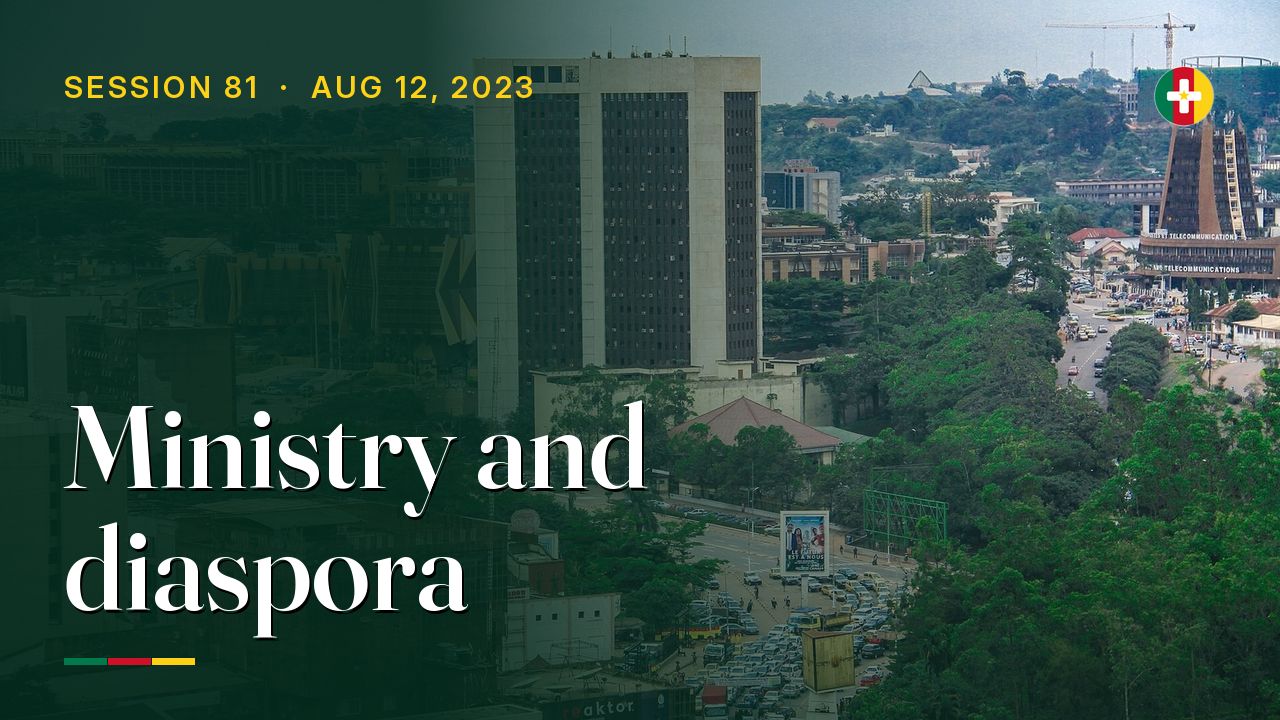
This policy briefing synthesizes key insights from the Cameroon Townhall for Healthcare Professionals meeting held on August 12, 2023 (date estimated), where the diaspora members of the Ministry of Public Health's new working group on the diaspora reported on its first meeting and the planned diaspora platform.
Context
Following two visits by the Minister of Public Health, Dr. Manaouda Malachie, to the town hall, the Ministry created a working group chaired by the Secretary General to act as an advisory body between MINSANTE and the diaspora. It held its first meeting on July 27, 2023, and a digital platform with registration, vetting and a diaspora health card was being designed.
Key issues
- No defined priorities. The Ministry had not yet stated the areas of need where diaspora help is wanted, so projects risk being scattered or duplicated.
- Practice rights. Diaspora doctors are not formally registered by the National Medical Council; temporary registration exists but is not well known, and other professional councils were not yet involved.
- Visas and customs. Cameroonians with another nationality face visa costs and delays, and donated equipment and medicines can be held at customs.
- Sustainability and follow up. Missions and screening without treatment capacity or follow up can create new problems for local teams.
- Monitoring and evaluation. There is little evaluation of past diaspora efforts and no shared targets to measure the working group's results.
Discussion highlights
- Projects should go through the district and regional health system and end with a written report.
- Participants asked the Ministry to publish its priority areas and proposed measurable joint targets.
- The platform should include professionals based in Cameroon, not only the diaspora.
- No project is too small, but projects that cannot be sustained locally should be vetted early.
- Diaspora professionals were urged to come as partners, with humility, and to work through associations.
Recommendations
- Publish a list of priority needs. MINSANTE, with regional delegations, should publish the areas where diaspora support is most needed (for example specialist surgery, oncology, nurse specialist training, laboratory sciences). First step: the working group circulates a first list through the town hall before the end of 2023.
- Clarify temporary practice registration. The National Medical Council, with the nursing, pharmacy and laboratory councils, should publish a simple procedure for temporary registration of diaspora professionals for defined activities, linked to platform registration.
- Launch the platform with clear vetting. MINSANTE should complete the diaspora platform with registration, vetting through professional associations abroad, and the electronic card, and open it to professionals based in Cameroon. First step: publish the registration requirements after the August 2023 workshop.
- Agree measurable joint targets. MINSANTE, the Ministry of External Relations and the working group should agree a small set of targets for the two year term, such as visa processing times, customs clearance of registered donations, and number of registered projects with reports.
- Require reports and follow up plans. Diaspora professionals and associations should submit a short project plan before each mission and a report after it through the district medical officer, including how patients will be followed up.
- Complete diaspora representation. MINSANTE should fill the seats for France and Germany so that major diaspora communities are represented.
Next steps
The working group's platform workshop was set for August 23 to 25, 2023. Participants were asked to send written recommendations to the working group through the town hall. The next session, on hepatitis B and C, was set for two weeks later.
Conclusion
The working group gives the diaspora a formal seat with the Ministry of Public Health for the first time. Participants agreed that its value will depend on clear national priorities, simple rules for practice and import, and projects that are reported and sustained locally.
Meeting minutes
Agenda
- Welcome and opening remarks by the moderators, Elvis Ndansi, Dr. Bryan Tegomoh and Dr. Katte Jean-Claude
- Remarks by the Chair, Dr. Munoh Kenne Foma
- Introduction of the diaspora members of the MINSANTE working group
- Presentation by Dr. Munoh Kenne Foma on the goals of the working group
- Report by Dr. Samuel Ndinjiakat on the first meeting (July 27) and the planned diaspora platform
- Discussion and Q&A, moderated by Dr. Bryan Tegomoh
- Closing remarks by the moderators and working group members, and next meeting
Opening remarks
- Elvis Ndansi opened the session as a special edition to hear from the diaspora members appointed to the working group created by the Minister of Public Health to develop cooperation with the Cameroonian diaspora in health. He said the town hall now brought together more than 2,100 people from different countries.
- Dr. Tegomoh said the diaspora holds a great deal of talent in medicine, public health and laboratory science, and that the Ministry's initiative could help remove barriers diaspora professionals have long faced and serve as a model for other African countries.
- Dr. Katte said things had moved quickly over the previous two or three weeks. Elvis Ndansi noted that the Ministry of External Relations was represented in the working group, which answered questions raised when the Minister was a guest of the town hall about visas for Cameroonians who hold another nationality.
- Elvis Ndansi described the shift from 'brain drain' to 'brain train'. The Chair added that collaboration must run both ways, with those at home also learning from and teaching the diaspora, and that diaspora professionals should not meet resistance when they try to help.
- Elvis Ndansi explained that the working group was set up through a formal text of creation, drafted by the Ministry, reviewed by the Prime Minister's office and validated by the Ministry of Public Health. Members serve a two year term.
Presentation
1. Membership of the working group
The Chair said all the directorates of the Ministry of Public Health were represented, along with the Ministry of External Relations, and that the Prime Minister's office took part in creating the text. The diaspora members named were Dr. Samuel Ndinjiakat (rapporteur), Gladys Larissa Happi, Prof. Theodore Ngatchu (United Kingdom) and the Chair himself for North America. The Minister created the group before representatives from France and Germany were named, and the members had asked that seats remain open for them.
2. Goals set in the text of creation
The goals presented were to define the areas where the diaspora can intervene in health, set up a mechanism for professional integration of diaspora health workers into Cameroon's health system, and promote diaspora initiatives across the national territory. The text also covers recognition and follow up of high impact diaspora initiatives, coordination and monitoring of diaspora activities, annual activity programmes, multi year and operational plans, and giving opinions on matters the Ministry submits to the group.
3. Using Cameroonian specialists abroad
The Chair said Cameroon has very few cardiothoracic surgeons, while several Cameroonians trained at home now practise this specialty abroad. He asked that they receive the same facilitation the country gives to foreign teams, so that their work can be sustainable.
4. Report of the first meeting
Dr. Ndinjiakat reported that the first meeting was held on July 27 and produced recommendations, including identifying other diaspora groups already active in Cameroon so that resources can be pooled. A workshop on the planned platform was scheduled for August 23 to 25. He gave an example of the network at work: a doctor in Cameroon caring for a hepatitis B positive pregnant woman with twins sent him a question, and the Chair returned treatment guidelines the same day.
5. The Diaspora Santé Cameroun platform
The platform (diasporaminsante.cm, not yet functional) was presented as a way to capitalise on Cameroonian health human resources abroad. It would include enrolment of diaspora health professionals, a membership directory, two way publication of projects and research to avoid duplication, and a chat function. Registered members would be connected with local authorities, such as the city council or the governor, before arriving in a region.
6. Vetting and the diaspora card
Members would register with personal and professional details and be vetted, for example by contacting the Cameroonian medical association in the country where they practise. They would then receive an electronic card (the 'carte santé') with a barcode. Benefits under discussion included facilitation with district, divisional and regional authorities, prior authorisation for customs free import of donated equipment, and meetings with the Minister or Secretary General for large projects. Elvis Ndansi said the long term aim, through the Ministry of External Relations, was for the card to ease visa requirements for Cameroonians with another nationality, but that this had not yet been achieved.
7. Attitude of diaspora professionals
Dr. Ndinjiakat closed with a slide on humility: instead of criticising, listen; instead of complaining, make a suggestion; instead of looking for a culprit, find a solution. Elvis Ndansi said this mindset is how the town hall structures its presentations: what the standard is, what is happening at home, and how things can be done better.
Discussion and Q&A
- Dr. Edwin Aroke: what counts as a viable project, how will projects be vetted, and can the town hall encourage people to work through associations rather than as individuals? Dr. Ndinjiakat said projects should end with a report, as his foundation does through the district medical officer, who reports to the regional delegate and then to Yaoundé, and that the working group is an advisory body that will help vet projects. The Chair encouraged action through associations and asked for a post project report so impact can be monitored. He said the Ministry still has to define its priority areas, giving examples such as cardiac surgery (the Shisong cardiac centre has been affected by the crisis), radiation oncology and cancer training.
- A volunteer with the Patcha Foundation: who will screen projects, how will projects be spread across all regions, and will the Ministry help fund follow up care after missions? The Chair said partnering with government is how projects become sustainable, and that projects done without involving the community can cause harm, citing wells built in the Far North that local women later destroyed. He warned against screening programmes without treatment capacity: he said hormone receptor testing for breast cancer is done almost only at Centre Pasteur and that many women receive treatment they may not need. He also said Cameroon needs specialised nurses, physiotherapists and laboratory specialists, not only doctors. Dr. Tegomoh noted that portable sequencing and point of care diagnostics could help widen testing in local hospitals.
- A participant: what has been learnt from earlier diaspora platforms, and what will the government do to attract diaspora professionals to return and work in Cameroon? Elvis Ndansi said no project is too small and the town hall will relay government priorities as expressions of need, but salaries are managed by the Ministry of Public Service, not the Ministry of Health. Dr. Ndinjiakat said the first meeting recommended mapping existing diaspora groups. The Chair said this is the first diaspora group coordinated by the Ministry, that monitoring and evaluation of earlier efforts is lacking, and that government cannot be the sole employer, so the platform should advocate for an environment for private investment.
- Dr. Katte Jean-Claude: was registration of diaspora doctors with the Cameroon National Medical Council discussed, and will nursing, laboratory, pharmacy and other councils be involved? Dr. Ndinjiakat said this was not discussed at the first meeting but would be noted. Prof. Ngatchu said the Medical Council does not formally register diaspora doctors, but its Secretary General, a member of the group, pointed out that temporary registration is possible for specific activities, and that registering on the platform should make it easier to obtain.
- Dr. Edwin Aroke (in the chat and later on the call): what short and long term goals will measure success? Dr. Ndinjiakat suggested that individuals start by joining missions and town hall work before launching larger projects. Dr. Aroke proposed concrete shared targets with the Ministry, for example a share of diaspora visitors received by ministry leadership, or a share of visa requests granted by the end of 2024, so that commitments survive a change of minister.
- A participant working on sickle cell disease: can the diaspora help assess the feasibility of projects brought to Cameroon? The Chair cited a planned bone marrow transplant project for sickle cell patients designed abroad without a plan for post transplant care, and said diaspora and local experts can help vet projects that are not sustainable. Dr. Tegomoh linked this to the logic model suggested in the chat.
- A participant working with Centre Pasteur on a malaria project: can the town hall link diaspora researchers with students in Cameroon, and help prepare local teams to accept diaspora professionals? The participant said diaspora professionals can face resistance from local staff and that awareness work is needed. Dr. Tegomoh said capacity building and linking students with researchers has been part of the town hall's work and offered to connect after the session.
- A participant in the chat: will health professionals based in Cameroon be included in the platform? Prof. Ngatchu said this was an important point, since the platform should match diaspora skills with what people in Cameroon need and not only what the government needs, and he would take it to the next meeting.
Calls to action and closing
- Sidney Tazeh said the working group is a product of the town hall, which also connects people with each other, and offered to guide anyone trying to set up a project in Cameroon.
- Dr. Katte said he hoped the working group would not become 'just another committee'.
- Elvis Ndansi thanked participants and said about 700 of the 2,100 recipients had opened the town hall's email on the working group within three hours.
- Gladys Larissa Happi said nursing groups are organised in every region and that she worked with nursing schools during the cholera outbreak in the South West Region. She stressed that members are not paid.
- Prof. Ngatchu said the political system is recognising the diaspora and urged members to take the opportunity. Dr. Ndinjiakat asked for written recommendations sent through the town hall.
- The Chair said the group had advocated for two more seats for France and Germany and closed with a call to collaborate rather than complain. Prof. Charles Shey Wiysonge, recognised as a mentor of the town hall, encouraged everyone to suggest improvements.
Next meeting
In a fortnight, on hepatitis B and C in Cameroon.
Submitted by the Co-Moderators, Cameroon Town Hall for Healthcare Professionals.