The Future of HIV Treatment and the Hope for a Cure
Overview
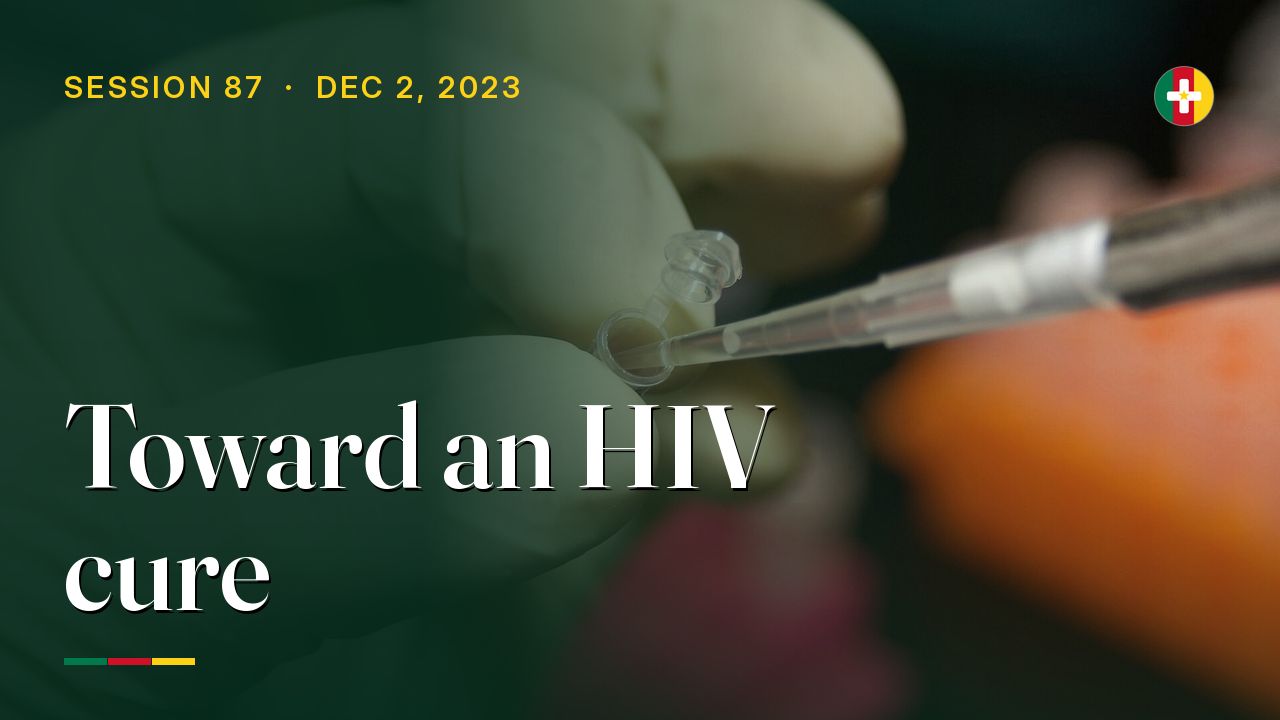
This policy briefing synthesizes key insights from the Cameroon Townhall for Healthcare Professionals meeting held on December 2, 2023, the day after World AIDS Day, focusing on the theme "The Future of HIV Treatment and the Hope for a Cure," presented by Dr. Boghuma Kabisen Titanji, infectious disease physician-scientist at Emory University.
Context
Cameroon has about half a million people living with HIV and close to 10,000 new infections a year (2022). Treatment coverage and viral suppression are near 80%, but PrEP reached only about 4,377 people in 2022 and only 39% of young children with HIV are on treatment, while donor funding for HIV has fallen by about 57% in ten years.
Key issues
- Prevention gap. PrEP is up to 98% effective but little used in Cameroon, and the 'high risk' framing and links to promiscuity discourage uptake, especially among young women.
- Children left behind. Only 39% of children aged 0 to 4 with HIV in Cameroon are on treatment, and new long acting options are designed and tested mainly in adults.
- Access to long acting drugs. Injectables and implants improve adherence and reduce stigma, but are costly, under patent and do not treat hepatitis B.
- Cameroon absent from trials. HIV cure and vaccine trials are concentrated in East and Southern Africa; regulatory barriers and few trained investigators make starting a trial in Cameroon very difficult.
- Misinformation. Claims by some religious leaders and traditional healers, and COVID vaccine misinformation, undermine treatment and could hinder future cure strategies.
Discussion highlights
- HIV control gains are fragile and depend on sustained funding.
- PrEP should be prescribable by any trained clinician and framed without stigma.
- Cameroon's diverse HIV strains make local participation in research important.
- Unpublished local innovation, such as Prof. Victor Anomah Ngu's work, cannot be credited or built on.
- Clinicians need clear guidance on disclosure in discordant couples under Cameroonian law.
Recommendations
- Scale up PrEP and remove stigma. MINSANTE and the national AIDS programme should expand PrEP beyond specialist clinics, allowing GPs, nurses and trained pharmacists to prescribe it with baseline and periodic HIV testing, and drop 'high risk' labels from guidance and messaging. First step: review PrEP guidelines and training materials with community groups of people living with HIV.
- Close the paediatric treatment gap. MINSANTE, regional delegations and partners should prioritise testing and treatment of children, especially those under five, and press manufacturers and procurement partners for child friendly formulations. First step: a district level review of why exposed infants are missed.
- Prepare for long acting options. MINSANTE and partners should plan for long acting injectables and future implants, including registration, pricing negotiations and screening for hepatitis B co-infection. First step: a technical working group with diaspora experts to assess costs and readiness.
- Make Cameroon a viable trial site. MINSANTE and the national ethics committee should shorten approval times, and universities should train HIV investigators in trial conduct, with support from DAC-Africa and diaspora researchers. First step: map HIV treatment centres able to host studies and the steps that slow approvals.
- Give clinicians guidance on disclosure. MINSANTE should issue clear guidance, based on Cameroonian law, on counselling and partner disclosure in discordant couples, built around U=U.
- Counter misinformation. Regional delegations, hospitals and training schools should equip health workers and engage religious and traditional leaders with accurate information on HIV treatment, prevention and cure research.
Next steps
Dr. Titanji offered to return to speak on HIV vaccines. The next session, led by Elvis Ndansi, was to address getting clinical research running in Cameroon.
Conclusion
HIV treatment has moved from 20 or more pills a day to long acting options, and a cure is being actively pursued. For Cameroon, the immediate priorities are wider and less stigmatised PrEP, treatment for children, readiness for new drugs, and the research capacity to take part in the next generation of trials.
Meeting minutes
Agenda
- Welcome and opening remarks by the Chair, Dr. Munoh Kenne Foma, and check in with regular participants
- Introduction of the speaker by the Chair and Elvis Ndansi
- Presentation by Dr. Boghuma Kabisen Titanji on "The Future of HIV Treatment and the Hope for a Cure"
- Participant reflections
- Discussion and Q&A
- Closing remarks, announcement of the next session and parking lot
Opening remarks
- The Chair welcomed participants after a few weeks' absence and noted that the session came right after World AIDS Day. He described the town hall as a fortnightly platform on health issues affecting Cameroon, drawing on perspectives from the country and the diaspora.
- Elvis Ndansi joined from Zambia, where he was attending a public health conference before travelling on to Zimbabwe. He recalled working at Columbia University on the Mosaico HIV vaccine study, which was stopped for lack of efficacy, and said he came to hear what hope remains.
- The Chair introduced Dr. Titanji, his medical school classmate, as an internal medicine and infectious disease physician-scientist with a PhD in HIV, an assistant professor at Emory and a supporter of the town hall since its beginning. He urged the Ministry and those in Cameroon to make use of her expertise. Elvis Ndansi added that she sits on the steering committee of DAC-Africa.
Presentation
1. Where the epidemic stands
Dr. Titanji said that in the 42nd year of the pandemic about 39 million people live with HIV, with 1.3 million new infections and just over 600,000 deaths in 2022. About 70% of people with HIV live in sub-Saharan Africa, 10 million people globally are not on treatment, and only one in two children with HIV has access to antiretroviral therapy. Women and girls aged 15 to 24 account for 77% of new infections in sub-Saharan Africa, while donor funding has fallen by about 57% over the last ten years. She said vaccines were outside the scope of the talk.
2. Cameroon's figures
Citing the UNAIDS country report, she said Cameroon had close to 10,000 new infections in 2022 and about half a million people living with HIV. About 80% of people with HIV are on treatment and almost 80% of those have a suppressed viral load. PrEP remains little used, with about 4,377 people reached in 2022, and only 39% of children aged 0 to 4 living with HIV are on treatment. She noted that Botswana, Eswatini, Rwanda, Tanzania and Zimbabwe have already reached the 95-95-95 targets, so the 2030 goal is achievable.
3. From many pills to long acting options
Since the first drug in 1987, more than 30 antiretrovirals have been developed, acting at different points of the viral life cycle, and people on treatment can expect a normal lifespan. Treatment moved from 20 to 30 pills a day to single pill options and now to long acting injectables. PrEP, first authorised in 2012, is up to 98% effective as oral pills or injections, and the dapivirine vaginal ring offers a woman controlled option with lower protection (30 to 50%). She said low PrEP coverage in Africa is a missed opportunity to prevent new infections.
4. Drugs in the pipeline
She described islatravir, a reverse transcriptase inhibitor with a half life of about 128 hours, whose trials were paused in 2021 over falls in CD4 and white cell counts and have resumed at lower doses, including in combination with doravirine and lenacapavir. Lenacapavir, a capsid inhibitor that blocks the virus at four steps and can be dosed every six months, is FDA approved for people with multidrug resistance after the CAPELLA study (NEJM), and is being studied for first line treatment and PrEP. Cabotegravir with rilpivirine (Cabenuva) is given by injection monthly or every two months and was non inferior to daily pills; cabotegravir alone is used for PrEP. She said the injectable costs about $6,500 a month in the US against about $3,500 for an oral regimen, and that it does not treat hepatitis B, which affects 10 to 20% of people with HIV.
5. New ways of delivering drugs
Subdermal implants about the size of a 50 franc coin could release drug slowly, and a phase 1 islatravir implant showed potential for PrEP once a year. Vaginal inserts, microneedle patches (one being developed by a colleague in her lab with Georgia Tech engineers), gels, douches and rectal inserts are in development. Broadly neutralising antibodies have long half lives but must match the circulating strain; two NEJM trials of antibody PrEP, including in young women in Africa, did not show protection. She stressed that these delivery methods are not experiments on Africans, since implants (such as those used for contraception in Cameroon) and depot injections are already used for other conditions.
6. Why HIV is hard to cure
HIV mutates rapidly, hides in resting CD4 T cells that form a latent reservoir, integrates its genome into the host DNA, persists in sanctuary sites such as the central nervous system, and infects long lived cells. Five people have been cured: three men and one woman through stem cell transplants for cancer from donors with the CCR5 delta 32 mutation (the woman with cord blood cells), and the Esperanza patient in Argentina who cleared the virus without therapy. She said a transplant costs about 50 million CFA francs and carries up to 25% mortality, so it is not a cure for the 39 million. The Visconti cohort in France, elite controllers (about 0.5% of people with HIV) and the Mississippi baby show that early treatment and immune responses can control the virus.
7. Cure strategies and what fits Africa
She separated a sterilising cure from a functional cure (remission) and described four approaches: shock and kill with latency reversing agents, gene editing (CAR T cells, ex vivo CCR5 editing with zinc finger nucleases, in vivo vectors, CRISPR), lock and block with latency promoting agents, and immunotherapies including antibodies and therapeutic vaccines. Several cure studies are running in Africa, mainly in southern Africa. She asked how African patients would view a functional cure that still needs monitoring, whether these costly, technology heavy options are feasible with falling donor funding, and how COVID vaccine misinformation might affect acceptance of gene therapies.
8. Key messages
She said progress over 42 years has been immense but the gains are fragile and depend on sustained funding for diagnosis, treatment and prevention. The search for a cure is active. Echoing the 2023 World AIDS Day theme, 'Let communities lead', she said the epidemic cannot end unless communities of people with HIV are engaged in research and care.
Discussion and Q&A
- Participant reflections from a physician and a pharmacist Both thanked the speaker, said the talk made complex science easy to follow, and said their communities need this kind of information.
- Chair (Dr. Munoh Kenne Foma, oncologist): why are cancer strategies such as immunotherapy, CAR T cells, CRISPR and targeted therapy harder to apply to HIV, and does HIV use 'don't kill me' signals like PD-L1? Dr. Titanji said 'HIV is a beast'. It integrates into healthy cells rather than cancer cells, so therapies must avoid harming normal cells; its genetic diversity means one antibody fits few of 'a million locks'; and it integrates at unpredictable points in the genome, so gene editing is hard to target. She cited an in vitro study published a week earlier in the Journal of Virology showing off target CRISPR edits. PD-1 blockade is being studied in HIV.
- A surgeon in Cameroon: does PrEP encourage riskier sexual behaviour, and is post-exposure prophylaxis still used? PEP remains about 99% effective if started within 72 hours, using a treatment regimen for 28 days. On PrEP, she said studies show it does not change sexual behaviour, and linking it to promiscuity reduces uptake, especially among young African women, some of whom face intimate partner violence when partners discover PrEP use. Elvis Ndansi added that defining PrEP users as 'high risk' stigmatises it; she agreed and said communities have asked providers to stop using that label.
- Chair: can PrEP be prescribed outside infectious disease clinics? In the US any internist, GP or sexual health nurse can prescribe it, and a patient treated for an STI with casual partners should not leave hospital without a prescription. She hoped PrEP could one day be dispensed in pharmacies, with a baseline HIV test and periodic testing to avoid partial treatment and resistance.
- An HIV service delivery clinician from Kumba: how can Cameroon attract HIV cure and vaccine trials now concentrated in East and Southern Africa, and what of Prof. Victor Anomah Ngu's immunotherapy work? She said those regions have a higher burden, stronger ethics regulation and community engagement, and that DAC-Africa aims to build trial capacity elsewhere. Cameroon needs fewer regulatory barriers at Ministry level and trained investigators; she called starting a trial in Cameroon 'a nightmare'. On Prof. Ngu's VANHIVAX, she said it resembled modified cell therapies but was never published transparently, so his possible pioneering role cannot be assessed, and urged researchers to publish, including in African journals. Elvis Ndansi said trust issues explained his secrecy; she noted Prof. Ngu had shown he could publish through his Burkitt lymphoma work, for which she said he won a Lasker award.
- A clinical pharmacist with the Indian Health Service: has she seen metabolic effects with Descovy compared with Truvada for PrEP? Truvada contains tenofovir disoproxil fumarate and Descovy tenofovir alafenamide, which has fewer renal effects but has been associated with weight gain. Her clinic offers both and patients choose. Kidney injury with tenofovir disoproxil is reversible on stopping, which is why kidney function is monitored.
- A participant working on community pharmacy HIV programmes: why are new formulations aimed at adults and not children? She agreed children are being failed: only 52% of children with HIV receive treatment against 75% of adults. Cabotegravir with rilpivirine is approved for paediatric use but is still on patent and not widely available in Africa. Advocacy is leading companies to study child friendly formulations, and parents need education so children can join trials.
- The pharmacist: comment on research partnerships He shared a link to a research conference in Nigeria where companies are building partnerships to train clinicians and diversify trials in sub-Saharan Africa.
- A clinician: how to manage a discordant couple where the positive partner refuses disclosure, and can drugs target gp120? Drugs targeting the envelope (enfuvirtide against gp41) exist and gp120 agents are in preclinical work. On disclosure, she said it depends on national law, and urged clinicians to check what Cameroon's penal code says. Clinicians may not disclose themselves; she counsels on U=U, destigmatises HIV and, where non-disclosure is criminal, explains the legal risk. In her experience patient counselling over several visits nearly always leads to disclosure.
- A doctor from a district hospital in the North West: what can be done about religious leaders and traditional healers who claim to treat HIV? She said misinformation affects HIV and vaccines alike, and that health workers must master the knowledge, through forums like the town hall, so they can counter false claims convincingly with their patients.
Calls to action and closing
- Elvis Ndansi began a summary of the statistics presented, including 480,000 people with HIV and 420,000 on treatment in Cameroon, but lost his connection; he later thanked Dr. Titanji for covering the history of antiretroviral therapy, the pipeline and the four approaches to a cure.
- The Chair thanked Dr. Titanji for her time and her advocacy for change in African research, and noted she has worked in Cameroon, the UK and the US.
- Dr. Titanji said she was always glad to return to the town hall and might come back to speak on HIV vaccines.
- The session moved to a 15 minute parking lot.
Next meeting
The next session was to feature moderator Elvis Ndansi on a special project on getting research running in Cameroon (held December 16, 2023 as the 90th edition, on DAC-Africa).
Submitted by the Co-Moderators, Cameroon Town Hall for Healthcare Professionals.