Ending HIV in Cameroon: Getting Long Acting Prevention to Those Who Need It
Overview
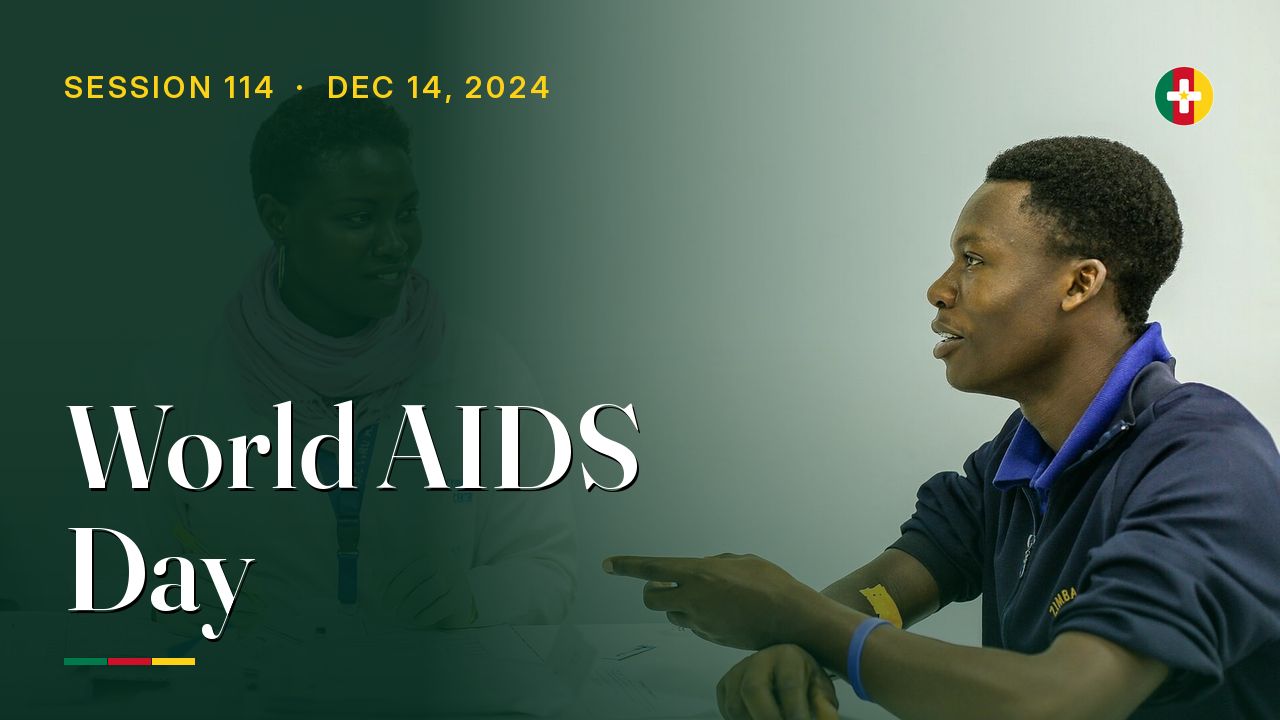
This policy brief synthesises key insights from the Cameroon Town Hall for Healthcare Professionals meeting held on December 14, 2024, marking World AIDS Day with updates on HIV prevention, treatment and vaccines by Dr. Boghuma Kabisen Titanji of Emory University.
Context
Africa carries 70% of the global HIV burden, and young women account for most new infections in sub-Saharan Africa. Highly effective prevention, including twice yearly injectable lenacapavir, now exists, but oral PrEP has had low uptake for 12 years, children lag in treatment coverage, and international funding is under threat.
Key issues
- Low prevention coverage. PrEP reaches far fewer people than targeted, held back by stigma and limited access points.
- Young women at highest risk. Age disparate relationships, economic dependence, violence and untreated STIs drive infections in women aged 15 to 24.
- Price and delay of new drugs. Long acting PrEP is priced far above production cost, and generic access may take 18 to 24 months or longer; no African manufacturer is licensed.
- Children left behind. Only 57% of children with HIV globally were on treatment in 2023.
- Funding fragility. Dependence on PEPFAR and the Global Fund leaves gains vulnerable to cuts.
Discussion highlights
- Lenacapavir showed 100% protection in young African women and superiority to oral PrEP in two trials.
- Stigma, not technology, was identified as the main barrier to PrEP use in Cameroon.
- Regional, African Union backed manufacturing was proposed as the realistic path to local production.
- Long acting PrEP appeared safe in women who became pregnant during the trial.
- Participants were urged to know their status and to counter vaccine conspiracy beliefs.
Recommendations
- Prepare now for long acting PrEP. MINSANTE's HIV programme, with PEPFAR and the Global Fund, should plan for introduction of generic lenacapavir and cabotegravir: regulatory registration, supply forecasting, training of providers and drug resistance monitoring. First step: include long acting PrEP in the next national HIV strategic plan and grant applications.
- Normalise and decentralise PrEP. MINSANTE and regional delegations should make oral PrEP routinely available at university health centres, youth friendly services and pharmacies, backed by a public education campaign to reduce stigma.
- Target adolescent girls and young women. Programmes should combine PrEP with STI screening and treatment, economic empowerment and protection from gender based violence for women aged 15 to 24, building on schools and universities.
- Close the paediatric treatment gap. Hospitals and the PMTCT programme should strengthen early infant diagnosis and paediatric ART, given that children have the lowest coverage.
- Support African manufacturing regionally. Government should work through the African Union and regional bodies on pooled procurement and purchase commitments that make African production of ARVs and PrEP viable.
- Protect domestic financing. MINSANTE and the Ministry of Finance should increase domestic funding for HIV to reduce dependence on external donors.
Next steps
The town hall planned to move to monthly sessions in 2025. Dr. Titanji referred participants to her earlier town hall talk on HIV prevention and cure strategies.
Conclusion
The tools to end HIV as an epidemic now exist, including twice yearly injections that prevented every infection in a trial of young African women. Whether Cameroon benefits depends on affordable access, sustained funding and a determined effort to remove the stigma that keeps people from prevention and treatment.
Meeting minutes
Agenda
- Welcome and introduction of the speaker by the chair, Dr. Munoh Kenne Foma
- Presentation by Dr. Boghuma Kabisen Titanji: state of the HIV pandemic, prevention, treatment, cure and vaccines
- Discussion and Q&A
- Closing remarks and announcements
Opening remarks
- The chair, moderating alone from the hospital while on call, introduced the yearly HIV session and Dr. Titanji, a long standing supporter of the town hall who trained in Cameroon and London before joining Emory.
- Elvis Ndansi greeted participants briefly from Heathrow airport.
- The chair announced that from the new year the town hall planned to move to monthly sessions.
Presentation
1. The state of the pandemic in 2023
Dr. Titanji said the 2024 World AIDS Day theme was 'Take the rights path', placing human rights and access at the centre of ending HIV. In 2023 there were 39.9 million people living with HIV, 1.3 million new infections (which she described as almost fivefold above the 2025 target of 350,000) and 630,000 AIDS related deaths, with 30.7 million on treatment. New infections have fallen 60% since the 1995 peak, and deaths fell 54% in Western and Central Africa between 2010 and 2023, but progress has plateaued. Africa is home to 70% of people with HIV.
2. Women, girls and key populations
Women and girls accounted for 44% of new infections globally and 62% in sub-Saharan Africa. Every week about 4,000 adolescent girls and young women aged 15 to 24 acquire HIV, 3,100 of them in sub-Saharan Africa. Prevalence remains higher among men who have sex with men (7.7%), sex workers, people who inject drugs, transgender people and prisoners, and PrEP coverage falls far short of targets in every region.
3. Long acting injectable PrEP
Lenacapavir, a capsid inhibitor injected every 26 weeks, gave 100% protection in a randomised trial of 2,134 young cisgender women in Eastern and Southern Africa published in the New England Journal of Medicine, and was superior to daily oral PrEP. A second trial in men and gender diverse people, reported about a week before the session, also showed superiority (two infections versus nine on oral PrEP). Cabotegravir, given every two months, was shown effective in 2022. Benefits include adherence, less stigma and convenience.
4. Price and access
Lenacapavir costs about US$41,000 to 42,000 a year, against an estimated production cost of about US$40 per injection, and cabotegravir about US$2,000 a year. Dr. Titanji noted the ethical problem of drugs tested in African women being out of reach in Africa. In October 2024 Gilead licensed six generic manufacturers, all in Asia and none in Africa, to supply 120 low income countries, leaving middle income countries out; she said generic cabotegravir may not be widely available in Africa until 2027, nine years after trials began.
5. Treatment and the latest cure case
Treatment coverage rose from 7.7 million in 2010 to 30.7 million in 2023 (77% of people with HIV), but only 57% of children aged 0 to 14 were on treatment, compared with 84% of pregnant women. She referred clinicians to the expert panel guidelines published on December 1. She described the seventh reported HIV cure, the 'Swiss patient' (Nature Medicine), who received a stem cell transplant from a donor with normal CCR5 and a JAK inhibitor for graft versus host disease, and remained in remission 32 months off treatment; she stressed this approach is not widely applicable.
6. Vaccines and the road ahead
A phase 2b trial of a four dose adenovirus vectored vaccine in African women published in 2024 showed no protection, and researchers are turning to broadly neutralising antibodies and new design approaches. She concluded that the tools to stop new infections already exist (treatment as prevention, oral and injectable PrEP) but are not reaching people, while funding is drying up and stigma remains a major barrier.
Discussion and Q&A
- The chair asked how soon long acting PrEP will reach Cameroon, and whether people at risk will use it given stigma. Dr. Titanji said generics and PEPFAR purchasing commitments could bring it to African countries from late 2025 to mid 2026, with Southern and Eastern Africa expected first, and noted that Cameroon's HIV programme is partly funded by PEPFAR and the Global Fund. She said oral PrEP, over 95% effective, has existed for 12 years with low uptake, so the Ministry of Health must lead education and destigmatisation, for example by offering PrEP routinely at university health services and through pharmacies.
- The chair asked about JAK inhibitors outside transplantation and the role of graft versus host disease in the cure case. She explained that JAK/STAT inhibitors, studied in her laboratory, reduce BCL-2 driven survival of infected cells and inflammatory T cell activation, shrinking the viral reservoir, and are being studied as part of combination cure strategies. Graft versus host disease itself also appears to contribute to clearing the reservoir in all reported cures.
- Franklin Maloba asked why young women are disproportionately infected and whether receptor differences play a role. She said the causes are mainly social: age disparate relationships with older men, economic dependence that limits condom negotiation, and violence against women seeking PrEP, along with anatomical susceptibility and untreated sexually transmitted infections. Studies have not shown sex differences in CD4 or CCR5 expression; differences relate to the exposed tissue.
- The chair asked whether the 95-95-95 targets for 2030 are achievable. She said yes if funding and political will follow, but warned of complacency now that HIV is a chronic disease, and that cuts to PEPFAR funding could quickly reverse gains.
- Participants asked how the 120 countries were chosen and why no African manufacturer was included. Eligibility follows World Bank low income criteria. She said new African manufacturers struggle to compete on price with established firms such as the Serum Institute of India, so African governments and the African Union would need regional, continent wide efforts and commitments to buy locally.
- A chat question asked whether long acting PrEP is safe in pregnancy, and Franklin Maloba asked why there is still no HIV vaccine when COVID-19 vaccines came within a year. Women who became pregnant during the lenacapavir trial had no adverse outcomes, though dedicated pregnancy trials will follow. On vaccines, she said HIV's heavily glycosylated envelope and high mutation rate make it a hard target, and that 40 years of HIV research made COVID-19 mRNA vaccines, RSV vaccines and CAR-T therapies possible; there is no conspiracy.
Calls to action and closing
- Dr. Titanji urged everyone to know their HIV status, encourage others to test, and speak out against stigma, saying health professionals must lead in making PrEP acceptable.
- The chair thanked her and highlighted equity and access as the key message: the tools exist, and the obstacles are social.
- He announced that the town hall would move to monthly sessions in the new year, that the next speaker would be communicated, and wished participants happy holidays. There was no parking lot because other moderators were travelling.
Next meeting
Town hall to move to monthly sessions in 2025; next speaker to be communicated.
Submitted by the Co-Moderators, Cameroon Town Hall for Healthcare Professionals.