Managing Health Worker Migration from Cameroon: From Brain Drain to Brain Circulation
Overview
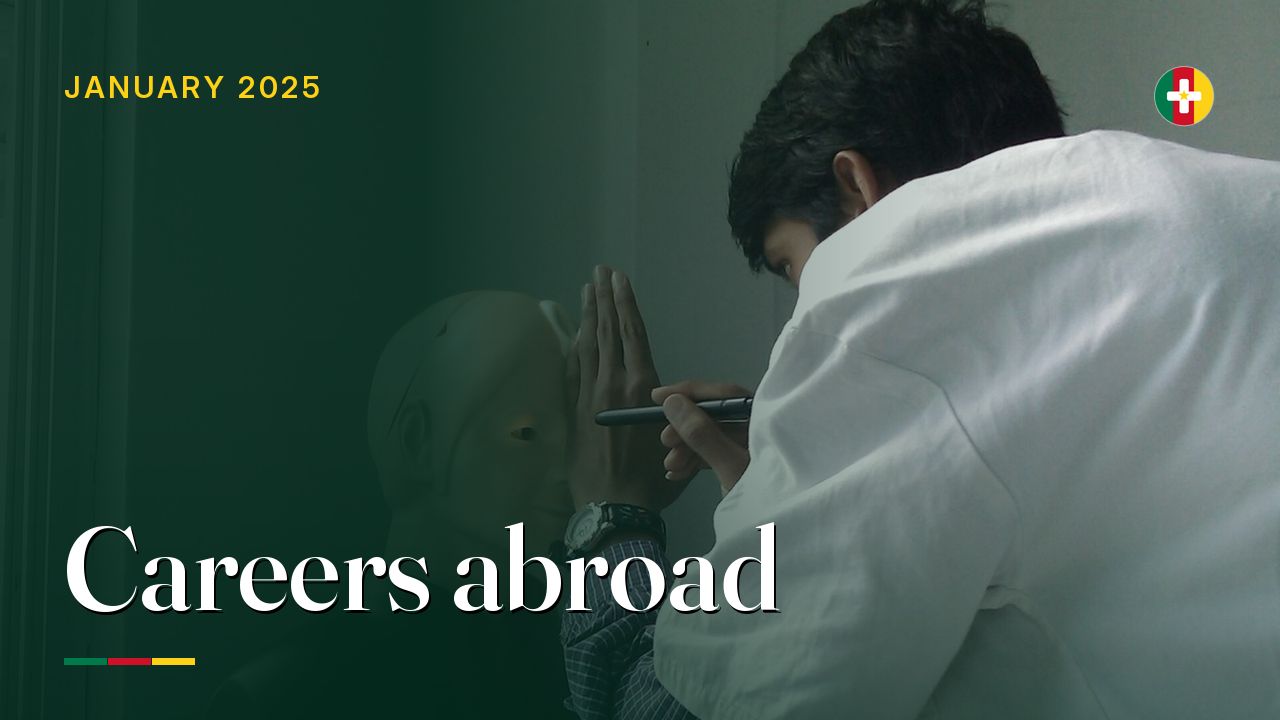
This policy brief synthesises key insights from the Cameroon Town Hall for Healthcare Professionals meeting held in January 2025, the first session of the year, focusing on healthcare career opportunities in the diaspora, including becoming a physician in the USA.
Context
Cameroon trains a growing number of doctors and nurses, while public recruitment and pay lag; many young professionals leave without guidance and lose years or abandon their training. Diaspora professionals in clinical research, medicine, laboratory science, public health and nursing described the routes they took and offered mentorship.
Key issues
- Uninformed migration. Many migrants re-enter training unnecessarily (for example, laboratory scientists or nurses restarting nursing school) because they lack accurate information.
- Barriers to recognition. Foreign credential evaluation requires transcripts, course outlines and professional council registration, which some Cameroonian schools and councils are slow to provide.
- Cost of licensing exams. Exam and application fees are hard to meet on Cameroonian public salaries, delaying applications.
- Weak career guidance at home. Training institutions rarely teach career planning, networking or alternative careers such as clinical research and public health.
- Loss of skills to the system. Without return or remote pathways, Cameroon loses trained staff it paid to educate.
Discussion highlights
- Clinical research is an under recognised career path open to graduates with a bachelor's degree.
- University of Buea laboratory science graduates can sit US board exams without retraining.
- Networking and mentorship were named by every speaker as decisive.
- Leadership experience in Cameroonian programmes strengthens applications to top schools.
- Speakers called for 'brain circulation' through remote work, teaching and investment.
Recommendations
- Create a structured diaspora mentorship pathway. MINSANTE's diaspora committee, professional orders and the town hall should set up a mentorship register linking students and graduates with diaspora professionals by field, working with groups such as the Association of Cameroonian Physicians in the Americas. First step: a public list of volunteer mentors and recurring town hall sessions on each career path.
- Speed up document verification. Training schools, the Cameroon Medical Council and the nursing order should issue transcripts, course outlines and registration certificates promptly and in formats accepted by ECFMG, ASCP, Canadian and UK bodies, and maintain listings in international directories.
- Teach career development at home. Faculties of medicine, nursing and health sciences should add career planning, research skills and networking to curricula and invite diaspora alumni to describe career paths.
- Keep links with those who leave. MINSANTE should create formal channels for diaspora professionals to teach, supervise research, give grand rounds and provide telemedicine in Cameroon, turning migration into brain circulation.
- Improve retention and pay. Government should review salaries, recruitment and career progression for health workers, so that staying is a viable choice and migration is planned rather than forced.
Next steps
Further sessions were planned on pharmacy, dentistry and career pathways in Europe and the UK. The chair planned grand round lectures in Cameroon in 2025.
Conclusion
Migration of health professionals from Cameroon is a reality. Clear information, mentorship and faster document processing can prevent wasted years, while deliberate links with the diaspora can return skills to the Cameroonian health system.
Meeting minutes
Agenda
- Welcome and opening remarks by Elvis Ndansi, Dr. Katte Jean-Claude and the chair
- Clinical research careers (USA and South Africa)
- Becoming a physician in the USA
- Medical laboratory science careers (USA and Canada)
- Public health careers (USA and UK)
- Nursing careers in the USA
- Questions, contributions and closing remarks
Opening remarks
- Elvis Ndansi welcomed participants to the first session of 2025, noting that the platform has about 2,500 members in some 35 countries and had held every session in 2024, including its 100th.
- Dr. Katte Jean-Claude, co-moderating from the UK, offered New Year greetings.
- The chair said the town hall had discussed over 115 topics in almost four years, including a session with the Minister of Public Health. He said many young Cameroonian health professionals are migrating without guidance and that the session aimed to show how to do so safely, since trained human resources ultimately benefit the country.
Presentation
1. Clinical research careers
The founder of the Clinical Research Hub community described the path from medical assistant to clinical research coordinator (screening and following trial patients, about US$60,000 to 70,000), clinical research associate after two to three years (monitoring sites for sponsors, 50 to 70% travel, about US$100,000 to 120,000) and clinical trial manager (about US$130,000 to 140,000). Doctors with foreign MDs or PhDs can become medical science liaisons or medical monitors (US$80,000 to 200,000). A bachelor's degree, ideally in health science, is the entry requirement. A pharmacist working as a medical science liaison added that MSLs also support approved drugs and bring field insights back to companies. The CEO of Partnership for Clinical Trial Research in Johannesburg said a coordinator in South Africa earns the equivalent of about 3 million francs CFA a month and a CRA about 10 million, and that organisations there prefer science graduates.
2. Becoming a physician in the USA
Dr. Chobufo Ditah said the path (ECFMG identification, USMLE Step 1 and Step 2, certification, residency application, and Step 3) is possible for Cameroon trained doctors, and the sooner after graduation the better, since programmes doubt long gaps without specialisation. He urged aiming for the highest scores and avoiding failed attempts, which cannot be erased, treating preparation as a team marathon, using free resources, and building relationships with mentors early. US clinical experience helps but is not decisive. He described his own non linear journey through government posting, MSF and an MPH in Israel.
3. Practical steps and networking
An internal medicine resident and incoming haematology and oncology fellow explained IMG eligibility (a school listed in the World Directory of Medical Schools), the ECFMG account and Form 186 identity certification, and said good scores with no failed attempts usually bring interviews. He said support (moral and financial), contact with those ahead, and above all networking with the Cameroonian physician community decide outcomes. Dr. Ditah said interventional cardiology took seven years of training (internal medicine, cardiology, interventional) and that salaries often exceed US$500,000.
4. Medical laboratory science
Dr. Kenji said University of Buea clinical laboratory science graduates can sit the ASCP board exam directly without retraining, then obtain state licences (as in California), and can earn six figures (about US$160,000 to 170,000 in California). With a PhD, a two year clinical fellowship leads to board certification as a laboratory director (about US$180,000 to 320,000), and he consults as director for several laboratories. He warned graduates against abandoning their training to start nursing from scratch. A clinical biochemist based in Canada said the country requires credential evaluation and sometimes a bridging programme before certification, and that clinical fellowships are often not advertised, so persistence and contacts matter.
5. Public health
A haematology and oncology fellow with an MPH from Johns Hopkins said medical doctors can take a one year MPH, and others an MSPH, through CEPH accredited schools using the SOPHAS application portal. He urged a year of preparation, strong recommendation letters, researching scholarships (including Bloomberg funded support at Johns Hopkins and partial awards at Harvard), and not underestimating one's chances at top schools. Leadership experience, such as his role as regional HIV coordinator in three regions, strengthens applications. Entry epidemiologist salaries are about US$70,000 to 90,000, rising to six figures. Dr. Katte described UK routes (one year MPH, NIHR PhD fellowships, the five year public health consultant training) and said his Cameroon public health residency, research and publications won him a competitive NIHR PhD place at Exeter.
6. Nursing
A US nurse practitioner (DNP) described US routes (CNA, LPN, RN, BSN after two years of prerequisites and a TEAS exam, then NCLEX) and her own move from BSN directly to a DNP in three and a half years. Nurses trained abroad at accredited schools need only credential evaluation and the NCLEX, and she had helped four Cameroonian women obtain US nursing licences within six months. The common mistake is re-enrolling in nursing school instead of seeking advice. BSN nurses earn about US$50,000 to 100,000 and nurse practitioners average about US$120,000.
Discussion and Q&A
- A Cameroonian doctor and research fellow trained in Zambia, asked how to join the Clinical Research Hub community and whether a foreign research diploma must be validated to work in clinical research in the USA. Elvis Ndansi directed him to connect with the Clinical Research Hub founder on LinkedIn for mentoring and noted the platform's French speaking moderator could help.
- A Cameroonian physician practising in Uganda asked about new US state pathways allowing internationally trained specialists to practise after exams and a fellowship, as in Tennessee. The moderators referred him to Dr. Ditah and the internal medicine panellist for detailed guidance.
- A participant asked about the age limit and other questions in the chat; Dr. Katte asked Dr. Ditah about his career path. Dr. Ditah stressed that failures and rejections are part of the journey, and that he supports aspiring doctors including financially, noting that USMLE fees are hard to raise on a government salary of about 250,000 francs CFA.
- The chair asked a participant (PhD in pharmaceutical sciences, now a resident) whether his PhD was worth it. He said his plans to enter residency or research jobs directly had failed, but a PhD in Florida changed his understanding of US society and networks and became a stepping stone to residency. The chair added that physician scientist tracks (such as ABIM research pathways) favour candidates whose PhD fits their intended specialty.
Calls to action and closing
- Dr. Katte urged moving from a 'diploma' mindset to building specific skills, wherever they are taught.
- A participant cautioned that salary figures could discourage those in Cameroon, where he was once offered 40,000 francs CFA a month as a laboratory scientist, and urged them to excel at their current work, which had earned him his own PhD scholarship.
- The chair said an effective workforce needs capacity building and fair pay at home, that the platform aims to help young people migrate well and give back, and that future sessions would cover pharmacy, dentistry and pathways in Europe and the UK (including CamDoc UK). He announced plans to give grand round lectures in Cameroon in 2025.
- Dr. Katte called for 'brain circulation rather than brain drain', with diaspora professionals using technology to work in Cameroon from abroad, and offered to review CVs.
- About 100 participants attended at the peak. The session moved to the parking lot.
Next meeting
In a month.
Submitted by the Co-Moderators, Cameroon Town Hall for Healthcare Professionals.