Breast Cancer Care in Low-Resource Settings: Getting the Basics Right in Cameroon
Overview
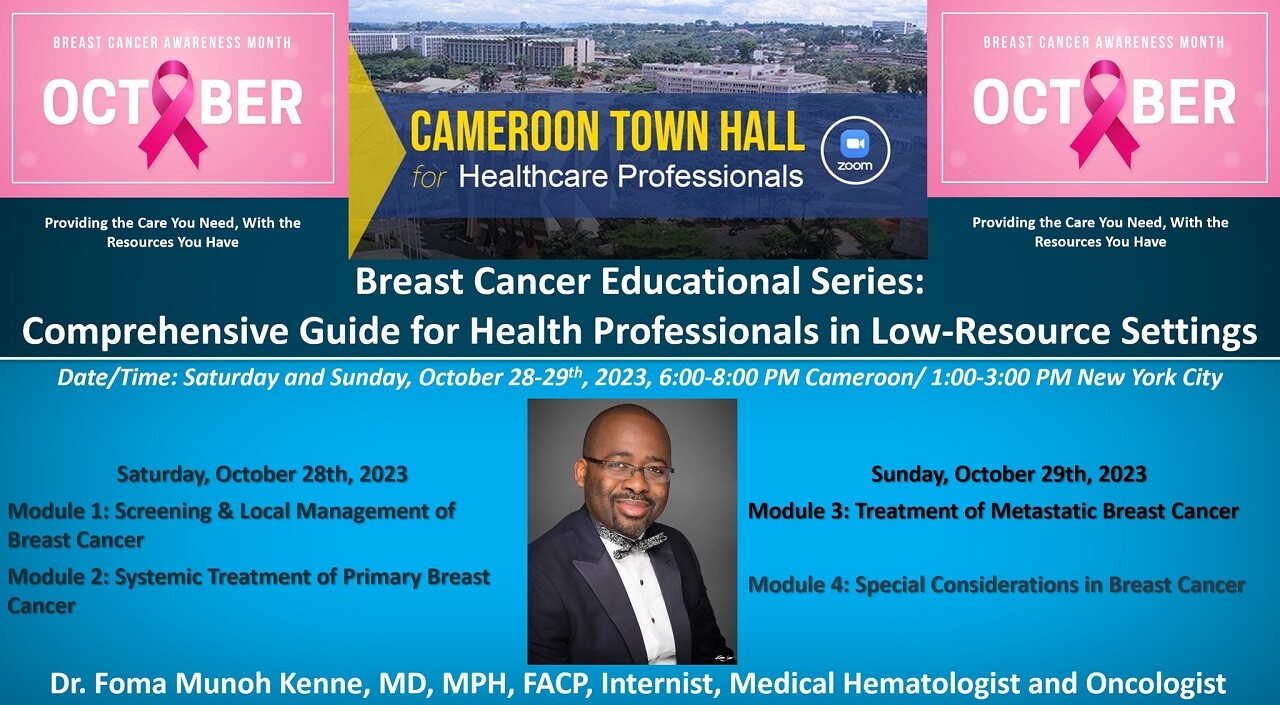
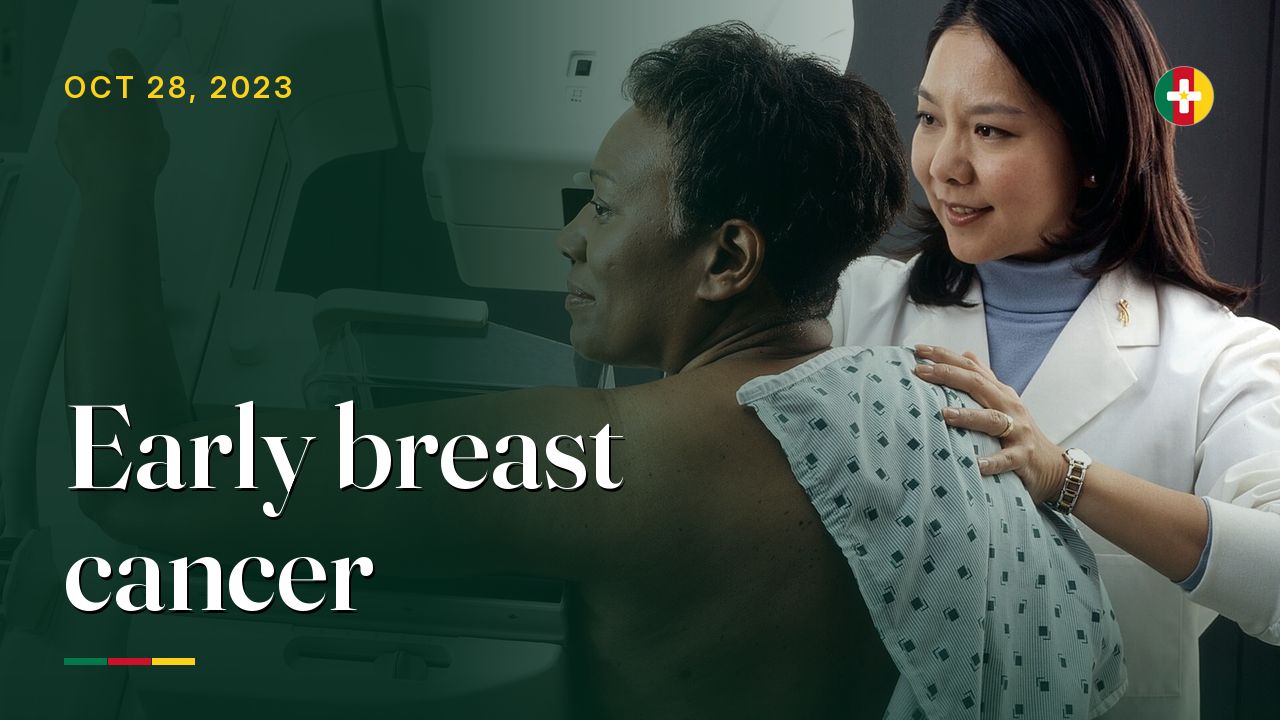
This policy briefing synthesizes key insights from Part I of the Cameroon Town Hall's Breast Cancer Educational Series, held in October 2023, in which Dr. Munoh Kenne Foma, medical oncologist, taught prevention, screening, diagnosis and treatment of early breast cancer to health professionals in Cameroon.
Context
Breast cancer is the leading cancer killer of women in Cameroon. Most women present late, there is no screening programme, most patients never get receptor testing, and only one radiotherapy facility, private and costly, was described as working.
Key issues
- Receptor testing is missing. About 80% of breast cancers are hormone receptor positive and respond to cheap endocrine therapy, yet the speaker estimated about 90% of patients in Cameroon never get ER and PR results, so many receive costly chemotherapy they do not need.
- Wrong biopsy methods. Fine needle aspiration remains common. It cannot separate in situ from invasive cancer or support immunohistochemistry.
- No screening programme. Most cancers are found as palpable lumps at a late stage.
- Limited radiotherapy. Without radiation, lumpectomy is not equal to mastectomy, so breast conserving surgery is risky for most Cameroonian women.
- Fragmented care and outdated practice. Specialists rarely meet in tumour boards, radical mastectomy and routine axillary dissection persist, and there are no national guidelines.
- Essential drugs out of reach. Trastuzumab is very expensive despite generics, and immunotherapy and T-DM1 are not available.
Discussion highlights
- Participants agreed that screening and early diagnosis should be the government's first investment.
- Mastectomy was supported as the safer option for early disease where radiotherapy cannot be assured.
- Breast clinics bringing surgeon, pathologist and radiologist together were proposed as a simple first structure.
- Online risk calculators were endorsed where genomic tests are unavailable.
- Virtual tumour boards (Zoom or WhatsApp) and written Cameroonian guidelines were proposed.
Recommendations
- Make receptor testing standard. MINSANTE and hospital pathology departments should make core biopsy with ER, PR and HER2 testing the minimum for every breast cancer, with a standard pathology report (type, grade, ER, PR, HER2, Ki-67, margins). First step: a national minimum pathology report template circulated to regional and reference hospitals.
- Launch organised screening. MINSANTE should adopt WHO guidance (mammography from 50 every two years, earlier for high-risk women) and train nurses and general practitioners in clinical breast examination and referral. First step: a pilot in regions where mammography units are already installed.
- Set up breast clinics and tumour boards. Regional and reference hospitals should create breast clinics with surgery, pathology and radiology, linked to multidisciplinary tumour boards, including virtual boards with diaspora specialists. First step: a monthly virtual tumour board hosted with the Cameroon Town Hall, building on the Mbingo and Bamenda boards.
- Issue national breast cancer guidelines. MINSANTE, with oncologists, surgeons and diaspora experts, should publish evidence-based national guidelines adapted to resources, covering mastectomy where radiotherapy is not assured, sentinel node biopsy, endocrine therapy for receptor positive disease, and avoiding surgery in metastatic disease.
- Expand access to essential medicines and radiotherapy. MINSANTE and the national procurement agency should add generic trastuzumab to the essential medicines list, keep tamoxifen and aromatase inhibitors in stock, and expand public radiotherapy. Partners such as CHAI could support price negotiation.
- Update training. Faculties of medicine and nursing schools should teach evidence-based breast oncology and train surgeons in sentinel node biopsy and breast surgery as a surgical sub-specialty.
Next steps
Part II of the series was scheduled for the next day on metastatic disease and special situations. Participants proposed a volunteer WhatsApp tumour board, and Dr. Foma accepted an invitation to teach at the University of Buea during a planned visit to Cameroon.
Conclusion
Most breast cancer deaths in Cameroon could be reduced with tools the country already has: core biopsy, receptor testing, endocrine therapy, screening and teamwork. Participants agreed that these basics should come before costly new technology.
Meeting minutes
Agenda
- Welcome and introduction by Dr. Munoh Kenne Foma
- Module 1: prevention, screening, diagnosis and local management of breast cancer
- Short questions and comments
- Module 2: systemic therapy for primary (stage I to III) breast cancer
- Discussion and Q&A
- Closing remarks and announcement of Part II
Opening remarks
- Dr. Foma welcomed participants to the first day of a two-day breast cancer educational series organised in partnership with the Cameroon Town Hall for Healthcare Professionals, aimed at medical students, nurses, general practitioners and specialists.
- He introduced his background: seven years of medical school in Yaoundé, two years at the Bamenda Regional Hospital, time as director of a district hospital, residency in clinical pathology in Cameroon, an MPH, then internal medicine and hematology and oncology training in the US. He said he sees about 20 breast cancer cases a week.
- He said he had been critical of the Cameroonian health system at the previous week's town hall and that the series was meant to orient training toward non-communicable diseases and the growing cancer burden. He stated that the content was his own and was based on clinical trials and evidence-based guidelines, not on the views of his employer.
- He opened with case questions on risk factors, breast conserving therapy, sentinel lymph node surgery, lobular carcinoma in situ and endocrine therapy, and gave the answers during the lecture. He thanked the 52 people attending.
Presentation
1. Breast cancer is a team sport
Dr. Foma said breast oncology needs surgeons, pathologists, radiologists, radiation oncologists and medical oncologists working together. He argued that breast surgery is a sub-specialty of general surgery and that leaving it to gynecologists in Cameroon contributes to poor outcomes. He said radical (Halsted) mastectomy, shown in trials since the 1960s to give no benefit over simple mastectomy, is still being done in Cameroon and is not acceptable.
2. Most breast cancers are hormone driven
He said breast cancer is the leading cancer killer in Cameroon and that about 80% of breast cancers, including in data from Nigeria and Ghana, are estrogen and progesterone receptor positive, with 15 to 20% triple negative. Lobular carcinoma is almost always receptor positive. He argued that no Cameroonian woman who has not had immunohistochemistry should die without receiving hormonal treatment, which is cheap compared with a round of chemotherapy (about 250,000 FCFA or more, as he put it). He described a young woman who had a double mastectomy and repeated chemotherapy, whose receptors came back 100% positive two days after she died.
3. Risk, prevention and screening
He reviewed risk factors (age, BRCA1 and BRCA2, other genetic syndromes, early menarche, late menopause, late first birth, hormone replacement, alcohol, high-risk benign lesions) and protective factors (breastfeeding, first pregnancy before 20, exercise). He noted three young Cameroonian women in his US practice who all carried Li-Fraumeni mutations. For high-risk women he summarised the NSABP and STAR prevention trials: tamoxifen is the only preventive option before menopause, and aromatase inhibitors are for postmenopausal women only. For Cameroon he recommended adopting WHO guidance, mammography from age 50 every two years, and earlier screening for women with a family history. He said mammograms are now in almost all regional hospitals and listed only a few working public MRI units.
4. Biopsy and the pathology report
He asked surgeons to stop fine needle aspiration of breast lesions: it gives cytology only, cannot separate DCIS from invasive carcinoma, and does not allow proper immunohistochemistry. Core needle biopsy is the gold standard, punch biopsy can be used for inflammatory cancer, and excision biopsy often means a second operation. Every breast pathology report should give histologic type, grade, ER and PR levels, HER2 by immunohistochemistry (with FISH for equivocal results) and Ki-67. Staging scans are needed for node positive or stage III disease, abnormal liver enzymes or alkaline phosphatase, or symptoms, and surgery for metastatic disease does not improve survival. Menopausal status should be documented before any treatment.
5. Local management: surgery, nodes and radiation
Citing NSABP B-04, B-06 and later trials, he said lumpectomy plus radiation equals mastectomy for early breast cancer, but lumpectomy without radiation does not. DCIS needs a 2 mm negative margin. With only one functioning radiotherapy centre in the country, private and costly, he said mastectomy is often the better option for Cameroonian women. Sentinel lymph node biopsy with blue dye or a radioactive tracer should replace routine axillary dissection for clinically node negative patients, and he called for advocacy and training so regional and general hospitals can do it. Post-mastectomy radiation is indicated for node positive disease.
6. Systemic therapy for early breast cancer
He said every patient with breast cancer needs systemic therapy to treat micrometastatic disease; the question is when. Triple negative disease needs anthracycline and taxane chemotherapy, given before surgery, with pembrolizumab (KEYNOTE-522) now standard for stage II and above and capecitabine for residual disease; he noted immunotherapy is not available in Cameroon. HER2 positive disease needs chemotherapy plus trastuzumab, and he called for trastuzumab, available for more than 30 years with generic forms, to be added to Cameroon's essential medicines list. T-DM1 for residual disease is not available in Cameroon.
7. Hormone positive disease and avoiding needless chemotherapy
For the 80% of patients with hormone receptor positive, HER2 negative cancer, he said endocrine therapy is the core treatment and many do not need chemotherapy. He summarised the TAILORx and MINDACT trials: Oncotype scores below 15 in premenopausal women and up to 25 in postmenopausal women indicate no chemotherapy benefit. Receptor positivity now starts at 1%. Endocrine therapy should run at least five years: tamoxifen before menopause (or ovarian suppression with an aromatase inhibitor), and anastrozole, letrozole or exemestane after, which he said are available in Cameroon. He warned of tamoxifen's risks (uterine cancer, clots, cataracts) and said chemotherapy is almost never an emergency, while neutropenia from poorly supported chemotherapy kills many patients.
Discussion and Q&A
- Dr. Francine Kouya (Mbingo Baptist Hospital): with cancer paid out of pocket, no national guideline, late presentation, and patients lost to follow-up after lumpectomy because radiotherapy in Douala has long waiting lists, what model should Cameroon adopt? Dr. Foma said the government's main effort should go to a national screening strategy based on WHO recommendations, and that because the only working radiotherapy machine is private and far from most patients, he also favours mastectomy for early stage disease, since lumpectomy without radiation is not equal to mastectomy.
- A breast surgeon trained in Ghana: should a woman over 75 receive chemotherapy, given lower life expectancy in Cameroon? He said the first step is to know ER, PR and HER2. A frail older patient with receptor positive disease should not receive chemotherapy unless there is visceral crisis; hormonal therapy is the treatment, and chemotherapy is almost never an emergency.
- Dr. Ntumsi Tontu, radiation oncologist in South Africa: can online calculators such as NHS PREDICT guide adjuvant chemotherapy where genomic tests are unavailable? He agreed they are a useful option in low-resource settings, though less accurate than Oncotype, and noted that in Cameroon the more basic problem is that about 90% of patients never get ER and PR testing. Sidney Tazeh, an oncology physicist in the US, added that calculators vetted by centres such as Mayo Clinic and MD Anderson remain valid and supported a greater role for mastectomy.
- A colorectal surgeon: surgeons are criticised for operating, but with late presentation what else can they offer? He said the threshold for mastectomy will be lower in Cameroon, that screening should be taken down to nurses, who see most patients first, and that he still sees women with fungating, septic tumours. Dr. Foma agreed that screening and prevention come first and called for advocacy at the Ministry on why only a private radiotherapy facility is working.
- Dr. Ivo Che Ditah: the policymakers are not on this call, so how does the message reach them, given Dr. Foma's role on the Minister's committee? Dr. Foma said advocacy must involve community leaders, parliament, hospital directors and regional councils, that he would channel the message himself, and that he would work with others who have the Minister's ear.
- A participant: could running clinical trials in Cameroon push policymakers to bring these drugs in? He said the Gates Foundation was working to streamline Cameroon's clinical trial process, recalled a large trial he had proposed for Cameroon that officials declined as too sensitive during COVID-19, and said drug access needs advocacy with the national procurement agency. He mentioned that a Clinton Health Access Initiative director was working with the government on subsidised cancer medicines.
- A surgical oncologist on breast clinics and terminology He said cancer care in Cameroon is haphazard and should start with breast clinics where surgeon, pathologist and radiologist work together on the triple assessment (clinical, imaging, histology). He said a 'lumpectomy' is only an excision biopsy and breast conserving surgery means wide local excision or quadrantectomy, and he defended teaching breast self-examination given the lack of infrastructure. Dr. Foma agreed on breast clinics and stressed that practice must follow trial evidence rather than expert opinion.
- The same breast surgeon on mindset and collaboration He said clinicians in Cameroon rarely share cases or give feedback, that some oncology units refuse to work with outside doctors, and proposed written Cameroonian guidelines and shared patient folders discussed over Zoom or WhatsApp, as was once done for HIV. Dr. Foma agreed and described weekly tumour boards in his practice.
- Dr. Joshua Tambe (radiologist, University of Buea): where are Cameroon's oncologists in these discussions? He said interdisciplinary tumour boards across facilities are needed and invited Dr. Foma to teach at his school; Dr. Foma accepted and said he might be in Cameroon in February. A gynecologist later proposed a volunteer WhatsApp group to start a virtual tumour board.
Calls to action and closing
- Dr. Foma's take-home messages: prevention is better than cure, so screen, diagnose and treat early; cancer care needs collaboration across specialties; no breast cancer patient should be treated without immunohistochemistry; and surgeons should use core biopsy, not fine needle aspiration.
- He praised the tumour boards and practice change at Mbingo and Bamenda, and thanked the participants who spoke.
- A pulmonologist in the US said colleagues in Cameroon, especially on the francophone side, needed to be more open to collaboration and that change also had to come at the system level.
Next meeting
Part II the next day, same time: metastatic breast cancer and special situations (breast cancer in men and in pregnancy).
Submitted by the Co-Moderators, Cameroon Town Hall for Healthcare Professionals.