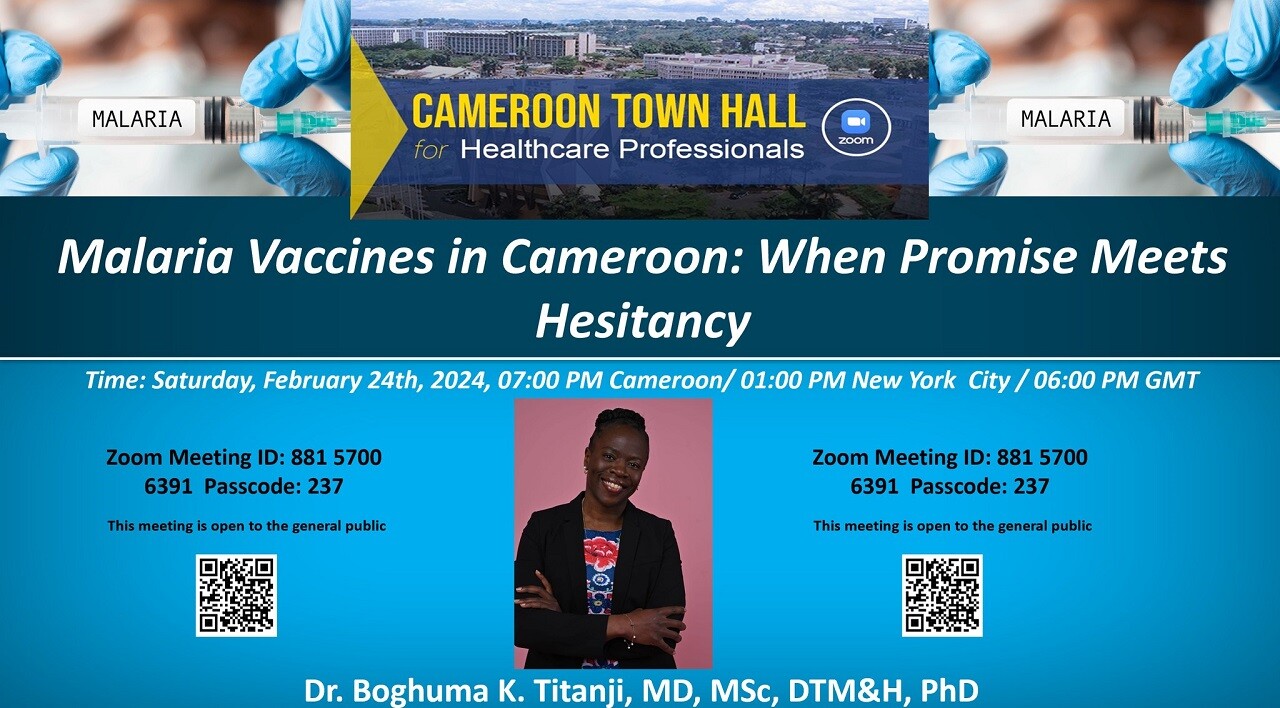
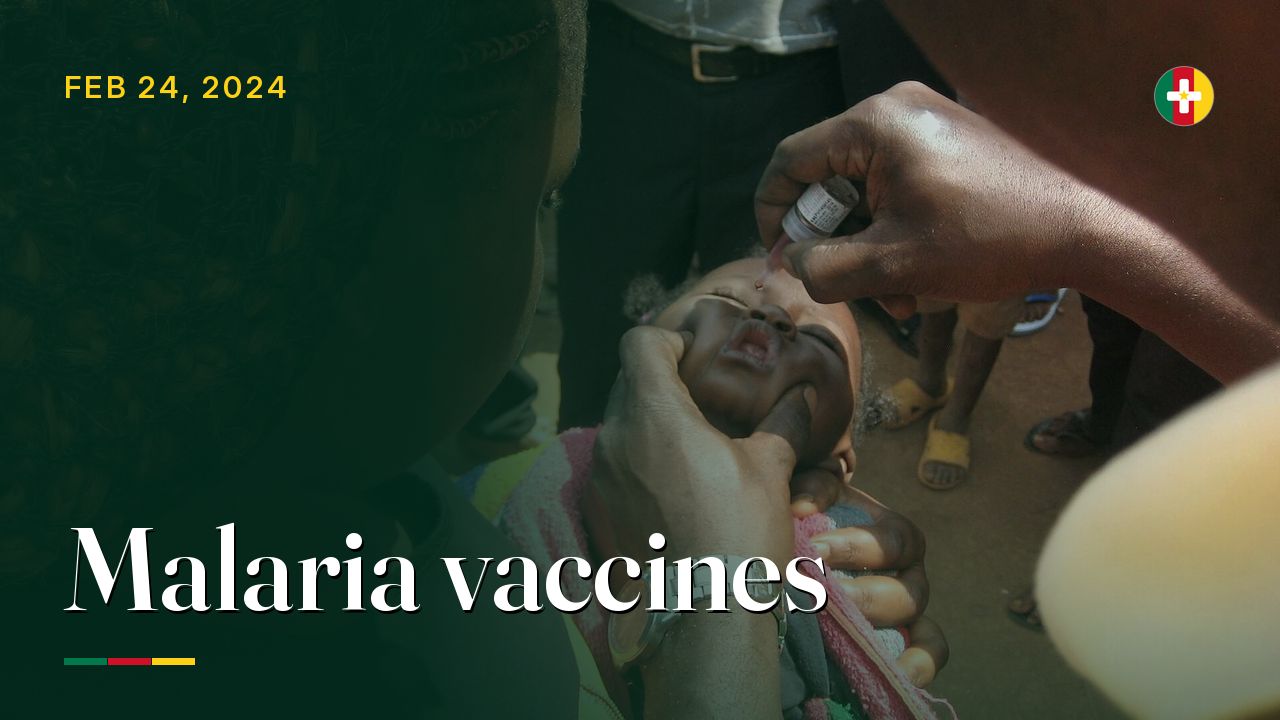
Malaria Vaccines in Cameroon: When Promise Meets Hesitancy
Overview
This policy briefing synthesizes key insights from the Cameroon Townhall for Healthcare Professionals meeting held in early 2024, weeks after Cameroon became the first country to introduce the RTS,S/AS01 malaria vaccine into routine immunisation, focusing on the theme "Malaria Vaccines in Cameroon: When Promise Meets Hesitancy," presented by Dr. Boghuma Kabisen Titanji of Emory University.
Context
Cameroon reported over 6 million malaria cases and over 12,000 deaths in 2022, 90% of deaths in children under five. RTS,S/AS01 is a four dose protein vaccine with modest efficacy that reduced all cause child mortality in the pilot countries, but its introduction met rumours and mistrust.
Key issues
- Hesitancy and misinformation. Rumours that the vaccine was rushed, made without Africans, or causes cerebral malaria and deaths in girls spread on WhatsApp and social media faster than official messages.
- Modest efficacy misunderstood. Efficacy of about 30 to 39% is often compared with 100% rather than with no vaccine.
- Four doses and access. Completing four visits costs families transport and time off work, and the vaccine needs a reliable cold chain.
- Sustainable funding. Introduction is heavily subsidised by Gavi, and Africa imports 99% of its vaccines.
- Resistance to current tools. Artemisinin resistance and insecticide resistance threaten existing malaria control.
Discussion highlights
- Health professionals were asked to act as trusted messengers in their communities.
- Messages in Pidgin and local languages on radio and WhatsApp were proposed, building on a Pidgin video recorded by the speaker.
- Regular, not campaign only, health education by the Ministry was called for.
- The choice between RTS,S and R21 was described as a national policy decision.
- The Chair called for infectious disease sub-specialty training in Cameroon.
Recommendations
- Community based vaccine communication. MINSANTE and the Expanded Programme on Immunization should build messages around the concerns communities actually raise (speed of development, African involvement, safety in girls, efficacy) and deliver them through community radio, WhatsApp and short videos in Pidgin, French, English and local languages. First step: commission a set of short videos by Cameroonian experts and distribute them through regional delegations.
- Track and answer misinformation. MINSANTE, with academic partners, should monitor malaria vaccine rumours on social media and in communities and respond quickly through trusted health workers. First step: a simple rumour log reported by district health teams.
- Help families complete four doses. Regional delegations and health districts should use reminders, align doses with other visits, and reduce costs for families. First step: publish dose 1 to dose 4 completion rates by district.
- Plan sustainable financing and supply. MINSANTE should set out a domestic co-financing plan for malaria vaccines beyond Gavi support and keep RTS,S versus R21 under review on cost, supply and cold chain needs, while supporting regional efforts on vaccine manufacturing in Africa.
- Keep vaccination within integrated malaria control. The National Malaria Control Programme should present the vaccine as an addition to nets, spraying, chemoprevention and treatment, and strengthen surveillance of drug and insecticide resistance and of the parasite's genetics.
- Train infectious disease specialists. MINSANTE, the Ministry of Higher Education and medical faculties should create infectious disease sub-specialty training, drawing on diaspora experts as teachers and mentors.
Next steps
The speaker's slides and her Pidgin video were to be shared through the town hall's YouTube channel and email. Dr. Titanji undertook to send data on non-responders and the hepatitis B immunogenicity reference. The next session was set for two weeks later.
Conclusion
Participants agreed that the malaria vaccine is imperfect but valuable, and that its benefit for Cameroonian children depends on acceptance. Clear, local and continuous communication by trusted professionals was seen as the main lever.
Meeting minutes
Agenda
- Welcome and introduction of the topic by Elvis Ndansi
- Remarks by the Chair, Dr. Munoh Kenne Foma, and Dr. Bryan Tegomoh
- Presentation by Dr. Boghuma Kabisen Titanji on malaria vaccines in Cameroon
- Discussion and Q&A moderated by Dr. Bryan Tegomoh
- Closing remarks by the Chair, summary by Elvis Ndansi, and next meeting
Opening remarks
- Elvis Ndansi welcomed participants and described the town hall as a platform of almost three years that brings together Cameroonian health professionals from across the world every two weeks.
- The Chair called the malaria vaccine one of the biggest milestones in science and noted that sickle cell disease persists in Africa because of malaria.
- Dr. Tegomoh noted the long road to a malaria vaccine and that Cameroon was leading its rollout as the first country to include it in routine immunisation.
- Elvis Ndansi set out the theme: the vaccine was received in Cameroon with both enthusiasm and hesitancy, linked to concerns about safety, efficacy and speed of development, mistrust of the health system, historical injustices and the need for culturally sensitive communication. He welcomed Prof. Vincent Titanji, who has long worked on malaria vaccine research, among the participants.
Presentation
1. The malaria burden
Dr. Titanji, who declared no conflicts of interest and no link to any pharmaceutical company, said global malaria cases and deaths had risen since 2019, to about 249 million cases a year, with sub-Saharan Africa carrying over 90% of cases and deaths. Cameroon is one of the 11 highest burden countries; in 2022 it reported over 6 million cases and over 12,000 deaths, 90% of them in children under five. Funding was only about 50% of what is needed to meet the 2030 target of a 90% reduction, and resistance to artemisinin and the spread of malaria with climate change add to the threat.
2. Fifty years of research
She traced the vaccine to Ruth Nussenzweig's 1967 finding that radiation attenuated sporozoites protected mice, followed by identification of the circumsporozoite protein (1979 to 1983) and the RTS,S vaccine developed by the Walter Reed Army Institute of Research and GSK from 1984, later tested in Africa with the PATH Malaria Vaccine Initiative. Phase 3 trials ran from 2009 to 2014 in seven African countries with about 15,000 children, and WHO recommended RTS,S in 2021. She called the claim that the vaccine was developed too quickly the first myth, and noted more than 25 candidate vaccines in the pipeline.
3. How RTS,S/AS01 works
RTS,S fuses the circumsporozoite protein of Plasmodium falciparum with the hepatitis B surface antigen, produced in yeast as virus-like particles and given with the AS01 adjuvant. The hepatitis B component was added because the parasite protein alone did not produce a strong enough immune response. It is a protein vaccine, not DNA or mRNA.
4. African scientists were part of it
The trials were run by multinational teams including many African researchers, with ethics approval from African institutions, and the protocols are public on ClinicalTrials.gov. In Kenya alone, over 14,000 community health workers took part in the Malaria Vaccine Implementation Programme. She called the claim that Africans were not involved the second myth.
5. Effectiveness
In phase 3 the vaccine reduced clinical malaria by 36.3% and severe malaria by 32% in children aged 5 to 17 months. She called this modest but said the comparison is with no vaccine at all, and that used with nets, spraying and chemoprevention it could prevent up to 23,000 child deaths a year in Africa according to modelling. The implementation programme in Ghana, Kenya and Malawi (since 2019) found a 13% reduction in all cause mortality and a 22% reduction in hospital admissions for severe malaria, with benefit even in districts with low uptake.
6. Safety
Phase 3 signals of more meningitis, cerebral malaria and deaths among vaccinated girls were not seen in the implementation programme, which had vaccinated over 2 million children with over 4.5 million doses. She called the claim that the vaccine causes cerebral malaria and kills girls false. The WHO schedule is three doses from 5 months at monthly intervals, completed by 9 months, with a booster at 15 to 18 months.
7. R21/Matrix-M
The second WHO approved vaccine, R21/Matrix-M, uses less hepatitis B antigen and more parasite protein, and a different adjuvant also used in a COVID-19 vaccine. It showed 75% efficacy when given before the high transmission season and 66% on a standard schedule, and is expected to cost $2 to $4 a dose. The two have not been compared head to head, so the choice is a national policy decision. At least 28 African countries plan to introduce a malaria vaccine and Gavi supports 18; another country followed Cameroon two weeks after its launch.
8. Challenges and solutions
She listed vaccine hesitancy, health misinformation online, sustainable funding beyond Gavi subsidies, and delivery barriers: cold chain storage, four doses, transport costs and time off work. Her proposals were to restore trust, empower trusted messengers, study how misinformation spreads on Facebook, TikTok and WhatsApp, increase domestic funding, strengthen distribution and develop vaccine manufacturing in Africa, which imports 99% of its vaccines. She also noted that malaria is the leading cause of childhood anaemia in Africa. 'Let us not allow perfect to be the enemy of good.'
Discussion and Q&A
- A doctor from Kumba: why were two different percentages shown for the same 5 to 17 month age group? Dr. Titanji said it was a typographical error on the slide: 32% was the reduction in severe malaria and the other figure the reduction in clinical malaria.
- A doctor from a Baptist hospital in the South West: does the vaccine cover all parasite species, does protection last beyond 17 months, and which vaccine is best for Cameroon? The vaccine targets Plasmodium falciparum only and is not cross protective; separate work is under way for P. vivax. Immunity wanes, so the fourth dose is a booster, with protection to about age three; data on longer protection and further boosters are awaited. RTS,S has more long term data, R21 is newer, and Cameroon chose RTS,S because it met its criteria, which may change. The R21 trials were done in Burkina Faso.
- Dr. Tegomoh, for a participant in the chat: does the hepatitis B component also protect against hepatitis B? A dedicated study found that children who received RTS,S developed protective antibody levels to hepatitis B, although it is not the recommended hepatitis B vaccine. The participant from the United Kingdom said hepatitis B kills more people in Cameroon than HIV and could be eliminated if every child were vaccinated; Dr. Titanji noted hepatitis B vaccine is already in the national programme.
- A participant: what about the phase 2 trials, the share of non-responders, and growing resistance to insecticides and artemisinin? The participant said phase 2 trials at about 14 sites in Africa built much of the continent's infectious disease trial capacity. Dr. Titanji agreed, said benefit on all cause mortality was seen even in children who did not complete the series, promised to follow up on non-responder figures, and said resistance is a reason to add vaccination, since people say they will rely on nets or drugs instead.
- A participant: does Cameroon's different timing of the fourth dose affect effectiveness, and is there any harm in children who already had hepatitis B vaccine or infection? Countries adapt the schedule to their immunisation programmes, and the implementation studies found that small variations in timing of the booster did not change immunogenicity or effectiveness. Prior hepatitis B vaccination or infection is not a contraindication; the vaccine would be expected to act as a hepatitis B booster.
- Dr. Tegomoh: how can public health communication on vaccines be improved after COVID-19? Dr. Titanji said hesitancy must not be dismissed. Forums like the town hall allow transparency and questions, and messages must address what communities are worried about; top down flyers made without community input tend to fail. She asked participants to act as trusted messengers.
- Dr. Ronald Gobina (comment): how can health workers respond when people expect magic? He said no treatment works like an on and off switch and 30% should be compared with zero. He said street drug sellers lecture daily in motor parks while the Ministry communicates only around campaigns, and asked the town hall to produce radio versions of the talk in Pidgin. Elvis Ndansi said Dr. Titanji had recorded a Pidgin video when the vaccine was launched, which he shared with a Ministry official and with his family WhatsApp group to counter misinformation, and that similar Ministry videos followed.
- A participant working in the malaria field in the US: could genetic variation and climate change make the vaccine obsolete? Dr. Titanji said time will tell, but more than 25 candidate vaccines target different stages, and monoclonal antibodies for prevention have shown results in phase 2 studies published in the New England Journal of Medicine. Combining strategies would need clinical trial evidence. Dr. Tegomoh stressed genomic surveillance.
- A participant from Maryland: is the vaccine DNA or mRNA based? It is a protein vaccine made in yeast and given with the AS01 adjuvant; the child's cells do not produce the antigen. She posted the adjuvant's full name in the chat.
- Comments from senior participants A malaria researcher said even a 30% reduction of malaria deaths in Cameroon warrants the vaccine while better ones are developed. Dr. Mathias Fobi praised the presentation and the earlier Pidgin video and called for basic scientists in Cameroon able to test products brought into the country.
Calls to action and closing
- The Chair said Cameroon has no infectious disease sub-specialty training in internal medicine despite its infectious disease burden, and called on decision makers in health and higher education to draw on Cameroonian specialists at home and abroad to build it.
- Elvis Ndansi summarised the presentation and noted that Cameroon's schedule gives the first three doses at 6, 7 and 9 months. He said the slides and the Pidgin video would be shared through the YouTube channel and the town hall's email.
- Dr. Titanji closed: 'Let's not let perfect be the enemy of good, and let's stay grounded in science.'
Next meeting
In two weeks; topic to be announced on the town hall's channels.
Submitted by the Co-Moderators, Cameroon Town Hall for Healthcare Professionals.