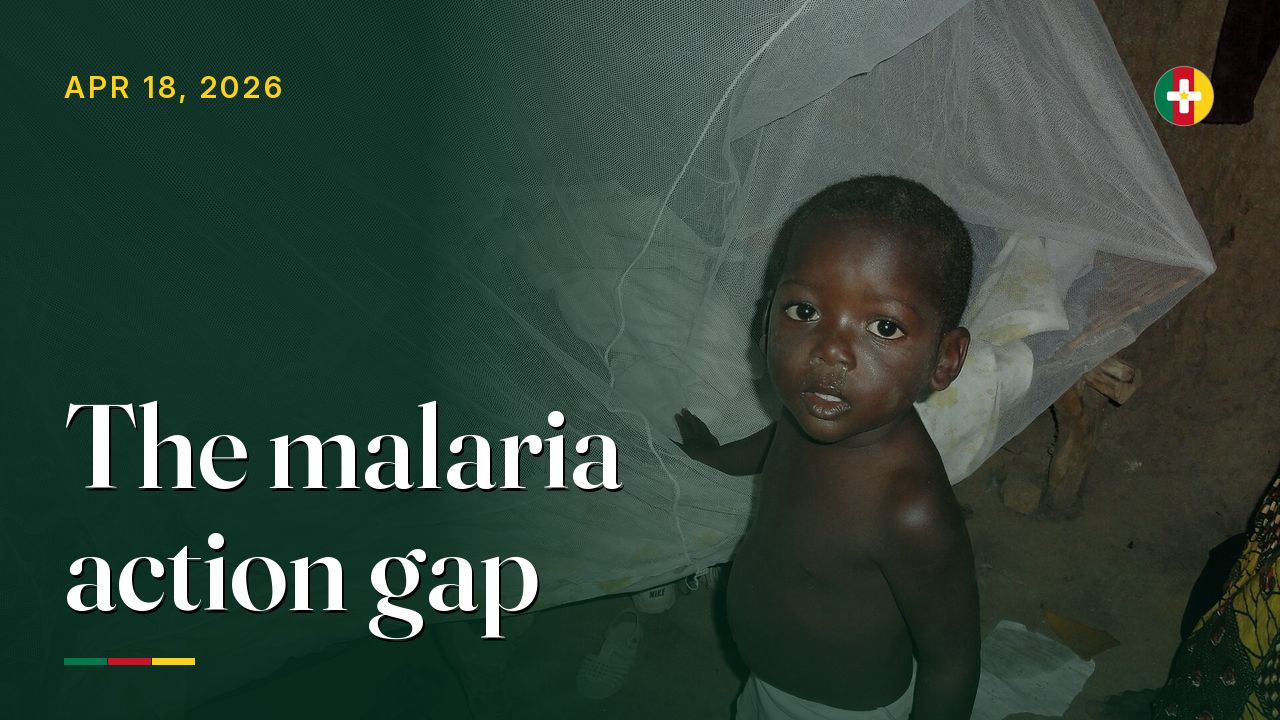
Closing Cameroon's Malaria Action Gap: Lessons from Countries that Eliminated Malaria
Overview
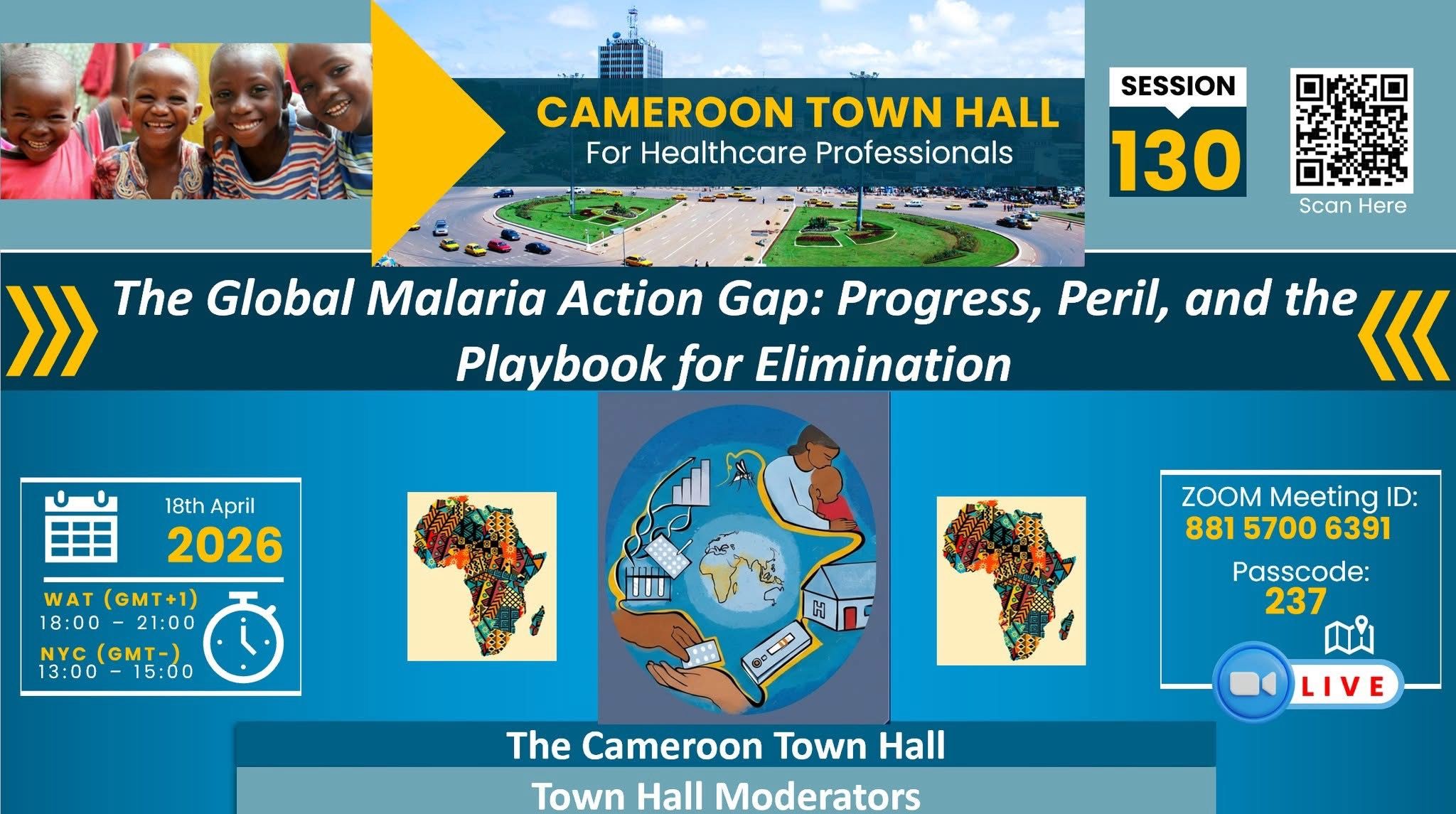
This brief draws on a session of the Cameroon Town Hall for Healthcare Professionals held on April 18, 2026, ahead of World Malaria Day. Co-moderator Dr. Bryan Tegomoh presented the findings of the WHO World Malaria Report and three recent elimination stories, and diagnostics experts and a National Malaria Control Programme official discussed what they mean for Cameroon.
Context
Malaria caused about 282 million cases and 610,000 deaths worldwide in 2024, 94% of them in the African region, which is off track against WHO targets (WHO World Malaria Report, as presented). Cameroon has year-round transmission and several transmission zones, and was among the first countries to introduce malaria vaccines. Global funding covers about 42% of need, the Global Fund has reduced Cameroon's malaria allocation for the next cycle, and community health workers' external funding is being transferred to the State (as reported by the programme).
Key issues
- Population growth outpacing control. Flat incidence in a growing population means more cases each year.
- Funding shortfall. Reduced external funding threatens commodities and community health workers, whose transition to State funding is not yet assured.
- Data blind spots. Most African case reports lack basic variables such as sex, limiting targeting.
- Diagnostic gaps. HRP2 deletions, asymptomatic carriers and over-diagnosis of malaria and typhoid undermine case management.
- Resistance. Insecticide and drug resistance require updated nets and continuous monitoring.
Discussion highlights
- Dr. Tegomoh: we have to scale faster just to stand still.
- Dr. Tegomoh: universal access, community ownership and regional coordination equal elimination.
- Dr. Kenji: Cameroon is Africa in miniature for malaria; one strategy will not fit every district.
- Dr. Maloba: asymptomatic carriers are an overlooked reservoir.
- National Malaria Control Programme: priorities are commodities, community health workers and prevention for under-fives.
Recommendations
- Protect community case management. MINSANTE and the Ministry of Finance should adopt a funded, time-bound plan to take over payment of community health workers who test and treat malaria, as external funding ends. First step: cost the transition and include it in the midterm review of the 2024 to 2028 National Strategic Plan.
- Make testing and treatment free for all. Following Suriname and Timor-Leste, MINSANTE should guarantee free malaria testing and treatment at every level and for every person, including displaced and migrant populations, with secure supplies of rapid tests and medicines.
- Stratify interventions by district. The National Malaria Control Programme and regional delegations should use surveillance data to match interventions to transmission zones: intensive control and vaccination in high-burden districts, case investigation and focal responses in low-burden ones.
- Fix the data basics. MINSANTE should make sex, age and pregnancy status mandatory fields in malaria reporting tools and DHIS2, and publish standard surveillance case definitions. First step: revise reporting forms in the next data tool update.
- Monitor resistance and diagnostic performance. The programme, with research institutions, should routinely monitor insecticide resistance, antimalarial efficacy and HRP2 deletions, and replace nets with newer types where resistance is documented.
- Honour Abuja and Yaoundé commitments. Government should report each year on progress towards the Abuja target of 15% of public spending on health and the Yaoundé Declaration's domestic financing commitment, and involve other ministries in a funded multisectoral malaria plan.
Next steps
The town hall will share this brief with the National Malaria Control Programme ahead of World Malaria Day and invite the programme to report on the midterm review of the National Strategic Plan at a future session.
Conclusion
Countries with fewer resources than Cameroon have eliminated malaria by making care free and universal, trusting communities and building strong programmes. Cameroon's tools already exist; closing the gap depends on funding, data and political will.
Meeting minutes
Agenda
- Welcome by the moderator, Elvis Ndansi
- Remarks by co-moderator Dr. Bryan Tegomoh and the Chair
- Presentation by Dr. Tegomoh on the World Malaria Report
- Reflections from the Chair and the moderator
- Discussion with Dr. Obadia Mfuh Kenji and participants
- Remarks from the National Malaria Control Programme
- Closing summary
Opening remarks
- Elvis Ndansi opened the session ahead of World Malaria Day, noting that about 2,500 people have attended at least one town hall session. He described a growing action gap between what is known to work and what is implemented, threatened by drug and insecticide resistance, climate change, fragile health systems and funding constraints.
- The Chair, Dr. Foma, recalled that the first malaria vaccine, RTS,S, was the first vaccine approved against a parasite, followed in 2023 by R21 from Oxford. He suggested Cameroon was chosen among the first countries to introduce the vaccine because of its high burden, a strong Expanded Programme on Immunisation, a committed Minister and support from WHO, Gavi, UNICEF and PATH.
Presentation
1. Why diagnosis matters
Dr. Tegomoh recalled a child with cerebral malaria at Bali District Hospital whose rapid tests were repeatedly negative because of an HRP2 gene deletion, with no microscopy available. This led him to research on detecting volatile compounds produced by the parasite in children's breath, with collaborators at Washington University in St. Louis.
2. Progress and the size of the problem
Drawing on the WHO World Malaria Report, he said there were about 282 million cases and 610,000 deaths in 2024, roughly one child dying every minute. Since 2000, interventions have averted about 2.3 billion cases and 14 million deaths. In 2024 alone, seasonal malaria chemoprevention reached about 54 million children.
3. The action gap
Incidence and mortality are well off the WHO Global Technical Strategy 2016 to 2030 milestones. A few countries carry most of the burden, with Nigeria alone accounting for about a quarter of cases and about a third of deaths. Egypt and Cabo Verde were certified malaria-free in 2024, and Georgia, Suriname and Timor-Leste in 2025, while climate extremes and conflict drive resurgence in places such as Madagascar and Yemen.
4. Scaling faster just to stand still
In the 11 high burden to high impact countries, which carry about 64% of cases and 68% of deaths, incidence was nearly flat (266 to 264 per 1,000) since 2017, but absolute cases rose by about 20%, from 151 to 181 million, because populations grew faster than interventions. The African region carries about 94% of the burden, is off track, and has seen malaria deaths rise by about 5% since the 2015 baseline. Only the South-East Asia region is on track.
5. Data blind spots
About 76.5% of reported cases in the African region have no recorded sex, against nearly 100% sex-disaggregated data in the Americas and South-East Asia. He said this is a systems problem, caused by non-standard tools and optional data fields, and it prevents targeting of men exposed through outdoor work and of pregnant women.
6. Three elimination stories
Suriname, the first Amazon country certified, made diagnosis and treatment free for everyone regardless of legal or migrant status, trained community members inside gold mining camps to test and treat, and coordinated border screening with neighbours. Timor-Leste built a disciplined national programme from 2003, a three-tier free service network and monthly mobile outreach, and eliminated malaria within two decades of independence. Georgia, after a resurgence in 2002, used intensive entomological surveillance to reach zero indigenous cases by 2015 and was certified in 2025. He summed up the lesson as universal access, community ownership and regional coordination.
7. The big push
Global malaria funding was about US$3.9 billion in 2024 against a need of about US$9.3 billion, roughly 42%, and the gap widened in 2025 as official development assistance fell. He cited the WHO call for funding aligned behind country plans and better surveillance, and the Yaoundé Declaration of March 2024, in which ministers of 11 high-burden African countries committed to political will, better data and multisectoral action so that no one dies of malaria.
Discussion and Q&A
- The Chair's reflections. Dr. Foma asked what certification means in practice and whether certified countries help others, noted that Nigeria's burden makes progress in Central and West Africa decisive, and said Cameroon faces both infectious and non-communicable disease epidemics, which makes prioritisation hard for the Ministry.
- Dr. Obadia Mfuh Kenji on elimination in Cameroon's context. He said comparisons with low-burden countries are not like for like: Cameroon has year-round transmission and several transmission zones, so high-burden districts need aggressive control and low-burden districts case investigation. He explained placental malaria (VAR2CSA binding in the placenta) and pregnancy-related immune changes, stressed replacing older nets as mosquitoes become resistant, and the WHO test, treat and track approach. In his studies, rapid tests detected about 15% more cases than microscopy and PCR 20 to 25% more, but PCR is costly; LAMP assays may bring molecular testing to the field. Elimination also needs finance, education, housing, water and local government.
- Dr. Franklin Maloba on asymptomatic malaria. He said asymptomatic carriers act as reservoirs and receive little attention; in one of his studies the share of asymptomatic infections approached 80%. Dr. Tegomoh said better biomarkers are needed. Dr. Kenji said current tests can detect asymptomatic infection, but reaching people who do not seek care is the challenge, and with limited resources the sick should come first; screening whole communities makes sense as incidence falls, despite concerns about drug resistance.
- Dr. Foma: how is malaria diagnosed in the United States, and is there a place for advanced diagnostics such as sequencing in Africa? Dr. Kenji said many US laboratories have closed parasitology benches because microscopy competence is hard to maintain, and diagnosis depends on clinicians asking about travel. US laboratories use FDA-approved rapid tests and multiplex PCR fever panels. Cameroon has strong microscopists; molecular testing could be phased in to find low-level parasitaemia once microscopy and rapid tests are fully used, while sequencing belongs mainly to resistance research. Dr. Tegomoh added that HRP2 deletions, reported in about 42 countries, can make the only FDA-approved rapid test miss cases, and that imported malaria in the US has risen.
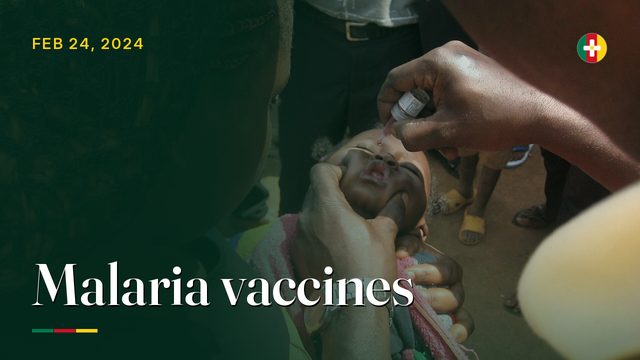
- Dr. Foma: what can the vaccines contribute to elimination? Dr. Tegomoh said RTS,S and R21 are valuable, and even small reductions in mortality matter in high-burden countries, but their efficacy is modest, RTS,S needs three to four doses, and cold chain and adherence are challenges. Dr. Kenji said the vaccines mainly reduce severe disease and death; vector control, diagnosis, chemoprevention, surveillance and treatment remain the core tools.
- Dr. Maloba: what did the three certified countries have in common, and does the Yaoundé Declaration mean anything given the unmet Abuja target? Dr. Tegomoh said all three were low or middle income countries whose political will translated into local funding, surveillance, community engagement and universal access. The Yaoundé Declaration responded to falling aid; Cameroon's Minister of Public Health, Dr. Manaouda Malachie, chaired the session. Dr. Foma said Cameroon later still received US funding for the same programme, and that health professionals must be at the table where such commitments are made.
- Dr. Foma on surveillance systems and on sustainable funding. Dr. Tegomoh said national surveillance case definitions are needed so that every level reports in the same way, and expressed hope that AI could help integrate health data. Dr. Foma explained that mass drug administration is a short-term measure for outbreaks, low-transmission areas near elimination and hotspots, not a standalone strategy.
- The head of case management at the National Malaria Control Programme on what Cameroon is doing. He said the Yaoundé Declaration rests on four pillars: political will (including domestic funding in line with Abuja), strategic information for decisions, prevention and case management, and governance. The programme is conducting a midterm review of the 2024 to 2028 National Strategic Plan, using the Declaration, integrating activities with HIV and TB programmes, and using the plan as an advocacy document for international and domestic funding. A recent multisectoral session set out roles for other ministries. Asked about needs, he said the Global Fund has reduced Cameroon's malaria allocation for the next cycle, so priority goes to case management commodities (rapid tests, microscopy and medicines), community health workers whose external funding is being transitioned to the State, and prevention for children under five (nets and chemoprevention).
Calls to action and closing
- Elvis Ndansi concluded that the gap is not a lack of tools but of implementation, financing and coordination. He listed priorities for Cameroon: targeted, data-driven interventions; community-based delivery; continuous monitoring of insecticide and drug resistance; domestic financing and partnerships; and integration of malaria into primary health care and maternal and child health.
Next meeting
In about a month (date not announced in the session).
Submitted by the Co-Moderators, Cameroon Town Hall for Healthcare Professionals.