Home Health Care in Cameroon during COVID-19
Overview
This policy briefing synthesizes key insights from the Cameroon Town Hall for Healthcare Professionals meeting held in January 2022, focusing on the theme 'Home Health Care: The Way Forward for Health-Related Issues during the COVID-19 Pandemic', presented by Ginyu Innocentia Kwalar, nurse and founder of the Klarah home health care platform.
Context
COVID-19 deterred patients from attending crowded hospitals, putting people with chronic and life limiting illness at risk. Many Cameroonians in the diaspora care for ageing parents from a distance with little information. At the same time, trained nurses are under employed, and nursing training and regulation in Cameroon are fragmented across ministries and a single order shared with midwives and laboratory technicians.
Key issues
- Continuity of care for chronic illness. Patients with hypertension, diabetes, stroke and other long term conditions miss follow up, leading to poor adherence and late recognition of complications.
- No framework for home health care. There is no national standard defining who may provide home nursing, what services it covers, or how quality and safety are assured.
- Fragmented nursing qualifications and regulation. Several ministries train nurses at different levels, making it hard for the public to know who is a qualified nurse.
- Equity and cost. Privately paid home care reaches families who can pay, often with diaspora support; poorer patients are left out.
- Safety of home visits. Insecurity in the North West and South West and the risk of assault in homes affect nurses providing care.
Discussion highlights
- Home nursing can relieve hospitals and support chronic disease follow up, and can use nurses' free time without taking them from hospital posts.
- Diaspora families valued regular reports and continuity of care for ageing parents.
- Participants debated whether home care is a luxury in a system with about one provider per 10,000 people; government recruitment of unemployed nurses was raised as the larger issue.
- Standard equipment, continuing education, life support training and clear rights and responsibilities for patients and nurses were suggested.
- Community health worker models for sickle cell disease show a lower cost route to home based care.
Recommendations
- Set national standards for home health care. MINSANTE, with the nursing order, should define home health care services, minimum qualifications (at least state registered nurse), required equipment, record keeping, confidentiality and incident reporting. First step: a working group with nursing schools, the order and existing providers.
- Clarify nursing qualifications and regulation. MINSANTE, the Ministry of Higher Education and the Ministry of Employment and Vocational Training should harmonise nursing training levels, and the government should consider a separate order or register for nurses so the public can verify qualifications.
- Recruit and use trained nurses. MINSANTE should increase recruitment of trained nurses and develop community and home nursing roles, including for chronic disease follow up and post discharge care.
- Link home care to health facilities. Regional delegations and hospitals should create referral and reporting links so home care nurses can share records with attending physicians and refer emergencies, building towards shared patient records with consent.
- Protect access for poorer patients. Partners, NGOs and diaspora associations should explore subsidised home care for patients who cannot pay, and community health workers should be used for home follow up of conditions such as sickle cell disease.
- Train home care nurses in emergency skills. Providers and training schools should include basic life support and communication in mandatory continuing education; diaspora clinicians offered to help teach.
Next steps
The Chair offered to teach life support modules for Klarah nurses, and a participant running a community sickle cell home care project offered to present at a future session.
Conclusion
Home health care offers a practical way to keep people with chronic illness in care while hospitals are under pressure, and gives trained nurses new roles. To grow safely and fairly it needs national standards, clear nursing regulation, links to health facilities and a plan for patients who cannot pay.
Meeting minutes
Agenda
- Welcome and New Year greetings by the lead moderator
- COVID-19 update and Omicron discussion with moderators and guests
- Introduction of the speaker by the Chair
- Presentation by Ginyu Innocentia Kwalar on home health care during the COVID-19 pandemic
- Discussion and Q&A
- Participant reflections
- Closing remarks by the moderators and the Chair
Opening remarks
- Elvis Ndansi opened the first session of the year, congratulating the chair and moderators because the town hall had not skipped a single fortnightly session in the previous year.
- Several moderators said they had caught Omicron in December. Dr. Bryan Tegomoh said more variants should be expected, some arising in immunocompromised people, and called for stronger genomic surveillance where transmission occurs, including in Africa.
- Dr. Munoh Kenne Foma said Omicron had replaced Delta in New York City, praised South Africa's surveillance, and predicted 2022 would be the year of oral antivirals and second generation vaccines.
- Dr. Ivo Che Ditah urged vaccination and boosters, which protect against severe disease even if they do not prevent infection.
- Dr. Obadia Mfuh Kenji said his laboratory had processed 4,000 to 6,000 samples the previous day with 27 percent positive, the highest he had seen, and that COVID-19 was moving towards an endemic disease.
- Elvis Ndansi noted that nursing training in Cameroon is offered under three ministries with overlapping qualifications, and that nurses share a single order with midwives and laboratory technicians, which makes regulation difficult.
Presentation
1. COVID-19 keeps people away from hospitals
Ms. Kwalar said COVID-19 spreads easily in close quarters, so many people became reluctant to visit hospitals, which were already crowded and high risk. Hospitals in Cameroon already faced bed shortages and overwhelmed staff, and patients with non-COVID illness lost access to care.
2. People with chronic illness are most affected
Patients with non-communicable or life limiting illnesses need regular follow up but fear going to hospital. Missed visits lead to poor adherence and late recognition of complications, which is how families end up called in a crisis.
3. What home health care is, and is not
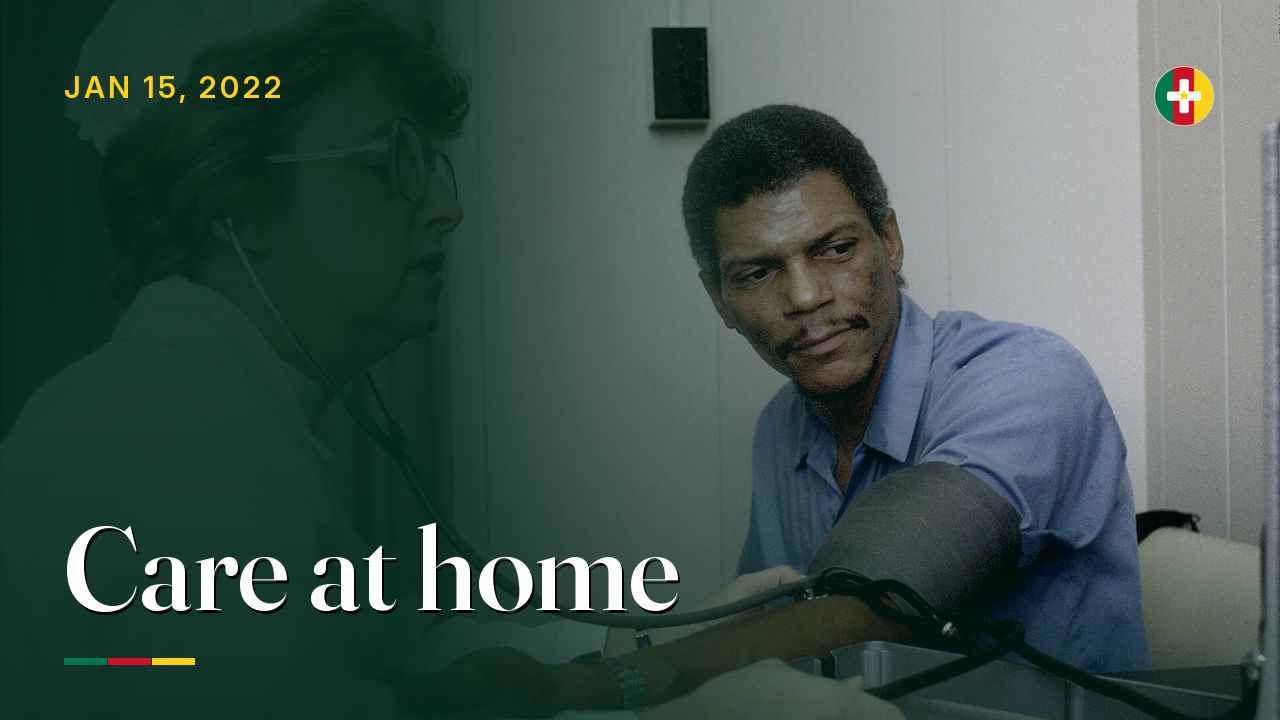
She defined home health care as a trained nurse delivering care in the patient's home: giving medicines, preventing pressure sores, wound care, patient teaching, monitoring vital signs, handling emergencies and linking patients to doctors. It is not a nanny or a nurse doing laundry and cooking. She listed its benefits as convenience, lower overall cost once time and transport are counted, safety during COVID-19, and personal attention.
4. The Klarah platform
She presented Klarah, a company that uses technology to match patients with nurses based on patient needs, nurse experience and proximity. It began after her own father fell ill while his children lived abroad and lacked timely information. Only nurses with at least three years of training (state registered nurses, degree, master's or PhD holders) are accepted, not nurse aides or assistants, and nurses send reports to families, including those in the diaspora. She described the goal as building 'the Uber for nurses' in Africa.
Discussion and Q&A
- Elvis Ndansi asked how families abroad pay. Payment is by PayPal and Flutterwave from abroad and by mobile money in Cameroon, with a bank account option.
- Bryan Tegomoh asked how nurses are recruited and retained, how the service works with physicians and sample collection, and how patient confidentiality is protected. Nurses join by word of mouth and must submit proof of training, employment and registration with the professional order. Most are hospital nurses working in their free time. Patient records are coded and anonymised, and nurses sign confidentiality contracts. The platform links patients to their attending physicians or to doctors it works with, and arranges for laboratory staff to draw samples, with results within 24 hours.
- A co-moderator asked whether nurses are trained in communication with patients and families. Training is given at onboarding based on identified needs and through regular mandatory modules. Feedback is collected from patients and families, with warnings for poor conduct and incentives for good feedback.
- A family nurse practitioner in upstate New York and the speaker's University of Buea classmate, gave a testimony. She said her 78 year old father, who has hypertension, glaucoma and hyperlipidaemia, is seen twice a week and was followed after glaucoma surgery, and that she receives encrypted nursing reports every two weeks. She estimated the cost at about 40 to 60 US dollars a month.
- Dr. Ivo Che Ditah asked whether home care fits a system with about one provider per 10,000 people, whether it pulls nurses away from hospitals, and whether it is a service only for those who can pay. Ms. Kwalar said nurses use their free time and keep their hospital jobs, so the service adds capacity. Elvis Ndansi argued that Cameroon has many unemployed trained nurses and that the real problem is limited government recruitment. On affordability, she said the service cannot yet cover patients who cannot pay, while the Chair suggested partnering with NGOs to sponsor such patients.
- A former classmate (medical laboratory scientist) asked how nurses' safety is ensured in the North West and South West given the armed conflict. Nurses are matched to patients within walking distance, and visits are not scheduled on Mondays, the 'stay at home' day in the two regions. She noted that the platform's nurses are spread across the country.
- A co-moderator asked what happens if a nurse is assaulted in a patient's home, and whether the platform provides equipment to standardise care. Assault would be treated as a crime, and the contracting family member is responsible for the nurse's safety under the contract. Nurses are expected to bring basic equipment such as a blood pressure machine and thermometer; families are asked to buy items such as glucometers. The co-moderator suggested standard equipment supplied against nurses' pay to assure quality.
- Dr. Munoh Kenne Foma asked about adding nurse aides and midwives, and training nurses in basic and advanced life support. She said nurse aides for daily living support were under consideration, home deliveries would not be offered because the risk is too high, though antenatal follow up might be, and that basic life support is already in the mandatory modules. She invited the Chair to teach further modules, which he accepted.
- A nurse in Yaounde asked whether the platform collaborates with the Ministry of Public Health. She described her own community based home care project for sickle cell disease using community health workers and offered to present at a future session.
Calls to action and closing
- A co-moderator welcomed first time participants, including a BSc nursing student in Douala, and reminded them that the town hall meets every fortnight and is open to all.
- Kingsley Kwalar, the speaker's brother, said his worry about their father helped start the initiative, and praised the town hall.
- The Chair said the town hall belongs to every Cameroonian health professional and sympathiser, and noted members had resisted an attempt to make it monthly.
- Elvis Ndansi reported 1,120 registered members on the town hall's database and closed the session, announcing the next edition in a fortnight.
Next meeting
In a fortnight (date not stated).
Submitted by the Co-Moderators, Cameroon Town Hall for Healthcare Professionals.