Protecting Workers' Health in Cameroon
Overview
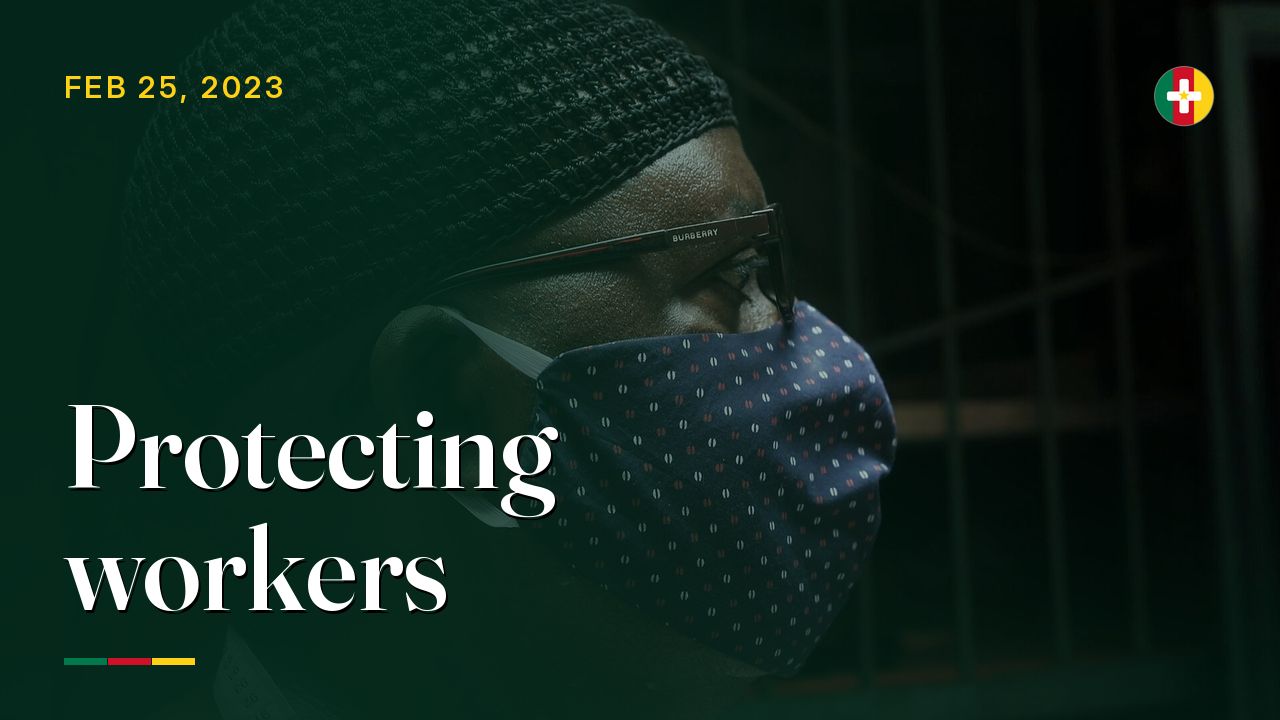
This policy briefing synthesizes key insights from the Cameroon Townhall for Healthcare Professionals meeting held on February 25, 2023, focusing on the theme "The State of Occupational Medicine in Cameroon", presented by Dr. Ekiti E. Martin, former Manager of Occupational Health at SONARA and founder of The GREY Lab.
Context
Occupational medicine in Cameroon is governed by a 1979 decree and overseen by the Ministry of Labour, with CNPS compensating work-related injuries. Services exist mainly in large private and parastatal companies. The government, the largest employer, has no systematic occupational health programme for its own workers, and informal workers such as farmers and moto-taxi drivers have no coverage at all.
Key issues
- Diseases overlooked. Compensation and attention go to injuries, while chronic, musculoskeletal and mental health conditions, which make up most of the work-related burden, are rarely recognised.
- Unprotected public sector workers. Government health workers are not routinely screened or vaccinated against hepatitis B before exposure, and exposures to blood are not followed up.
- No local data. No Cameroonian studies appeared in the global reviews of work-related disease, so employers and policymakers lack evidence to act on.
- Overstretched company services. Company doctors are absorbed by primary care for workers and families, leaving little time for prevention or research.
- Weak enforcement. Accreditation and enforcement by the Ministry of Labour were described as weak, and risk analyses after injuries are not followed up.
Discussion highlights
- Drinking water and early working hours at the SOSUCAM plantation were linked to CKD prevalence of 3.4 percent, against 16.2 percent in smallholder cocoa farmers.
- Data on lost workdays persuaded SONARA to stock hepatitis B treatment on site.
- Participants stressed that pre-employment screening must lead to treatment, vaccination or redeployment, not exclusion.
- Decentralised recruitment of health staff offers an opening to introduce minimum pre-employment examinations.
Recommendations
- Protect health workers in public facilities. MINSANTE and regional delegations should require hepatitis B screening and vaccination, and follow-up registers for blood exposures, for all health workers, starting with regional hospitals in the South West.
- Set a minimum pre-employment examination. The Ministry of Public Service and the Ministry of Decentralisation, with regional delegates, should define a job-matched pre-employment and exit examination for public workers, with treatment and redeployment instead of exclusion. A pilot in one council such as Limbe is the first step.
- Recognise work-related disease. The Ministry of Labour and CNPS should update criteria for compensating work-related diseases and check that post-injury risk analyses are implemented, involving occupational physicians.
- Build mental health and ergonomics into workplaces. Employers, through their hygiene and safety committees, should create mental health support and set ergonomic standards for office and home work.
- Generate local evidence. Companies and consultancies should track health-related productivity losses, and medical faculties should support student research on occupational health, beginning with the burnout study the town hall pledged to fund.
- Reach informal workers. MINSANTE, councils and NGOs should extend community screening and simple prevention, such as drinking water, ergonomic tools and heat-safe hours, to farmers and transport workers, building on models such as The GREY Lab.
Next steps
The town hall committed to fund a student burnout study mentored by Dr. Ekiti, to consider inviting the Minister of Public Service or Labour, and to hold a future session on burnout.
Conclusion
Healthier workers are more productive workers. Cameroon has the legal framework and some strong company services, but the public sector and informal workers remain largely unprotected, and local data are missing. Simple, evidence-based measures and stronger enforcement could protect workers and the economy.
Meeting minutes
Agenda
- Welcome and opening remarks by the lead moderator, Elvis Ndansi, and the Chair
- Introduction of the speaker by Dr. Bryan Tegomoh
- Presentation by Dr. Ekiti E. Martin on "The State of Occupational Medicine in Cameroon"
- Discussion and Q&A
- Summary and closing
Opening remarks
- The lead moderator said the town hall had never covered occupational medicine. He recalled that, as a new graduate, a construction company had turned down his proposal to provide health care at its work site.
- The Chair recalled his own work certifying insured workers in Cameroon and said companies with occupational doctors were at the forefront of preventive medicine.
- The lead moderator said about 1,750 people had attended at least one session, and that the Minister of Public Health had promised to return.
- Dr. Tegomoh introduced the speaker as a former leader of the medical students' association (CAMSA) and its health campaigns. He said Dr. Ekiti had headed occupational medicine at SONARA, serving about 650 workers and about 3,000 people including families, and had founded The GREY Lab, a non-profit with about 40 volunteers that screens workers for non-communicable diseases.
Presentation
1. What occupational medicine is and why it matters
Dr. Ekiti defined occupational medicine as the branch of medicine concerned with health in the workplace, preventing and treating work-related disease and injury, with the aim of maintaining and increasing productivity. The team includes occupational physicians, nurses and hygienists, and in companies a hygiene and safety committee with staff representatives, human resources and the Ministry of Labour. Citing The Lancet, he said improving worker health is a more direct route to economic growth than changing the ratio of workers to dependents. He noted that lower mortality accounted for about 11 percent of economic growth in low- and middle-income countries, and that productivity losses in the United States consistently exceed twice the combined medical and pharmacy costs.
2. Occupational medicine in Cameroon
The field is little known even among doctors. In the absence of specialists, primary care or public health physicians may practise. Practice takes place in accredited company services, such as SONARA's, or in independent practices and consultancies. He cited a 1979 decree on the practice of occupational medicine, company collective agreements, and the National Social Insurance Fund (CNPS), which compensates work-related injuries and diseases.
3. Core tasks
Tasks include fitness-for-work examinations at hiring, return to work and other times; workplace risk assessment and mitigation; routine medical visits; primary care for workers and often their families; and health promotion. Occupational physicians also manage medical affairs: they act as liaison with outside hospitals, review bills against the diagnosis and the tests needed, and audit reimbursement claims for care outside the company network.
4. The neglected burden: disease, musculoskeletal and mental health
Practitioners focus on injuries, which are easy to attribute, while diseases linked to exposures such as benzene, silica or lead are harder to prove, so CNPS compensation goes mostly to injuries. Citing WHO and ILO, he said chronic diseases account for about 80 percent of work-related deaths, more than half of them cardiovascular, and work-related disease accounts for 71 percent of work-related DALYs. Musculoskeletal disorders affect up to a third of people, with low back pain the leading cause of disability since 1990. About 12 billion working days and about one trillion dollars are lost each year to depression and anxiety through absenteeism and presenteeism.
5. Evidence from his own research
Global CKD prevalence is 13.4 percent, and Cameroonian studies report 10.9 to 14.1 percent. A study with his mentor found 16.2 percent among smallholder cocoa farmers near Kumba, while his thesis at the SOSUCAM sugarcane plantation in Mbandjock and Nkoteng found only 3.4 percent. He attributed this to the company's occupational health policies: work starting around 4 AM to avoid the midday heat, and drinking-water tanks placed across the fields.
6. Working from home and mental health
Remote work saves employers money but leaves open who ensures the safety and ergonomics of home workspaces. He described the occupational physician as balanced between employers who want more work and employees who want time off, and said many workers endure their jobs instead of enjoying them because mental health is neglected. After the fire at SONARA he saw many depressed and demotivated workers, with no system in place to support them.
7. What each group can do
Company doctors should track health-related productivity losses, set up mental health units and use data to persuade employers. He did this himself, showing the workdays lost to trips to Douala for hepatitis B treatment, which persuaded SONARA to stock six months of medication on site. Consultants who see workers from many industries should collect data and do independent research. Students should intern in occupational health and run simple studies, such as on burnout among health workers or students' on-call sleeping conditions. All health professionals should look after informal workers such as moto-taxi drivers and smallholder farmers, for example by advising on longer-handled tools to prevent back pain.
8. The GREY Lab model
His non-profit uses mass media, churches, village squares, town criers, billboards and social media for awareness; screens communities with point-of-care devices, including kidney function results in under a minute through a partnership with Nova Biomedical; runs mobile clinics; refers patients to partner cardiologists, nephrologists and ophthalmologists; and enrols selected participants in diet and exercise programmes. With more than 40 volunteers it had screened more than 2,500 people, free of charge, for hypertension, diabetes, obesity, kidney disease and eye disease, and it offers its services to companies, philanthropies and researchers.
Discussion and Q&A
- The lead moderator suggested a study on drinking alcohol during lunch breaks near government ministries, and Dr. Tegomoh asked whether Cameroon has a body like the US Occupational Safety and Health Administration. Dr. Tegomoh said he was struck by the CKD findings and by the difference that drinking water made.
- The Chair asked what the government, the largest employer, does for its own workers' health. The Chair said health workers in public hospitals are not checked or vaccinated for hepatitis B before starting work, although they are exposed to bloodborne infections, and called for data on hepatitis among health workers. The Chair noted that in the US, chronic kidney disease qualifies patients for Medicare at any age, showing the value of prevention.
- A participant commented on stress among workers. Dr. Ambe proposed workplace nurseries, including in hospitals, so mothers can breastfeed and return to work with less stress, and urged continuous screening and prevention packages instead of waiting for illness.
- A gastroenterologist from the United Kingdom commented. The gastroenterologist said the drinking-water finding shows how simple measures prevent serious disease, and that Cameroon could eliminate hepatitis B by vaccinating every child at birth.
- A medical technologist working from home in Germany commented on remote work. The participant said remote work lacks the physical contact that supports mentorship and mental health, and that, unlike in Germany, workers in Cameroon may have no insurance for accidents at home.
- A participant asked how burnout can be identified in the workplace. Dr. Ekiti said burnout symptoms resemble depression and are linked to work through the history of workplace stressors. Company doctors have little time for research: at SONARA two doctors served about 650 staff, about 300 subcontractors and their families, which is why he took his research into the community.
- The South West regional coordinator for HIV said there is no policy for following up health workers exposed to blood and body fluids. The region planned to open registers in larger facilities, starting with regional hospitals, to follow exposed health workers as a cohort.
- The Chair asked what the town hall could do to push for occupational health for government workers, noting the lack of pre-employment screening for TB, drugs, alcohol and hepatitis. Dr. Ekiti said that, with decentralisation, councils and regional councils would recruit health staff below the level of doctors, with regional delegates of public health supporting recruitment. The town hall could ask the delegates now to require a minimum pre-employment medical examination, starting in one place such as Limbe. Elvis Ndansi cautioned that screening must lead to care, not exclusion, or workers will avoid it, and proposed inviting the Minister of Public Service to the town hall. The Chair agreed that screening must come with treatment and vaccination.
- Dr. Tegomoh asked about models in Africa and high-risk industries. Dr. Ekiti said diseases are easiest to link to work where exposures are absent from daily life, such as heavy metals, hydrocarbons and agents causing COPD. Within Cameroon, CNPS runs injury compensation well, but no one checks whether the risk analyses that follow injuries are implemented, and occupational physicians are often left out of them. He knew of no African studies on work-related disease to use as models.
- A former occupational health physician of the Cameroon Development Corporation shared his experience. The physician said the Ministry of Labour, not the Ministry of Health, accredits and enforces occupational medicine, and that weak enforcement has let doctors practise it for money. Pre-employment examinations must be matched to the job, for example lung capacity for confined spaces, with workers redeployed instead of rejected, and exit examinations should record conditions at the end of employment. The physician described advising an energy company on community health programmes and helping found a society for health, safety and environment in Douala. Companies fund research only when data show it will reduce lost work hours.
- A participant asked for a definition of burnout, its causes and prevention, and about the health effects of digital devices. Dr. Ekiti shared the WHO definition of burnout in the chat. He said long screen use can affect vision and that device use before bed disrupts sleep, with wider effects on health.
Calls to action and closing
- Dr. Tegomoh suggested inviting the Minister of Public Service or the Minister of Labour to a future session.
- The Chair proposed a future session on burnout and its psychosocial effects on health workers and others.
- Elvis Ndansi committed the town hall to fund a medical student's burnout study mentored by Dr. Ekiti, who offered mentorship to students.
- The lead moderator summarised the session and invited participants to the parking lot.
Submitted by the Co-Moderators, Cameroon Town Hall for Healthcare Professionals.