Policy Briefing: Medical Missions and Diaspora-Built Health Facilities in Cameroon
Overview
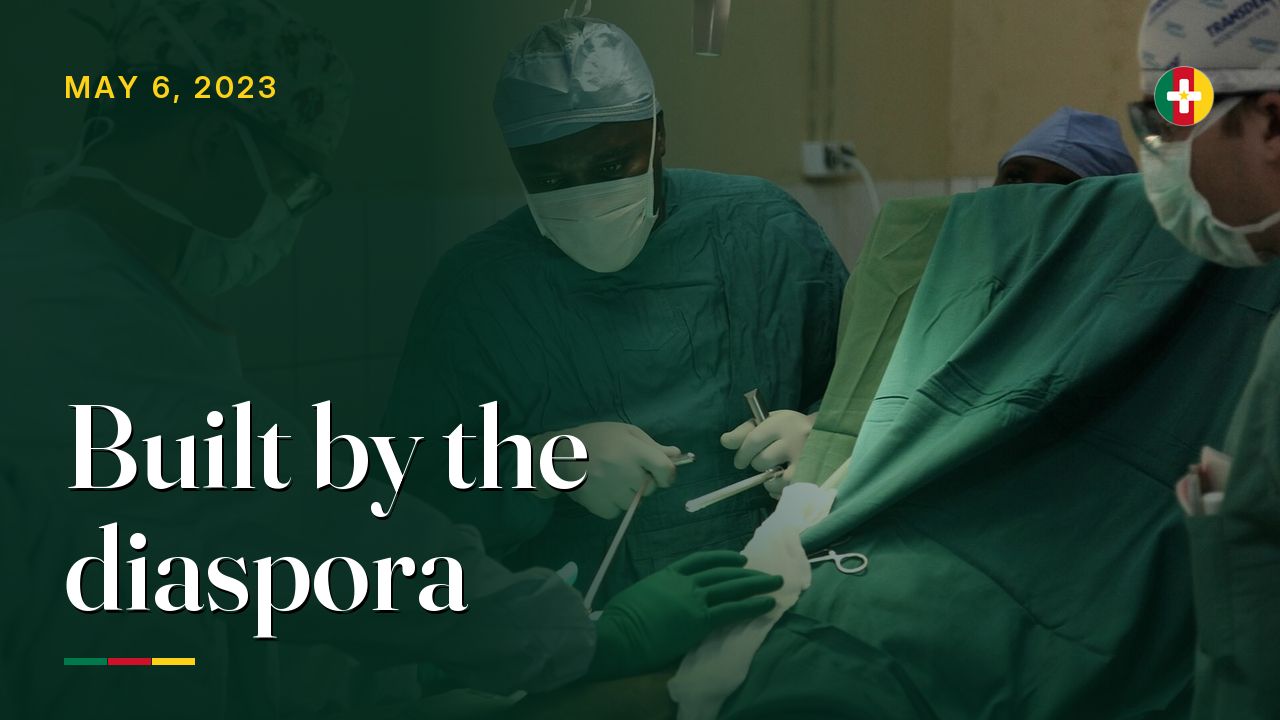
This policy briefing synthesizes key insights from the Cameroon Townhall for Healthcare Professionals meeting held on May 6, 2023, focusing on the theme “Medical Missions to Cameroon,” presented by Dr. Samuel Ndinjiakat and Mrs. Emelda Ndinjiakat of Faith Gardens Medical Foundation International and Grace Gardens Hospital Ndop.
Context
Many diaspora health professionals want to help at home but do not know the process. The speakers built a hospital in Ndop, North West Region, through medical missions from 2014, authorisation in 2018 and opening in November 2019, during the regional crisis and then COVID-19. Their experience shows both the path through the Ministry's structures and the obstacles along it.
Key issues
- No clear entry path for the diaspora. Diaspora groups struggle to know which office to approach, face informal payment demands, and wait years for approvals (four years for the hospital's name).
- Short missions without follow-up. Mission care has value only when follow-up is in place, which requires a permanent local structure and trusted staff.
- Emergency access in rural and conflict areas. Ambulances cannot reach many villages, there is no blood bank in Ngoketunjia Division, and basic emergency skills such as CPR are not widespread.
- Low cervical cancer screening. Screening coverage was cited as under 20%, and small screenings in Ndop and Yaoundé found high rates of abnormal results.
- Duplication among NGOs. Many NGOs and foundations work in Cameroon without coordination, which wastes resources.
Discussion highlights
- Opening a facility starts with the district medical officer, a technical report, and approval by the Regional Delegate, followed by Medical Council inspection.
- Regional delegations in the North West and South West were described as open to diaspora partners.
- Motorcycle first responders linked by community phone networks can reach areas closed to ambulances.
- Low-cost mobile colposcopy with VIA can extend cervical screening in district hospitals.
- Supporting proven organisations is often better than founding new ones.
Recommendations
- Publish a diaspora guide to opening and supporting facilities. MINSANTE, through its planned diaspora committee, should publish the steps, documents, fees and timelines for authorising a health facility and importing donated supplies, with a named contact in each regional delegation. First step: a one-page guide posted online and shared through the Town Hall.
- Set time limits for approvals. MINSANTE and regional delegations should set and publish maximum processing times for facility authorisation and naming, and a channel to report requests for informal payments.
- Support community emergency response. Regional delegations and partners should pilot trained motorcycle first responders with first aid kits in conflict-affected divisions, starting with Ngoketunjia, and plan blood storage capacity at division level.
- Scale cervical cancer screening in district facilities. MINSANTE's cancer control programme should support VIA and mobile colposcopy screening and HPV vaccination outreach in private and faith-based hospitals as well as public ones, with results reported to the district.
- Map NGO and diaspora activity. MINSANTE, regional delegations and the Town Hall should keep a shared register of NGO and diaspora health projects by region to reduce duplication and match donors to working projects.
Next steps
The Chair offered to connect the motorcycle emergency response proposal to Gates Foundation contacts. Participants were invited to connect with the speakers and to the Organizational Partnership for Humanity event in Houston in November.
Conclusion
The session showed that a diaspora-built hospital can work in a conflict area when it follows the Ministry's own structures, keeps a trusted team on the ground, and listens to the community. Clearer and faster procedures would let more diaspora professionals do the same.
Meeting minutes
Agenda
- Welcome and opening remarks by the Chair, Dr. Munoh Kenne Foma
- Presentation by Dr. Samuel Ndinjiakat on Faith Gardens Medical Foundation and Grace Gardens Hospital Ndop
- Presentation by Mrs. Emelda Ndinjiakat on the Grace Gardens Women's Health Association
- Discussion and Q&A
- Closing remarks
- Parking lot discussion
Opening remarks
- The Chair opened the session from his workplace and apologised for technical problems. Several co-moderators could not join because of the coronation taking place that day.
- He recalled that the Minister of Public Health had recently joined the Town Hall to discuss Universal Health Coverage, and said many in the diaspora wanted to make a difference at home but did not know how.
- He introduced Dr. Samuel Ndinjiakat as someone who had built a working hospital in the North West Region from the diaspora, and asked for a practical, interactive Q&A.
Presentation
1. Why a US foundation first
Dr. Ndinjiakat founded Faith Gardens Medical Foundation International in 2013 in the United States so that volunteers could join missions under a registered charity (with tax-deductible costs and CME credit for telemedicine work), and so that he could approach the Cameroon government on behalf of an organisation rather than as an individual. The foundation aims to bring the same standard of care practised in the diaspora, not to hand out painkillers and antibiotics on short visits. Its first board met in Dallas and was built around people of African descent.
2. Learning the system before building
The first major mission came in 2014. On arrival the team went first to the Prime Minister's office, then met the Investment Promotion Agency, the Director of the Centre for Disease Control, the mayor and council, and hospitals including Banso Baptist Hospital and the Shisong Cardiac Centre. He stressed listening and humility: diaspora professionals should not arrive assuming they know everything.
3. Missions and follow-up care
Missions ran in the Centre and North West regions, including Bangolan and Bamunka, with team members sharing the cost of a bus and medicines sourced from US suppliers. He described following one young man with a chronic infection for three years, with antibiotics and a custom shoe, who is now a magistrate, to show that care after a mission matters most. Ebola, the North West and South West crisis from 2016, and then COVID-19 interrupted missions, and many medicines expired during lockdowns.
4. How the hospital was authorised
Building followed a signed design from a registered Cameroonian engineer and a technical report by the district medical officer. The file went to the Regional Delegate of Public Health and the Cameroon Medical Council, which inspected the site. Because the facility exceeded the size of a medical centre (under 15 beds), inspectors asked that it be named a hospital. Authorisation came in 2018, and Grace Gardens Hospital Ndop opened on November 26, 2019, in the middle of the crisis.
5. Facilities and services
The site covers 10,934 square metres in Bamunka, Ngoketunjia Division, about 2 km from the district hospital, in a health district he put at about 268,000 people. The primary care centre has 18 beds and does deliveries, chronic and infectious disease care, and laboratory work. A surgical centre with two operating rooms and three 15-bed wards (men, women, children) was equipped by container shipment through Douala. Services include C-sections, minor surgery, eye care, wound care and counselling. Two wells with pumps and solar power supply water, and the hospital saw about 6,000 clients in the previous year.
6. COVID-19 response and community work
During COVID-19 the hospital wrote to the Minister of Public Health, worked with the district hospital, and ran door-to-door education, mask use and handwashing stations. A motorcycle emergency response team, inspired by a model in Zimbabwe, reaches villages where ambulances cannot go; the hospital is seeking sponsors for motorcycles and first aid backpacks. A diabetes care model links patients to a Yaoundé physician, with prescriptions filled by a Cameroonian pharmacist in North Carolina for three to six months.
7. Cervical cancer screening
Citing the HPV Information Centre 2021 fact sheet, he said 6.7 million Cameroonian women aged 15 and over are at risk, about 3,000 are diagnosed yearly and about 2,000 die, and screening coverage is under 20%. At the July 2021 screening in Ndop, 103 women were screened, 24 had suspicious lesions and 3 had precancerous lesions. Among 27 civil servants screened in Yaoundé, 9 had abnormalities (about 33%). The hospital uses a five-blade speculum and the Gynocular mobile colposcope with WHO visual inspection with acetic acid protocols, with images reviewed remotely; 118 patients had been examined this way, and the hospital is part of a digital African network for cervical cancer elimination.
8. Women's health and widows' support
Mrs. Ndinjiakat, a cervical cancer survivor (stage 2B, diagnosed 2019, in remission since February 2020), organised a breast and cervical cancer conference in Ndop. Women asked for regular contact, which led to the Grace Gardens Women's Health Association: about 344 members, including about 104 widows, meeting by Zoom every other Saturday for preventive health education. Members make and sell about seven household products and share the profits. Widows of Grace supports 36 widows affected by the conflict, funded partly through the Organizational Partnership for Humanity event in the United States. She also attended the 67th Commission on the Status of Women at the UN in March 2023 and found only one Cameroon event.
Discussion and Q&A
- Julie, a data scientist in Sacramento, asked what unexpected challenges the team faced and how they found funding and the right contacts. Dr. Ndinjiakat said informal payments were expected from the first office visited, that finding the right office was hard, and that a family elder with government experience helped them network. The couple used their own retirement savings to start the project. Getting the hospital name approved took four years. Mrs. Ndinjiakat said she attends every event looking for partners, and that for every hundred doors knocked one person says yes.
- Sidney, a regular participant working on radiology in Buea, asked how the couple balance their presence in Cameroon and the United States. Dr. Ndinjiakat said that early on he travelled whenever he had five free days, then built a structure with a trusted chief operating officer in Cameroon who reports to him, and runs daily contact by phone and video. He warned against handing projects to family members without a professional structure.
- The Chair asked how the team worked through the crisis and COVID-19. Dr. Ndinjiakat said the team was already part of the community before the crisis, paused for about six months, then continued with telemedicine and supplies sent through Bamenda. They wrote to the Minister and the Regional Delegate with their plans, and he said that anyone can apply in writing to meet a minister or mayor.
- Dr. Franklin asked how an NGO can move to opening a health facility, and how to get permission without large funds. Dr. Ndinjiakat said the process starts with the district medical officer, who gives the requirements. A feasibility visit and technical report are attached to the application, which goes to the Regional Delegate for approval. A promoter does not have to be a doctor; a group can sponsor a facility, and existing health centres without doctors can also be strengthened.
- The Chair asked how the hospital works with the district and regional health system, including data. The hospital sends a nurse to district meetings and reports its data to the district. Retired district staff joined the team, and successive North West Regional Delegates of Public Health had supported the project. The Chair said the North West and South West Regional Delegates were open to working with the diaspora.
- Frida asked what allowed the work to grow during the crisis and the pandemic. Dr. Ndinjiakat said there were more setbacks than gains: expired medicines, partners withdrawing, and security risks. The clinic opened in 2019 against advice, and the community embraced it, which led to the screening and women's association.
- The Chair and Julie asked about the motorcycle emergency response: how it started and how riders know where to go. The idea came from the crisis, when roads were closed and humanitarian groups could not reach some areas. The hospital's chief operating officer explained that the hospital number is circulated through elders and community leaders; a native staff member takes the call and the rider goes. Dr. Ndinjiakat noted the division has no blood bank. The Chair offered to link a written project proposal to contacts at the Gates Foundation.
Calls to action and closing
- A senior Cameroonian physician in the United States called it the most practical session so far and urged participants to donate to foundations that already work rather than each starting their own.
- Dr. Obadia Mfuh Kenji, from Ndop, offered help with laboratory diagnostics, including 'laboratory in a suitcase'. A regional malaria control coordinator who had supervised the hospital described its staff as dynamic and committed.
- Mrs. Ndinjiakat gave eight steps for starting an NGO in Cameroon: start small, be passionate, learn the population, work with chiefs and local political leaders, stay humble, collaborate, drop excuses, and pray.
- Dr. Ndinjiakat invited participants to the Organizational Partnership for Humanity event in Houston in November.
- The Chair noted the Town Hall had run for three years and had hosted the Minister of Public Health twice, then moved to a 30-minute parking lot discussion.
Next meeting
Not announced in the session.
Submitted by the Co-Moderators, Cameroon Town Hall for Healthcare Professionals.