Universal Health Coverage Phase 1 in Cameroon: From Promise to Reality
Overview
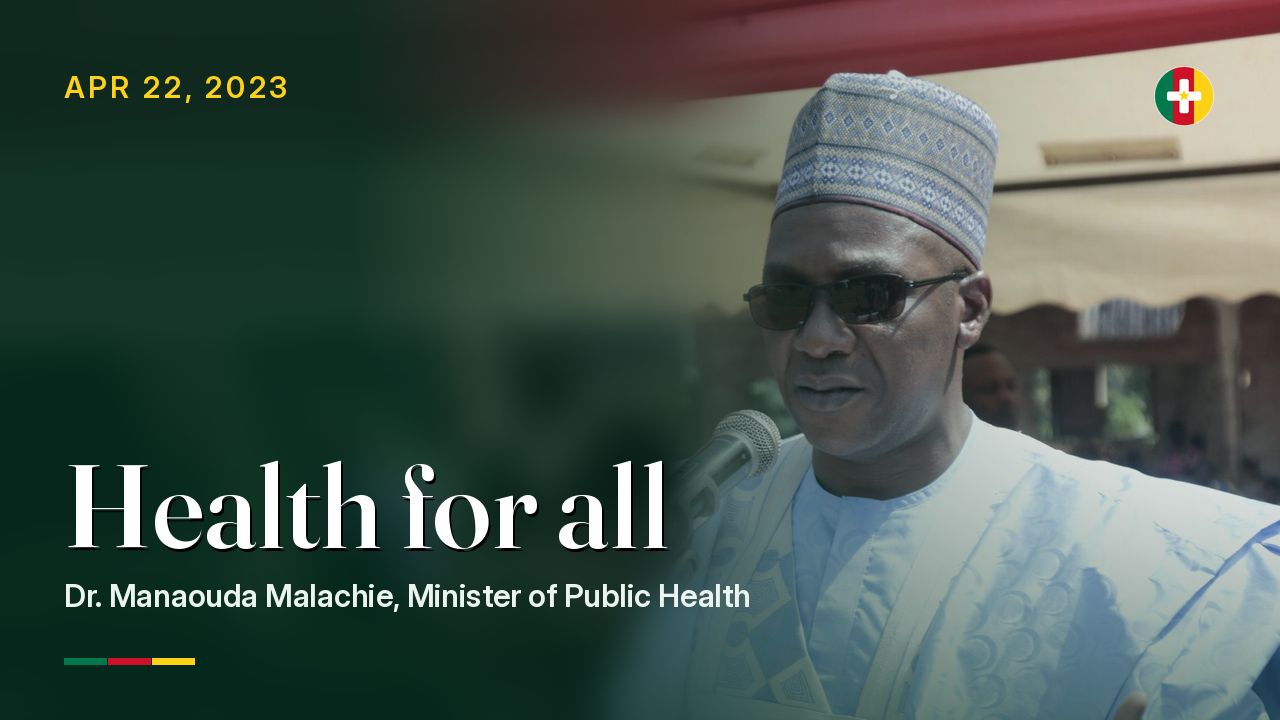
This policy briefing synthesizes key insights from the Cameroon Town Hall for Healthcare Professionals session held on April 22, 2023 with His Excellency Dr. Manaouda Malachie, Minister of Public Health, ten days after the launch of Phase 1 of Universal Health Coverage (UHC). MINSANTE reported 1,295 participants online at the peak of the session.
Context
Fewer than 7% of Cameroonians are covered by a social health protection mechanism, essential service coverage is 45%, and households pay about 70 to 72% of health spending out of pocket. Phase 1, launched on April 12, 2023 with a budget of 95.9 billion FCFA shared almost equally between the State and partners, targets children under 5, pregnant women and newborns in five regions, people living with HIV, TB and onchocerciasis, and dialysis patients, while the UHC law is still under government review.
Key issues
- No legal framework yet. The UHC bill and implementing decree were with government. Compulsory affiliation, contributions and expansion to the whole population depend on them.
- Dependence on partners. About half of Phase 1 funds, including most medicines and vaccines, come from partners such as the Global Fund and Gavi.
- Free for the patient, paid to the provider. Uptake depends on facilities being reimbursed on time and on stopping informal payments and stockouts, which had already undermined free malaria care.
- Workforce. UHC adds workload while staff leave; recruitment of 20,000 to 25,000 staff was only at the advocacy stage, and contract staff status remains unresolved.
- Geographic and private sector limits. The maternal package covers five regions, and private facilities enter only where no suitable public facility exists.
Discussion highlights
- A pregnant woman pays 6,000 FCFA once for antenatal care, delivery including caesarean section, and newborn care to 42 days.
- Dialysis costs fell from about 720,000 to 800,000 FCFA a year to a 15,000 FCFA annual card.
- More than 15,000 people had enrolled within ten days of the launch.
- The Minister said facilities will be reimbursed to the last franc and that inspectors, and he himself, would check for informal payments.
- Patient mobility with the UHC card was presented as the most innovative feature.
- The Minister said the diaspora platform existed and the working group's terms of reference were out for comment.
Recommendations
- Adopt the UHC law and its financing. Government and parliament should adopt the UHC bill and implementing decree, using the actuarial study to set contributions for households, the informal sector and companies. First step: publish the timetable for the bill's transmission to the National Assembly.
- Publish the fortnightly Phase 1 report. MINSANTE and the National Technical Coordination should deliver the public update every two weeks that the Minister proposed, with enrolment, use of services, reimbursement delays and stockouts by region, and the success indicators once finalised. First step: a public dashboard on the UHC platform with the 60% by 2025 target tracked by region.
- Pay facilities on time and enforce no-payment rules. The regional health promotion funds should set and publish reimbursement deadlines, and the General Inspectorates should carry out unannounced checks for informal payments and stockouts, with a hotline for patients. First step: a joint inspection round in the five maternal health regions.
- Secure the medicine supply. MINSANTE, CENAME and the regional funds should agree a stock plan for Phase 1 products, especially pediatric malaria kits and dialysis kits, and a plan to reduce dependence on partner-funded medicines. First step: monthly stock reporting from district facilities to CENAME.
- Staff the scheme. Government should approve a phased recruitment of health staff and settle the status of contract staff, while MINSANTE extends referral, telemedicine and performance and quality bonuses. Training schools and regional delegations should brief providers on how reimbursement works. First step: a recruitment plan for the five maternal health regions.
- Use the diaspora. MINSANTE and the town hall should finalise the diaspora working group's terms of reference and invite diaspora professionals to support provider training, telemedicine and accredited clinics in underserved areas. Diaspora members should send comments on the terms of reference through the town hall. First step: a joint list of diaspora offers matched to Phase 1 needs.
Next steps
The Minister committed to regular public reporting (every two weeks), publication of success indicators, expansion of the basket once the UHC law is adopted, possible extension of the maternal package to other regions the following year, and completion of the diaspora working group after feedback on its terms of reference. He offered to return to the town hall when invited.
Conclusion
Phase 1 brings free or low-cost care to children, pregnant women, people living with HIV, TB and onchocerciasis, and dialysis patients, financed half by the State and half by partners. Its success will depend on timely reimbursement, steady medicine supply, enough staff and a UHC law that secures domestic financing. Participants welcomed the Minister's openness and his invitation to the diaspora to contribute.
Meeting minutes
Agenda
- Welcome by the moderators, Dr. Christelle Jouego Tagne, Elvis Ndansi and Dr. Katte Jean-Claude, in French and English
- Audience polls run by Dr. Bryan Tegomoh: where participants joined from, their status, and age group
- Opening words and presentation by His Excellency Dr. Manaouda Malachie, Minister of Public Health, on Phase 1 of Universal Health Coverage (UHC): context, objectives, options chosen, level of implementation and outlook
- Questions prepared by the moderators and questions from members and the chat
- Closing thanks by the moderators and closing remarks by the Minister
Opening remarks
- The moderators welcomed participants and thanked the Minister for accepting the town hall's invitation once again.
- The polls showed that 54% of respondents joined from Cameroon, 20% from North America, 18% from Europe and 7% from other African countries. Most were aged 25 to 44 (43% aged 25 to 34). The moderators told the Minister his audience was mostly in Cameroon and wanted to hear where universal health coverage stood.
- The Minister said he was glad to return to a platform he had missed, thanked members for their support to the Cameroonian health system, and said he remained open to all proposals, whether criticism or support, because the Ministry and the diaspora had to build something strong together.
- He recalled that since arriving at the Ministry in 2019 he had pursued the humanisation of care and services, put into practice through the Agenda for the Transformation of the Health System ('Time to Act') validated by the Head of State. He said three years earlier a patient in Kousseri or Maroua had to travel to Yaoundé for a CT scan, while CT scanners were now in Maroua, Mokolo, Garoua (one or two) and Ngaoundéré, with one coming to Yagoua and an MRI in Garoua. Staff file tracking had been automated so staff no longer travel from Maroua to Yaoundé to follow their files.
Presentation
1. Why Phase 1
The Minister recalled the Head of State's instruction (address of December 31, 2017) to complete the work on the progressive introduction of universal health coverage. He said the newly published national health accounts showed that no more than 7% of the population is covered by a social health protection mechanism, coverage of essential health services is 45%, and households pay about 70% of health spending directly, 72% in the latest accounts. Hospitals and health campaigns kept meeting people who could not come to hospital because they had no money, which led the Ministry to speed up the work after workshops with beneficiaries, technical services and partners.
2. Objectives and choice of a phased start
The general objective is to increase access to and use of covered services by removing financial barriers and improving the quality of care. The specific objectives are to cover about 60% of Phase 1 priority targets by 2025 and to substantially reduce direct payments for covered services. Because the UHC law was not yet in place, the Ministry chose to run the system at a reduced scale first, to test it and to address the worst health indicators. Anyone living in Cameroon, Cameroonian or not, including refugees and displaced people, can enrol.
3. The basket of care
Preventive and promotional services are free for everyone nationwide: vaccination, nutrition with vitamin A supplementation and deworming, and community health interventions such as tracing patients lost to follow-up, home care, hypertension care and cholera response. Curative care covers: free consultations for children aged 0 to 5 nationwide; free treatment of malaria in children 0 to 5 in all 10 regions, which he said had been official before but was blocked by stockouts and by some facilities that refused to apply it; pregnant women and their newborns up to 42 days; people living with HIV/AIDS, tuberculosis and onchocerciasis; and patients on dialysis.
4. What patients pay
A pregnant woman pays a single entry fee of 6,000 FCFA, which covers antenatal care, delivery, complications up to a caesarean section and discharge, and follow-up of the newborn to 42 days with vaccination. This applies first in five regions (Far North, North, Adamawa, East and South), with extension to other regions under consideration for the following year. Dialysis patients previously paid 5,000 FCFA a session, twice a week, or about 720,000 to 800,000 FCFA a year; under Phase 1 they pay 15,000 FCFA for the card and nothing more for the year.
5. Financing
The Minister said he wanted to be transparent on this point. The State had budgeted about 47.5 billion FCFA (49.5%) and technical and financial partners about 48.3 billion FCFA (50.4%), for a total Phase 1 budget of 95.9 billion FCFA. Items he listed included about 21.7 billion FCFA in transfers to the regional health promotion funds to reimburse services, 7 billion for performance purchasing, 4.7 billion to subsidise dialysis kits in public dialysis centres, about 56 billion for medicines and vaccines (supplied through the Global Fund and Gavi), about 3 billion for category 4 to 6 facilities, about 1.2 billion for enrolment, 400 million for communication, and about 200 million for the national technical coordination. He stressed that the Minister does not manage this money.
6. Governance and controls
A National Technical Coordination with a coordinator, a deputy and four operational sections runs Phase 1, under a strategic council led by the Minister that meets every week; he said the Ministry could report to the public every two weeks. Regional technical units under the regional delegates supervise in each region, and the regional health promotion funds, run by community-designated boards, act as purchaser: they verify, carry out medical checks and reimburse facilities. Risks named were slow release of funds (under discussion with the Ministry of Finance and partners), informal payments, stockouts and poor uptake. The three General Inspectorates (administration, pharmacy and laboratory, hospitals), and the Minister himself, would make checks to ensure patients are not asked to pay, and CENAME would supply facilities.
7. Implementation so far and next steps
Phase 1 was launched on April 12, advocacy was under way in each region, and more than 15,000 people were already enrolled. He gave the case of a woman in the East who enrolled, developed complications in labour, was referred to Bertoua Regional Hospital for a caesarean section and went home with her baby without being asked to pay. Next steps were training providers on the mechanism, information sessions down to community organisations, a better supply circuit for medicines, and advocacy meetings with partners. Once the UHC law is adopted the basket would be enlarged and extended to the whole population.
8. What is new: continuity and patient mobility
Answering a question from Elvis Ndansi and those who say nothing is new, he said earlier projects had ended or were ending and the State had taken them over within UHC. Free consultations for children 0 to 5 did not exist before. He called patient mobility the most innovative part: with the UHC card, a dialysis patient from Garoua can be dialysed in Yaoundé, and a person living with HIV registered in one treatment centre can collect medicines in Douala, which still requires work on data linkage.
Discussion and Q&A
- Moderator, from the chat: most dialysis patients (70 to 80%) have diabetes, hypertension or another non-communicable disease. How will UHC treat the whole person and not only the kidney failure? The Minister said Phase 1 first removes the session fee, since patients paid 5,000 or 6,000 FCFA per session plus tests and transfusions. He said Ministry staff had seen patients in dialysis centres pooling money so one of them could have a session, that this was reported to the President, who decided to relieve them. Existing programmes, such as diabetes, continue until the UHC law allows full care of these patients.
- Moderator, from interviews with doctors before the session: what is the place of the National Order of Physicians in implementing UHC? The Order took part in the technical group that prepared UHC and will act as the guardian of quality of care rather than in operations. He said the Order was going through a difficult period; the Prime Minister's Office had asked MINSANTE to review the electoral list, final lists had been sent, and elections should be called soon because the Ministry needs a functional and strong Order.
- A participant asked about neglected tropical disease programmes and maternal and child mortality Ministry programmes, including the NTD programme run by a sub-directorate, continue. Phase 1 focuses on a few indicators and priority targets: the five regions for pregnant women and newborns are those with higher maternal and neonatal mortality, and children under 5 are a vulnerable group.
- A participant (question partly captured) on the place of the private sector He said that during COVID-19 and free malaria care the private sector kept billing patients despite receiving free inputs, so Phase 1 starts with public facilities, where the Ministry has leverage. Private and faith-based facilities will be accredited with a checklist where no public facility has the needed technical level, and once the UHC law is in place the scheme will open to the private sector, with which a dialogue session had been held. He said the Ministry knows it cannot do this without the private sector.
- A participant: with more work under UHC, how will Cameroon fight brain drain? Is the Ministry supported by health economists, what is the timeline, and when will the bill (including taxing profitable companies) come? Care is free for the patient but not unpaid for the provider: facilities will be reimbursed to the last franc, and a performance bonus will apply across Phase 1. Compulsory affiliation and national solidarity (those with more pay more to cover the poor) are UHC principles, and an actuarial study of contributive capacity was nearly complete. The bill and its implementing decree had been prepared and submitted to government for review; he could not say when they would go to the National Assembly.
- A participant whom the Minister was meeting for the second time on the platform raised communication and a clinic in a remote area Phase 1 has a communication strategy through the media (including CRTV), digital channels and face-to-face communication by community health workers, whom he called an essential link for remote areas (house-to-house cholera vaccination, hypertension follow-up, tracing). Their numbers will be increased. Where no public facility of the right level exists, the participant's clinic would be enrolled.
- Franklin Maloba: how will Phase 1 be staffed, and why were these five regions chosen? He said early UHC plans assumed 1,300 billion FCFA was needed before starting, and that waiting for 1,300 billion would mean never doing it, so UHC is being done within available means. The Ministry is setting up referral and counter-referral (for example to Maroua Regional Hospital), telemedicine for reading images, redeployment of staff and mentoring between facilities, and had asked the President to authorise recruitment of about 20,000 to 25,000 health staff, which could be spread over five years. A SAMU covering 360 subdivisions was being planned. The regions were chosen for their maternal, infant and neonatal mortality and for cultural factors that keep women from delivering in hospital.
- Moderator, from the chat: partners fund more than 50% and government 7%. How will services be sustained, and will success indicators be public? He corrected the figures: partners provide about 50.5% and the State about 49.3% (48 billion and 47 billion FCFA), and simulations were done so the State can hold over time. Under the law, household, informal sector and company contributions should cover the basket. Success indicators were being refined and would be published; the target remains 60% of priority targets by 2025 and sustained financing.
- A participant in the chat: how is government preparing to procure medicines, and will it invest in the pharmaceutical sector? Simulations were made with the Directorate of Pharmacy and Laboratory and CENAME, the central body for supply and distribution. Part of the medicines and inputs come from the Global Fund, Gavi (vaccines), the World Bank and other partners, and part is bought by the State. The regional funds and regional delegates handle supply, while the Ministry and its inspectors check that products reach facilities.
- Moderator: a past programme to recruit 25,000 staff left recruits as contract staff without civil servant status. Will this happen again? Recruitment is still at the advocacy stage. He agreed that under Cameroonian rules contract staff do not have civil servant status, said unions had raised it, and that a study of the cost of moving contract staff into the civil service had been submitted to government. He added that the difference should not hold anyone back from serving their country.
- Chat: what is the role of the Government of Cameroon, Africa CDC and WHO in preparing for the next pandemic? Cameroon has its public health emergency operations coordination centre, is setting up a public health emergency response fund (not yet in place), and has trained emergency staff. He said Cameroon is a hub of expertise in Central Africa, with its experts regularly asked to train other countries, and works with Africa CDC, WHO and others.
- A participant: comment on the new visa process for Cameroonians with other nationalities announced by the Ministry of External Relations, and where is the diaspora working group promised at the Minister's last appearance? He confirmed that an e-visa service lets applicants apply and receive their visa online, as part of the country's modernisation. The diaspora platform had been created and terms of reference sent for comment, and the working group depended on that feedback. He said he had already received about four diaspora members in his office.
- Last question, on quality of care Facilities are accredited against a checklist of minimum standards, and the scheme buys quality: on top of reimbursed services there is a quality bonus. Dialysis centres, for example, must meet set standards to take part.
Calls to action and closing
- A moderator thanked the Minister for coming to the platform a second time, thanked the Regional Delegate of Public Health for the South-West for answering questions in the chat, and greeted teachers present. Close to 300 people were connected at that point on the moderators' count.
- The Minister thanked members for giving their time from abroad, said he remained open and available to return when invited, and said health is the beginning of everything: without health there is no wealth creation and no emergence. He called the launch of Phase 1 historic and asked the diaspora to help write this history together.
Submitted by the Co-Moderators, Cameroon Town Hall for Healthcare Professionals.