Breast Cancer in Cameroon: From Awareness to Diagnosis and Treatment
Overview
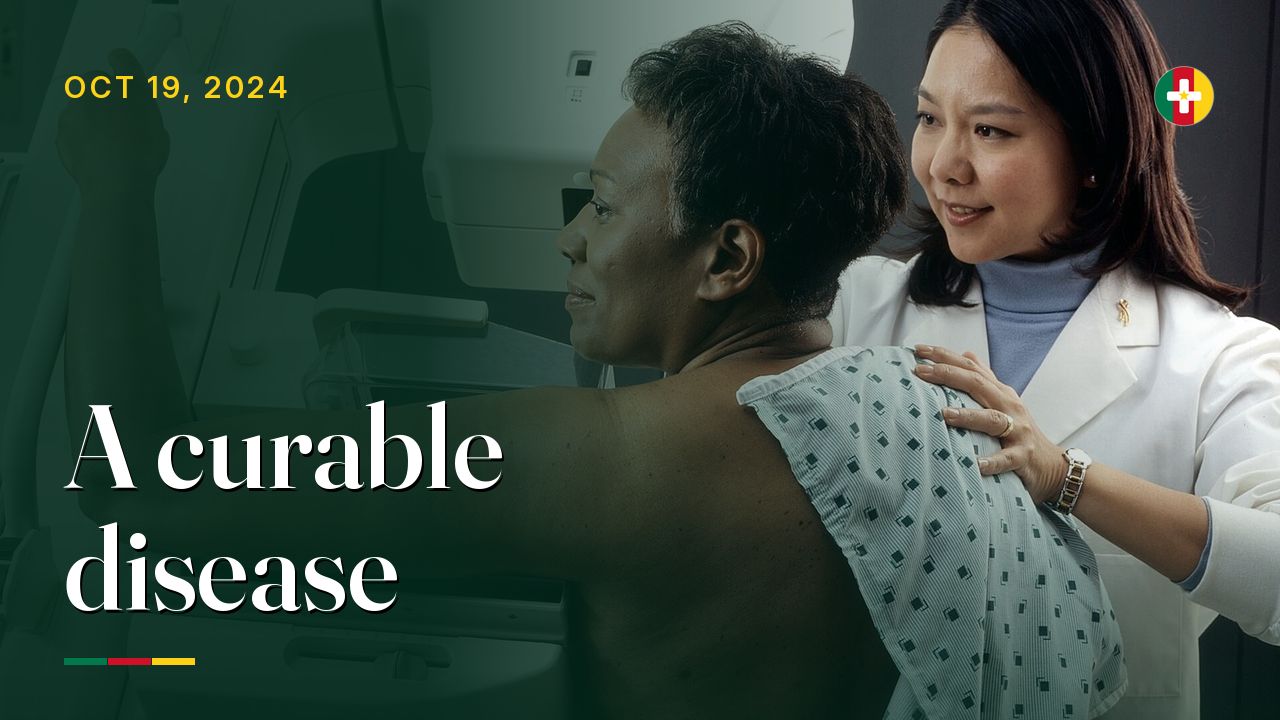
This policy brief synthesises key insights from the Cameroon Town Hall for Healthcare Professionals meeting held on October 19, 2024, focusing on the theme 'Breast Cancer Awareness Month in Cameroon: Efforts to Fight a Curable Disease', with medical physicist Sidney Tazeh, founder of CLEAR Radiology in Buea.
Context
Breast cancer is the most common cancer among women in Cameroon and most women are diagnosed at an advanced stage. Survival exceeds 90% when it is caught early. Mammography, ultrasound, biopsy, hormone receptor testing, surgery, chemotherapy and radiotherapy now exist in the country, but awareness, follow up, affordability and coordination remain weak.
Key issues
- Campaigns that stop at awareness. Many sensitisation and screening efforts do not link women to diagnosis and treatment, which discourages them from coming forward.
- Incomplete diagnosis. Treatment is often started without biopsy, hormone receptor (ER, PR, HER2) status or staging, and women with metastatic disease are offered surgery that does not benefit them.
- Cost and late presentation. Poverty, low trust in the health system and myths, such as the belief that mammograms cause cancer, delay care. Families sometimes spend heavily on treatment abroad after late diagnosis.
- Limited radiotherapy and genetic testing. Only one radiotherapy facility was reported operational, and genetic testing is mostly sent abroad.
- Weak data. There is no functioning national cancer registry; some hospitals (Mbingo, Bamenda Regional Hospital) and private centres keep their own.
Discussion highlights
- Partnership with the Ministry of Women's Empowerment, churches, traditional leaders and medical students extended reach to high risk and rural women.
- Calling patients back after abnormal results improved follow up.
- Hormone receptor testing was described as the most important test for any woman with advanced disease.
- Participants agreed that mammography is now available in every region and general practitioners should use it.
- Local doctors were seen to change practice when advised respectfully and through case discussion.
Recommendations
- Link every awareness campaign to a care pathway. MINSANTE and regional delegations should require that screening campaigns name where women go next for diagnosis and treatment, with referral contacts. First step: publish, for each region, the list of facilities offering mammography, ultrasound, biopsy and hormone receptor testing.
- Make hormone receptor testing standard. Hospitals and oncology services should require biopsy and ER, PR and HER2 testing before treatment, in line with the Cameroon Society of Oncology's position. MINSANTE could negotiate reduced prices with reference laboratories.
- Equip general practitioners to screen. Training schools and regional delegations should train GPs and nurses on breast awareness, clinical breast examination and mammography every two years from age 50 (or 40), and on referring any breast lump in a young woman. Diaspora specialists can contribute through the town hall training series.
- Support follow up and affordability. Hospitals should adopt call back systems after abnormal results and discounted follow up tests. Partners and diaspora donors can fund sliding scale support and transport for low income women.
- Build cancer data from the facility up. MINSANTE should revive the national cancer registry and, meanwhile, encourage hospitals and private centres to keep compatible facility registries, using Mbingo's as a model.
- Expand radiotherapy and plan for genetic testing. Government, with private and diaspora partners, should increase radiotherapy capacity and support local research on hereditary breast cancer in Cameroonian women to guide future genetic testing.
Next steps
Dr. Foma's breast cancer training series for health professionals was scheduled for the following weekend under the town hall's Giveback project. CLEAR Radiology planned to report its single institution data within a year.
Conclusion
Breast cancer is curable when found early, and Cameroon now has most of the tools to find and treat it. The session showed that linking awareness to diagnosis, insisting on hormone receptor testing and working through trusted community channels can bring women to care earlier.
Meeting minutes
Agenda
- Welcome and opening remarks by Elvis Ndansi, Dr. Marthe-Sandrine Mpollo and the chair
- Presentation by Sidney Tazeh on breast cancer efforts on the ground in Cameroon
- Remarks by the chair, Dr. Munoh Kenne Foma
- Discussion and Q&A moderated by Dr. Mpollo
- Closing remarks, announcements and next meeting
Opening remarks
- Elvis Ndansi welcomed participants, noting that the town hall had met every two weeks for three years without skipping a session.
- He framed the session within Breast Cancer Awareness Month and said breast cancer accounted for about 13.4% of cancer deaths among women in Cameroon in 2020, with over 60% of women diagnosed at an advanced stage.
- Dr. Mpollo welcomed participants.
- Dr. Munoh Kenne Foma introduced Sidney Tazeh as a 'doer' who built CLEAR Radiology in Buea, and announced his yearly breast cancer training series for doctors, nurses, residents and students, to be held the following weekend in partnership with the town hall.
Presentation
1. Why breast cancer, and why now
Mr. Tazeh said breast cancer is among the cancers with the highest survival worldwide, around 98% when found early, and is less costly to treat than most cancers. He noted projections that a large share of future cancer deaths will come from Africa and argued that breast cancer is where Cameroon can make the most immediate impact. His guiding principle was 'do not let perfection be the enemy of the good'.
2. A complete pathway, not just awareness
He said many campaigns in Cameroon stop at sensitisation or screening, leaving women with no next step. CLEAR Radiology in Buea set out to offer awareness, screening, accurate diagnosis and help with management, with triage as a key function: deciding who needs which test, so that limited money is not spent on scans or drugs patients do not need. Patients come from the Southwest and Northwest, Douala and as far as Yaoundé.
3. Community awareness through trusted channels
Trained final year medical students and young doctors ran radio programmes aimed at older women, visited churches including the Presbyterian Church in Cameroon, and worked with the Paramount Chief of Buea, himself a doctor. For the International Day of Rural Women they worked with the Ministry of Women's Empowerment, which referred higher risk women for discounted screening. Volunteers handed out 1,000 breast self examination cards in Buea on the day of the session.
4. Screening and diagnosis tools now available in Buea
Self breast examination, clinical breast examination, mammography and breast ultrasound are all now available at CLEAR and at the regional hospital, where mammography was not available two years earlier. Biopsies and hormone receptor testing are sent to partner laboratories, including Centre Pasteur, and staging CT is available. He said local doctors had begun asking for hormone status, staging CT and biopsies, which he saw as the real goal because local doctors deliver the care.
5. Follow up and affordability
Every CLEAR report carries a clear recommendation, and staff call patients a week later to bring them back for follow up tests. Costs are subsidised case by case through CLEAR Medical Foundation and donors, about 90% of them in the USA and, by his estimate, 20 to 40% from town hall members, but rarely at 100%. He said no patient seeking a test had been turned away, and transport is sometimes paid.
6. Myths and partnerships
He addressed the common belief that mammograms cause breast cancer, explaining that the dose from one mammogram equals about two months of natural background radiation. He credited the regional delegation, the Ministry of Women's Empowerment, local hospitals, MTN, the medical students' association and diaspora groups, including a walk in Atlanta to fund treatment in Cameroon. Over 650 people joined the Buea walk that day, and a 30 year old survivor shared her story.
Discussion and Q&A
- A chat question asked how genetic testing could be made accessible for high risk women and for relatives of survivors. Dr. Foma said Cameroon has much of the equipment but such tests are rarely offered and mostly sent abroad at high cost. He reported seeing unexpected numbers of Lynch syndrome, Li-Fraumeni and BRCA2 positive results among Cameroonians and called for investment and research on African genetic diversity. Mr. Tazeh said large scale genetic testing in Cameroon was not near, and he would focus on solvable problems. A clinical pathologist in Cameroon said tests are still mostly sent out and that her laboratory hoped to bring them locally. Dr. Mpollo noted that an ISO certified genetic testing laboratory had opened in Ghana.
- A participant asked what women living below the poverty line should do, and how much early breast cancer treatment costs so families can plan. Mr. Tazeh said costs are handled on a sliding scale at CLEAR and at the Cameroon Oncology Center, and one case he checked was under half a million francs CFA. Dr. Foma said cost cannot be estimated before staging, but surgery is usually under 100,000 francs CFA, hormone receptor testing about 80,000 at Mbingo and about 150,000 at Centre Pasteur, and early stage treatment overall could be under half a million. He urged that even a family's 'last 100,000' should go on ER, PR and HER2 testing, since women with metastatic disease do not benefit from surgery and many do well on hormonal therapy alone. Mr. Tazeh advised against travelling to India for treatment found late, as care close to family is cheaper and support matters.
- A participant asked why women still present late and whether an HIV style national survey could be used for breast cancer. Mr. Tazeh said early diagnosis is the only way forward, since Cameroon cannot 'treat its way out of cancer' in the next ten years. Dr. Foma said a mass screening approach used for HIV does not fit breast cancer and that research on who is affected must come first. He said mammography is now available in every region and that general practitioners should offer mammograms every two years from age 50 (or from 40 every two years) instead of unnecessary tests such as the Widal test, and should take any breast lump in a young woman seriously.
- Dr. Mpollo asked whether CLEAR keeps a registry of findings, follow up and survival, and raised low trust in the health system as a cause of late presentation. Mr. Tazeh said CLEAR collects and will analyse its data and planned to report single institution results within a year, and that hospitals should not wait for a national registry. He said only one radiotherapy facility was operational, at the Cameroon Oncology Center, which was adding a second linear accelerator. Dr. Foma said Mbingo Baptist Hospital keeps a high quality cancer registry, Bamenda Regional Hospital had started one, and the national cancer plan built with the Clinton and Gates foundations had seen limited implementation.
- Dr. Mpollo asked how CLEAR decides who receives financial help and how it changes local doctors' practice without hurting egos. Mr. Tazeh described a case where a family sought a prostate MRI; after a quick case discussion with Dr. Foma and urologists, a repeat PSA was advised first. He stressed respect when advising local doctors and joint decisions. Financial help is assessed case by case, rarely covering the full cost.
Calls to action and closing
- Dr. Foma said Cameroon must separate luxury from necessity in tests: hormone receptor testing is necessary, while PET or next generation sequencing often is not.
- He said medical training must adapt to the rise of non-communicable diseases, and that tumour boards he attended in Cameroon did not allow all specialists to contribute.
- He announced his detailed breast cancer lectures for health professionals and patients the following Saturday and Sunday, as part of the town hall's Giveback project, with continuing education credits being sought.
- Elvis Ndansi thanked the speaker, the chair and Dr. Mpollo and closed the session.
Next meeting
Breast cancer training lectures the following weekend (October 26 to 27, 2024); next regular town hall in a fortnight (expected November 2, 2024).
Submitted by the Co-Moderators, Cameroon Town Hall for Healthcare Professionals.