Breast Cancer in Cameroon: A National Screening Policy and Standard Diagnostic Work Up
Overview
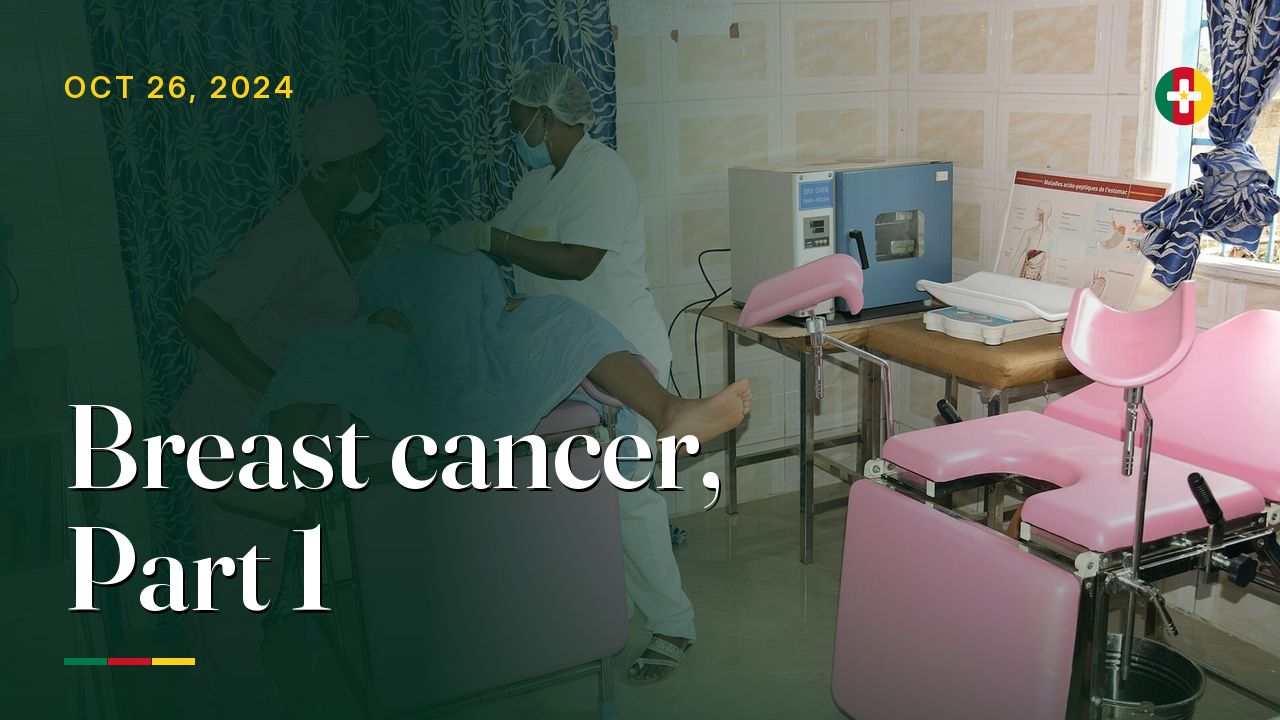
This policy brief synthesises key insights from the special edition of the Cameroon Town Hall for Healthcare Professionals held on October 26, 2024, the first part of a breast cancer educational series for health professionals, presented by medical oncologist Dr. Munoh Kenne Foma.
Context
Breast cancer is the most common cancer in Cameroonian women, and most are diagnosed late. Mammography units now exist in all 10 regions, but there is no national screening policy, no in-house immunohistochemistry, and only one centre providing standard radiotherapy. Many women are still treated without biopsy, receptor testing or staging.
Key issues
- No national screening policy. Breast cancer screening is not in the minimum package of activities, and new mammography units are not matched by trained breast radiologists.
- Inadequate diagnosis. Fine needle aspiration and excision biopsies are still used; receptor testing (ER, PR, HER2) is sent abroad and often skipped; pathology reports rarely state margins.
- Treatment without staging. Women with stage 3 or 4 disease receive surgery or chemotherapy without staging CT or hormone status, wasting money and lives.
- Limited radiotherapy. Breast conserving surgery requires radiation, which few women can access, so surgical choices must be adapted.
- Missing allied workforce and data. There are no training schools for oncology nurses, medical physicists or dosimetrists, and no map of specialists and capabilities.
Discussion highlights
- Participants debated the right screening age for Cameroon, given a younger median age at diagnosis in local data.
- Risk assessment from age 30 by GPs was proposed as a low cost first step.
- Radiologists noted ultrasound alone misses microcalcification only cancers.
- The University of Buea's Faculty of Health Sciences welcomed partnerships with diaspora professionals.
- A proposal emerged to map oncology services and specialists in each region.
Recommendations
- Adopt a national breast cancer screening guideline. MINSANTE should add breast cancer screening to the minimum package of activities: risk assessment from 30, yearly clinical breast examination from 40, and mammography every two years from 50 to 75 (or from 40 where affordable). First step: a technical working group, with University of Buea radiology and public health researchers, to review local age data and set the starting age.
- Make core biopsy and receptor testing the standard. MINSANTE and reference hospitals should issue a protocol requiring core needle biopsy and ER, PR, HER2 and Ki-67 for every breast cancer, and should support at least one public in-house immunohistochemistry laboratory to cut cost and delay. Partners and diaspora investors can help equip it.
- Standardise pathology and staging. Pathology services should adopt synoptic reports stating histology, grade, receptors and margins. Oncology units should require staging CT for stage 3 and above before treatment.
- Train breast radiologists and allied staff. Training schools and MINSANTE should fund breast imaging sub specialisation for radiologists using the new regional mammography units, and open programmes for oncology nurses, medical physicists and dosimetrists.
- Adapt surgical practice to radiotherapy access. Surgical societies should end radical mastectomy, adopt sentinel lymph node biopsy, and agree guidance on when mastectomy is preferred because radiation is unavailable. Government should expand radiotherapy beyond one centre.
- Map oncology capacity. The town hall, diaspora associations and the National Medical Council should map specialists and services by region so that providers know where to refer.
Next steps
Part 2 of the series on breast cancer treatment was held the following day. Participants proposed a mapping project of oncology resources and collaboration between the University of Buea, diaspora associations and the town hall.
Conclusion
Most of the gap in breast cancer outcomes in Cameroon begins before treatment: late screening, inadequate biopsies and missing receptor results. A national screening policy, standard diagnostic work up and trained breast radiologists would allow more women to be treated early and correctly with drugs already available in the country.
Meeting minutes
Agenda
- Welcome and introduction by Dr. Munoh Kenne Foma
- Pre-test questions
- Section 1: Epidemiology, risk factors and prevention
- Section 2: Screening
- Section 3: Diagnosis and staging
- Section 4: DCIS and local management of invasive breast cancer (surgery, axillary evaluation, radiation)
- Cameroon's cancer control capacity
- Open discussion and Q&A
Opening remarks
- Dr. Foma opened this special edition of the town hall as a lecture series for young physicians, nurses, nurse practitioners, laboratory technicians, researchers and others working on breast cancer in Cameroon and Africa.
- He described his background as a medical oncologist and haematologist in Albuquerque, a former clinical pathologist in Cameroon and holder of an MPH.
- He explained that the series was motivated by the death of a 32 year old friend in Douala whose breast cancer was managed without hormone receptor testing, staging or radiation, and who had asked him to educate doctors in Cameroon.
Presentation
1. Two cases that show the gap
A 60 year old Cameroonian woman visiting the USA found a lump, had a mammogram, biopsy and ER/PR results within two days, underwent lumpectomy with negative sentinel nodes, and was spared chemotherapy after genomic testing; she was doing well on hormonal therapy. By contrast, his 32 year old friend in Douala had lumpectomy for what was already stage 3 disease, no hormone testing, no staging and no radiation, recurred, and received chemotherapy without knowing her receptor status. Her result (ER and PR positive) arrived two days after she died; he said tamoxifen or an aromatase inhibitor may have served her better.
2. Epidemiology and risk
Breast cancer is the most common cancer in Cameroonian women (about 20% of cancers in women by hospital data). Worldwide about 70% of breast cancers are hormone receptor positive and HER2 negative; Black women have higher rates of triple negative disease. The main risk factors are being a woman and age (one in eight women who live to 80), followed by BRCA1/2 and other inherited mutations, prior atypical hyperplasia, LCIS or DCIS, dense breasts, alcohol, obesity, hormone replacement therapy and late first pregnancy. Breastfeeding, a first pregnancy before 20 and exercise reduce risk. Breast implants, cysts and fibroadenomas do not raise risk.
3. Prevention for high risk women
General practitioners should assess every woman's risk from age 30 using family history and tools such as the Gail, Claus and Tyrer-Cuzick models, while noting these have not been validated in Cameroonian women. Based on NSABP and STAR trial evidence, premenopausal high risk women can take tamoxifen (cheap and generic); postmenopausal women can take tamoxifen, raloxifene, exemestane or anastrozole. LCIS needs prevention, not surgery. Lifestyle advice includes at least 150 minutes of moderate exercise a week and limiting alcohol.
4. Screening policy for Cameroon
Cameroon has no breast cancer screening policy and screening is not part of the minimum package of activities, although mammography units have been installed in all 10 regions. Dr. Foma recommended breast awareness and yearly clinical breast examination from age 40, and, as a cost effective national policy, mammography every two years for women aged 50 to 75 as recommended by WHO and used in the UK, with women who can afford it starting yearly at 40. He said radiologists must be trained and sub specialised in breast imaging, since reading mammograms is the hardest part.
5. Diagnosis: no tissue, no issue
All suspicious breast lesions need a core needle biopsy, ideally image guided by a radiologist; fine needle aspiration and excision biopsy should not be used because they cannot separate DCIS from invasive cancer or support immunohistochemistry. He said there is still no in-house immunohistochemistry in Cameroon: Centre Pasteur sends samples to Senegal or France and Mbingo to the USA, at about 80,000 francs CFA at Mbingo. Every patient should have ER, PR, HER2 and Ki-67 results, and pathology reports must state margins, which most reports he has reviewed from Cameroon do not.
6. Staging and work up
Stage 1 to 2B disease needs imaging only if symptoms or blood tests (anaemia, raised liver enzymes or alkaline phosphatase) suggest spread. All women with stage 3 or higher need CT of the chest, abdomen and pelvis before any treatment, and this should take priority over other spending. Menopausal status must be defined (12 months without menses, or hormone tests) because treatment depends on it.
7. Local management and surgery
Radical mastectomy should no longer be performed. Breast conserving surgery with radiation is equivalent to mastectomy for early disease, but because Cameroon has only one centre giving standard radiotherapy (the Cameroon Oncology Center, with Mbingo building a bunker and the cobalt unit at Douala General Hospital often broken), he advised mastectomy (with reconstruction where possible) for stage 3, and considered conserving surgery with hormonal therapy for stage 1. Sentinel lymph node biopsy should replace routine axillary dissection to avoid lymphoedema. DCIS needs 2 mm margins and hormonal therapy if receptor positive.
8. Cameroon's capacity
The national cancer strategic plan prepared with WHO, the Clinton Foundation and other partners had seen little implementation. Higher recorded incidence in the Northwest reflects where screening and treatment centres are. Training of oncologists and radiologists has improved, but trained radiation oncologists are underused, there are no schools for oncology nurses, medical physicists or dosimetrists, and opioid access for pain is poor. He said Mbingo Baptist Hospital provides the most systematic cancer care he has reviewed in the country.
Discussion and Q&A
- A participant asked what rural women exposed to firewood smoke for decades should do. Dr. Foma said firewood smoke is documented as a risk for lung cancer, which is relatively common in African women for this reason, but not yet for breast cancer. He called for engineering solutions such as chimneys, lifting families out of poverty, lung cancer screening for heavily exposed women, and research.
- A participant asked whether letrozole used for ovulation induction raises breast cancer risk, and about hormone replacement therapy. He said aromatase inhibitors lower, not raise, breast cancer risk. On HRT, he said there is mixed data but an overall consensus that estrogen containing therapy increases risk, and NCCN, ASCO and ESMO guidelines advise against it after breast cancer.
- A participant asked when women with a family history should start screening, and about risk in transgender people on long term hormones. Screening should start about 10 years before the age at which the youngest relative was diagnosed. Risk in people on long term estrogen and progesterone has not been well studied but empirical data suggest it rises.
- Dr. Joshua Tambe noted that local data show a median age at treatment in the late 30s to early 40s and asked which age group a Cameroonian screening policy should target. Dr. Foma said local data are needed and challenged Dr. Tambe's students to produce it. Without financial limits he would screen from age 40 yearly, with GPs triaging women aged 30 to 40 using risk tools and ultrasound. A haematology and oncology fellow at the NIH advised risk stratified screening tailored to family history and ability to pay. A surgical oncologist in Pennsylvania called for Cameroon to develop its own risk model and asked whether ultrasound should be the main tool given dense breasts. Prof. Tambe explained that ultrasound misses non mass lesions seen only as microcalcifications on mammography, though AI assisted ultrasound may help.
- A participant asked what message to give current cancer patients, what the government should prioritise, and where the diaspora should invest. Dr. Foma called for investment in palliative care and pain control, knowing every patient's hormone status, training GPs as the guardians of screening, and a national plan centred on prevention and screening. He urged diaspora professionals to invest in screening platforms and in education partnerships with universities in Buea, Bamenda, Dschang and Douala.
- The surgical oncologist from Pennsylvania asked whether Cameroon's oncology resources could be mapped and surgeons' training needs listed. Dr. Foma said National Medical Council data from about 2018 list doctors but not their capabilities, and proposed that the town hall or diaspora associations fund a project to map specialists and services by region.
Calls to action and closing
- A haematology and oncology fellow at the University of Minnesota described a friend whose immunohistochemistry result took two months, by which time her HER2 positive cancer was metastatic; she said wider knowledge of where testing is available could save lives.
- The Dean of the Faculty of Health Sciences at the University of Buea, welcomed collaboration and said the faculty already had partners in Arizona, Pennsylvania and Tanzania. Dr. Foma proposed joint work with diaspora associations including ACPA.
- In answer to a nurse practitioner on nutrition, Dr. Foma said data on diet and cancer in Cameroon are lacking and that Cameroon should train oncology nurses, dietitians, medical physicists and other allied professionals according to a proper needs assessment. A participant reported that the University of Bamenda offers a bachelor's degree in nutrition.
- Dr. Foma offered to help diaspora groups arrange meetings with the Minister of Public Health through the diaspora committee.
- Part 2 of the series, on treatment and metastatic disease, was scheduled for the next day.
Next meeting
Part 2 of the breast cancer series (treatment) on Sunday, October 27, 2024.
Submitted by the Co-Moderators, Cameroon Town Hall for Healthcare Professionals.