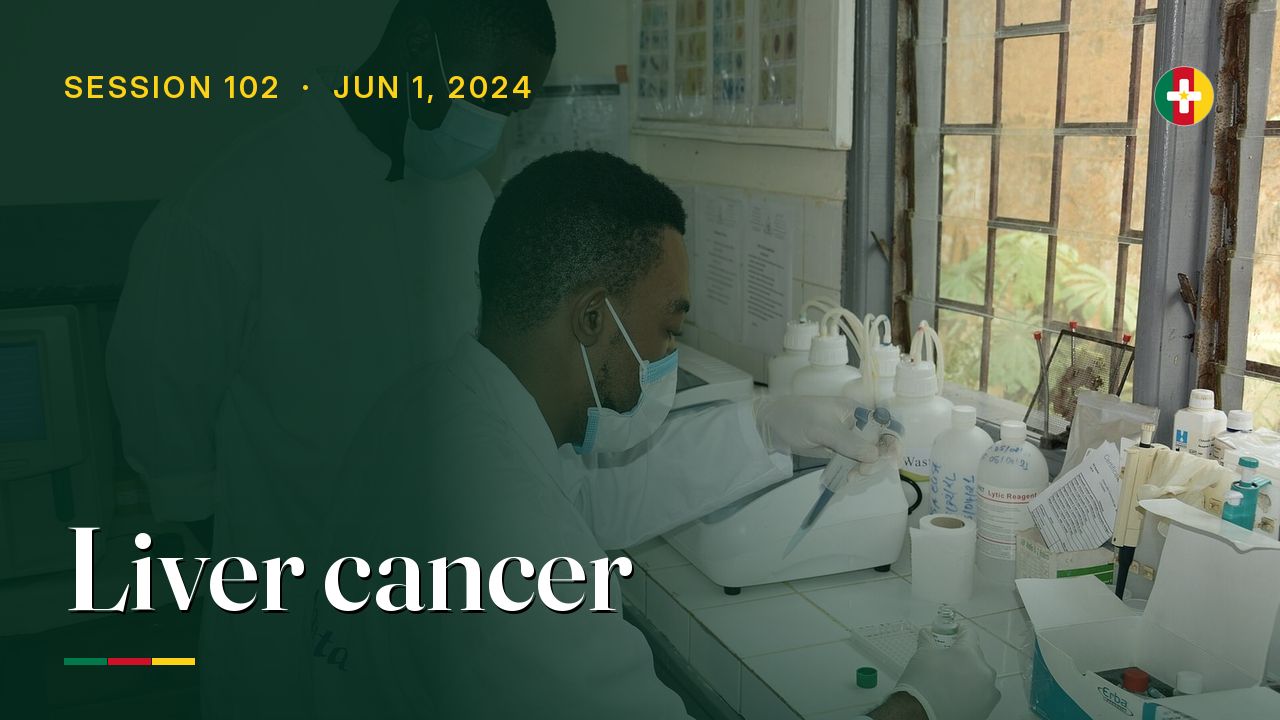
Liver Cancer in Cameroon: An Urgent Call to Action
Overview
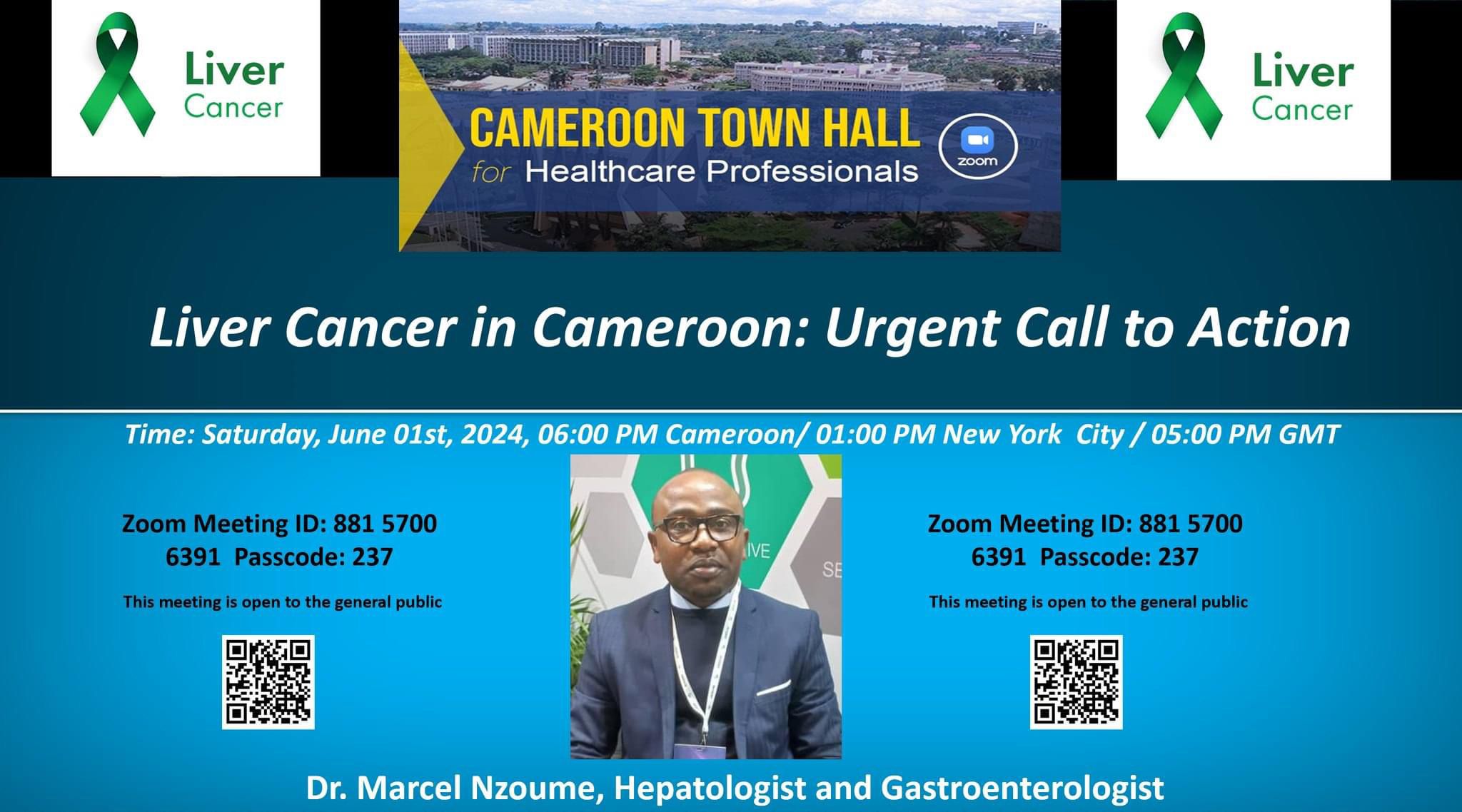
This policy briefing synthesizes key insights from the Cameroon Townhall for Healthcare Professionals meeting held on June 1, 2024 (102nd edition), focusing on the theme "Liver Cancer in Cameroon: An Urgent Call to Action," presented by Dr. Marcel Nzoume, gastroenterologist and hepatologist at the Bafoussam Regional Hospital.
Context
Liver cancer is the fourth cause of cancer death in Cameroon. Most cases are linked to hepatitis B, which is acquired early in life, and patients are young (peak at 30 to 39 years) and diagnosed late, when no curative treatment is possible.
Key issues
- High hepatitis B burden. Prevalence was cited at 11.2% overall, about 13.4% in pregnant women and about 10.5% among blood donors, with some blood still transfused without adequate testing.
- Gaps in mother to child prevention. The vaccine starts at six weeks with no birth dose; about 40% of births are not attended by trained staff; many pregnant women do not know their status.
- Late diagnosis. About 80% of cases are found at an advanced stage, with no organised screening, costly tests, and about 60 hepatologists nationwide.
- Limited treatment. No liver transplant, few liver surgeons, interventional radiology in its infancy, radiotherapy only in Douala, and first line immunotherapy not available.
- Hepatitis C cure not reaching patients. Direct acting antivirals could be available at $60 a course, but uptake depends on registration and procurement.
Discussion highlights
- Prevention, especially of hepatitis B transmission, was agreed as the main priority.
- Post-vaccination serology and screening of pregnant women were proposed.
- Opportunities were identified for $60 hepatitis C treatment and for Egypt's offer of free drugs.
- Speakers called for Cameroonian research on aflatoxins, scarification and regional clusters.
- Interventional radiology, resection, radiofrequency ablation and FibroScan were named as tools within reach.
Recommendations
- Introduce a hepatitis B birth dose. MINSANTE and the Expanded Programme on Immunization should add a hepatitis B birth dose within 24 hours of delivery, with immunoglobulin for infants of infected mothers where feasible. First step: a costed plan with partners for hospitals with the most births.
- Screen pregnant women and protect newborns. MINSANTE should make hepatitis B testing with quality assured tests part of every antenatal visit, vaccinate women who test negative, and apply the mother to child prevention protocol for those who test positive. Regional delegations should track coverage. First step: national guidance to antenatal clinics and a review of the tests in use.
- Secure blood and medical procedures. Hospitals and the national blood transfusion programme should ensure every unit of blood is screened for hepatitis B and C, and training schools should reinforce safe injection practice. First step: an audit of screening in district hospitals.
- Bring the hepatitis C cure within reach. MINSANTE should confirm which direct acting antivirals are registered, pursue the $60 per course offer from WHO prequalified manufacturers, and follow up Egypt's offer of free treatment. First step: a meeting between MINSANTE, Treatment Action Group and the town hall.
- Build liver cancer services and data. MINSANTE, university hospitals and diaspora specialists should train interventional radiologists for each region, expand resection and radiofrequency ablation, set up regional tumour boards, and start a liver cancer registry and research on aflatoxins and regional clusters. First step: a training partnership on interventional radiology with diaspora and visiting teams.
- Engage communities and traditional healers. Regional delegations and community health workers should run awareness on hepatitis, alcohol and safe groundnut storage, and work with traditional practitioners to refer suspected hepatitis early.
Next steps
The participant survey was launched at the end of the session. Treatment Action Group was invited to connect with the speaker and the town hall on access to hepatitis C treatment. The next session was set for two weeks later.
Conclusion
Liver cancer in Cameroon strikes young adults and is mostly preventable. Participants agreed that the strongest returns lie in stopping hepatitis B transmission at birth, screening and treating viral hepatitis, and building local capacity for earlier diagnosis.
Meeting minutes
Agenda
- Welcome and opening remarks by the moderators and the Chair, Dr. Munoh Kenne Foma
- Introduction of the Cameroon Town Hall participant survey
- Presentation by Dr. Marcel Nzoume on liver cancer in Cameroon
- Comments by the Chair on hepatocellular carcinoma management in the United States
- Discussion and Q&A
- Closing remarks, summary and adjournment
Opening remarks
- Dr. Tegomoh welcomed participants to the 102nd edition of the Cameroon Town Hall, devoted to liver cancer, a public health problem that receives little attention in Cameroon.
- Elvis Ndansi cited about 900,000 new liver cancer cases and about 830,000 deaths worldwide in 2020, and noted that hepatitis B, hepatitis C and alcohol, its main risk factors, are all common in Cameroon. He said the moderators first titled the session 'a cry for help'.
- The Chair introduced Dr. Marcel Nzoume, his medical school classmate of more than 20 years, who trained in gastroenterology and hepatology in Yaoundé, sub-specialised in hepatology and endoscopy in France, and works in the West Region to make endoscopy, colonoscopy and early diagnosis of hepatocellular carcinoma available locally.
- The Chair said hepatocellular carcinoma needs a full multidisciplinary team (interventional radiology, radiation oncology, hepatology, hepatobiliary and transplant surgery, medical oncology) and a tumour board, and listed Cameroon's risk factors: hepatitis B, untested hepatitis C, alcohol and cirrhosis, rising obesity and fatty liver disease, aflatoxins in poorly stored groundnuts in the West, genetic factors and smoking.
- Dr. Tegomoh introduced the participant survey, designed with volunteers, built on a platform created by a Cameroonian based in Germany. It takes under five minutes, collects no identifying data, and covers participant profiles, an assessment of the town hall, Cameroon's main health challenges, and expectations of the Ministry's diaspora committee. It was to be launched at the end of the session.
Presentation
1. Burden of liver cancer
Dr. Nzoume, presenting in English and French, focused on primary liver cancer, mainly hepatocellular carcinoma, which usually arises on chronic liver disease. Citing 2022 figures, he said it ranks sixth worldwide for incidence and third for cancer deaths. In Cameroon it ranks seventh for incidence, behind breast, cervical and prostate cancer, non-Hodgkin lymphoma and Kaposi sarcoma, and fourth for cancer deaths. At the Bafoussam Regional Hospital multidisciplinary meeting, hepatocellular carcinoma was the most frequent digestive cancer in 2023, followed by colorectal cancer.
2. Hepatitis B and C
He said hepatitis now kills more people worldwide than HIV, TB or malaria. Cameroon is hyperendemic for hepatitis B, with a general prevalence of 11.2% in the study he cited, about 10.5% among blood donors and 13.4% in pregnant women, and a 2017 study showing regional variation, with about 20% in the North. Hepatitis C prevalence is around 4% and falling, as infection was concentrated in people born between the 1920s and 1960s, which he attributed to past medical transmission. He mentioned co-infection with hepatitis D, which speeds progression to cirrhosis, and HIV and hepatitis B co-infection at 14%.
3. Young patients and early transmission
Most patients seen by the therapeutic committees for hepatitis B are aged 20 to 29, and studies show the peak of hepatocellular carcinoma in Cameroon at ages 30 to 39. Infection is acquired early, mostly from mother to child: 80 to 90% of infants infected in the first year and 30 to 50% of children infected before age six develop chronic infection, against under 5% of adults. While 82% of pregnant women attend at least one antenatal visit, only 63% of births are attended by trained staff, so about 40% of women deliver without the measures that prevent transmission. He added unsafe medical procedures and traditional practices as routes of transmission, and noted cases of cancer in patients with low viral loads and without cirrhosis (about 40% in one study).
4. Other risk factors
Hepatitis B was the leading risk factor (48% of cases) in a Cameroonian study of hepatocellular carcinoma, and a February 2024 prognostic study found most patients present at an advanced stage (mostly Barcelona Clinic Liver Cancer stage C). A 2023 study found non-alcoholic fatty liver disease in 48.9% of the population studied, linked to metabolic syndrome. He also listed aflatoxin exposure from food storage, excessive alcohol use (which Cameroonians tend to underestimate), diabetes, inherited liver disease and socioeconomic disadvantage.
5. Barriers to diagnosis
He said 33% of Cameroonians live on less than one US dollar a day, which limits access to tests. Ultrasound, CT and MRI are missing in some remote areas; there are only about 60 hepatologists in the country, along with shortages of pathologists, oncologists and radiologists; tumour markers are not available in all laboratories; and there are no organised screening programmes, so most cases are found late.
6. Barriers to treatment
Few centres can perform liver surgery, chemotherapy, immunotherapy and radiotherapy are costly or unavailable, and there is no liver transplant facility in Cameroon. Many health facilities lack a multidisciplinary meeting and standard protocols, and supportive and palliative care is limited. He said many patients first go to traditional healers because hepatitis is widely seen as something conventional medicine cannot treat, and some believe cancer is caused by witchcraft.
7. Current interventions and proposals
Hepatitis B vaccine has been in the Expanded Programme on Immunization since 2005, but it starts at six weeks, leaving infants born to infected mothers unprotected. He called for a birth dose, safe food storage to reduce aflatoxins, alcohol awareness and support services, accessible screening, interventional radiology (noting a team working in Yaoundé), palliative care, and engagement of traditional healers and community leaders. He also called for better epidemiological data, genetic and molecular research into why liver cancer is so aggressive in Cameroon, school based education, health worker training, telemedicine, and clinical trials, while stressing that prevention matters most.
Discussion and Q&A
- Chair (Dr. Munoh Kenne Foma): how is hepatocellular carcinoma managed in the United States? He said management depends on Barcelona staging and a multidisciplinary team. He now biopsies most patients to separate mixed hepatocellular and cholangiocarcinoma and to run next generation sequencing. Options include resection, transarterial chemoembolisation and radioembolisation (Y90), SBRT, transplant and systemic therapy. First line treatment is atezolizumab with bevacizumab; he said bevacizumab is available in Cameroon but atezolizumab is not and is very expensive, sorafenib is available but old and toxic, and lenvatinib is not available. Radiation oncology is available only in Douala and interventional radiology is in its infancy, with a French team introducing chemoembolisation at Douala General Hospital. Many patients fly to India for treatment.
- Joelle Dountio Ofimboudem (Treatment Action Group): which hepatitis C direct acting antivirals are used in Cameroon, and at what price? She reported that at a viral hepatitis resource mobilisation conference convened by CHAI and the Hepatitis Fund, the WHO prequalified manufacturers Viatris and Hetero committed to supply a full course of hepatitis C treatment for $60 in low and middle income countries, if registered locally. She also described Egypt's offer of free hepatitis C treatment to some African countries: Cameroon was not on the list, but Egypt was willing to supply drugs if Cameroon covered transport and importation. She explained Egypt's success: mass screening of over 90% of the population and local manufacture of the drugs. Dr. Nzoume replied, and the moderators invited her to connect with him and the town hall to pursue this.
- Franklin Maloba: what data exist on alcohol and aflatoxin related cirrhosis, and what can be done for rural communities facing poverty, blood transfusion without screening and vaccine cold chain problems? Dr. Nzoume said alcohol combined with hepatitis B or C speeds progression to cirrhosis and cancer, and that he knew of no Cameroonian study directly linking aflatoxin to liver disease. The Chair said Cameroon must generate its own data, noting areas of the country with high cancer incidence but low hepatitis and alcohol rates, and that hepatitis B vaccine is now free in rural areas, but more advocacy and government engagement are needed.
- A survey volunteer: could other factors explain the high rates in the North, and are current public health measures working? He suggested liver fluke infection among pastoral communities. Dr. Nzoume said much has been done and much remains to be done. The Chair added that any cause of cirrhosis raises risk, that scarification with shared blades in the North spreads hepatitis B and C, and that groundnut consumption there makes aflatoxins a research priority.
- A radiologist: how is a single liver lesion with atypical imaging confirmed? Dr. Nzoume said that at Bafoussam, when imaging is not characteristic and MRI is unavailable, the team does a liver biopsy with the hospital's radiologist. The Chair said Cameroon must train its own interventional radiologists for every region rather than rely on visiting teams from France: 'no tissue, no issue'.
- A gastroenterologist from Bafoussam: what should prevention focus on? He cited the WHO 2030 targets (90% fewer new infections, 65% fewer deaths). He said vaccinated infants are not always protected, so post-vaccination serology should become routine before school entry, and that in one study about 45% of women coming to deliver did not know their hepatitis B status. Pregnant women should be screened and those who test negative vaccinated.
- Dr. Ivo Che Ditah: how does hepatitis B differ from hepatitis C? He said hepatitis B integrates into the host DNA and can cause cancer without cirrhosis, so in the US screening for liver cancer in hepatitis B carriers of African origin starts at age 20, compared with 40 for men and 50 for women born in the US. Ultrasound with or without alpha-fetoprotein every six months is the standard. He would advise screening everyone in Cameroon and vaccinating those who test negative. Later he said resection is the best available option for a single resectable lesion in Cameroon, and that FibroScan is used mainly to decide who needs antiviral treatment rather than for screening.
- A clinician: what can be done with tools Cameroon already has? He pointed to strong ultrasound skills that could extend to FibroScan, already available in Yaoundé, the chemoembolisation work at the University of Yaoundé, which could lead to radioembolisation, and radiofrequency ablation as a low cost option. Dr. Nzoume said FibroScan is also available in Douala and Bafoussam but many cannot afford it, and that about 80% of patients are diagnosed at an advanced stage.
- Prof. Gregory Halle-Ekane, Dean, Faculty of Health Sciences, University of Buea: what is the lesson for medical education? He said the session felt like a classroom and should be opened to students through e-learning, and that with limited resources a multidisciplinary, collaborative approach to cancer care is essential.
Calls to action and closing
- The Chair said prevention is the priority, starting with hepatitis B, and asked whether Cameroon has the trained surgeons, transplant teams and interventional radiologists to treat this cancer. He called for strengthening existing medical schools rather than proliferating new ones, and for collaboration with the diaspora.
- Dr. Nzoume's priorities: systematic hepatitis B screening of pregnant women and the general population with high quality tests, vaccination of those who test negative, prevention of mother to child transmission, proper management of infected people, and community engagement to counter the belief that hepatitis cannot be treated by conventional medicine; he estimated 98% of patients see traditional practitioners first.
- Dr. Tegomoh invited students and faculty of the University of Buea to take part in future sessions.
- Elvis Ndansi summarised the presentation and announced the next session in two weeks.
Next meeting
In two weeks (June 15, 2024 per the town hall's records).
Submitted by the Co-Moderators, Cameroon Town Hall for Healthcare Professionals.